Switzerland
Share
Edited by: gaya ❤️ one
Switzerland
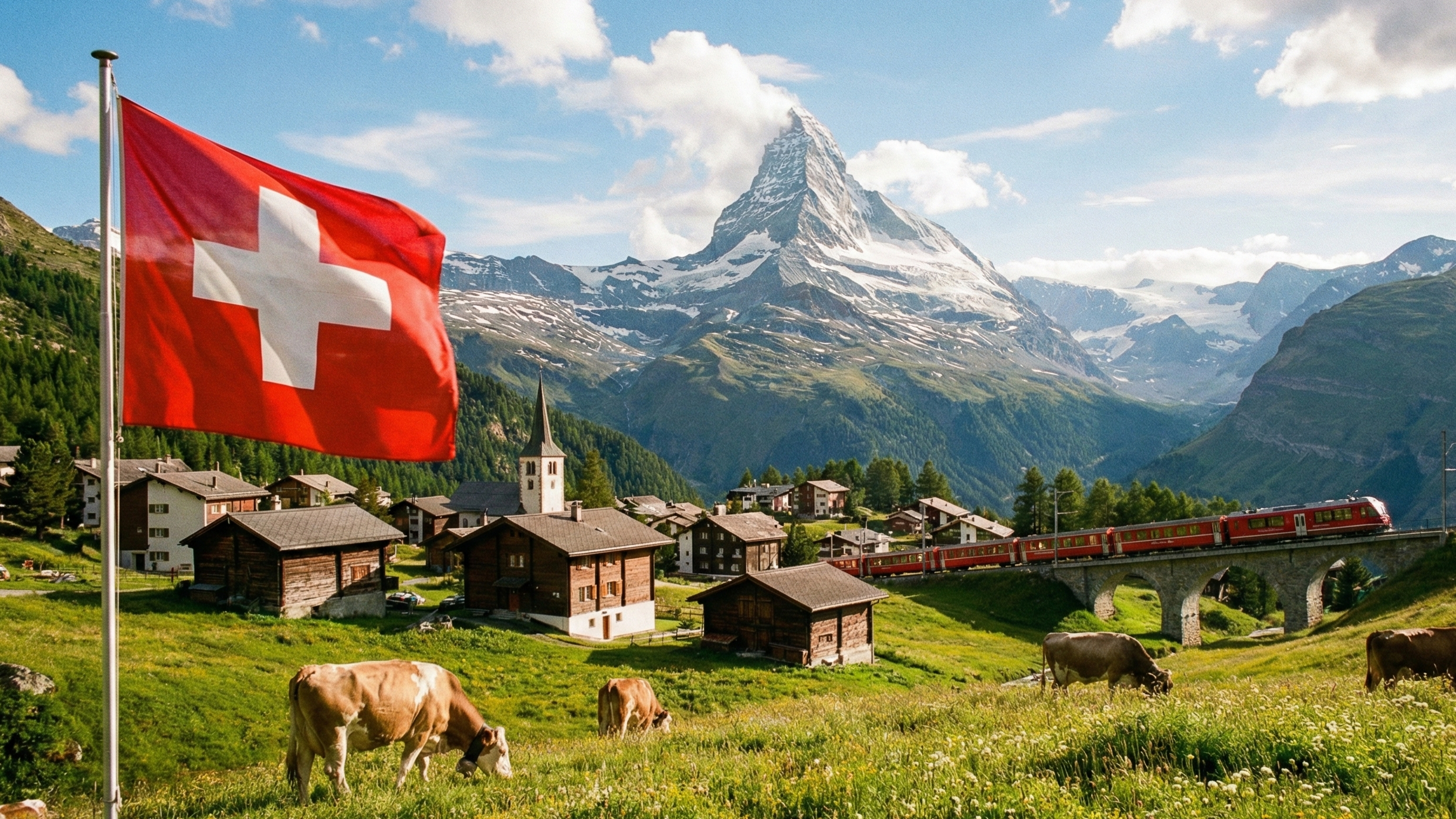
On December 11, 2025, the Swiss National Bank (SNB) announced its decision to hold its key policy rate at the expansionary level of 0.00%, a move that met market expectations and signaled continued support for domestic economic activity amid low price pressures. This decision followed the observation that headline inflation in Switzerland registered zero percent in November 2025, marking a low point for the period. The SNB, led by President Martin Schlegel, projects average annual inflation at 0.2% for 2025, rising to 0.3% in 2026 and 0.6% in 2027, assuming the policy rate remains unchanged. The central bank also signaled its readiness to actively intervene in the foreign exchange market should the strength of the Swiss franc threaten export competitiveness.

Philippines
In a policy divergence, the Bangko Sentral ng Pilipinas (BSP) implemented its fifth consecutive interest rate reduction on the same date, lowering the benchmark overnight reverse repurchase rate by 25 basis points to 4.50%, a three-year low. This aggressive easing cycle, which has cumulatively reduced borrowing costs by 200 basis points since its August start the previous year, is a direct response to a significant deceleration in economic momentum. The primary catalyst for this economic weakening is a major political and infrastructure corruption scandal that has constrained government spending and eroded both business and consumer confidence.
Third-quarter Gross Domestic Product (GDP) growth in the Philippines slowed substantially, likely registering between 4% and 5%, falling short of the government's 5.5% to 6.5% target for 2025. BSP Governor Eli Remolona Jr. stated that the rate cut is intended to support economic activity, though the easing cycle is reportedly nearing its conclusion. The central bank noted that while monetary policy offers compensatory support, fiscal measures are indispensable for fully addressing the fallout from the governance issues. Inflation remains subdued, with year-to-date inflation averaging 1.6% in 2025, remaining below the BSP's 2% to 4% target range.
The governance challenge has severely impacted public works, with government capital outlays for vital infrastructure projects diving by nearly 22% year-on-year to P84.9 billion in the period leading up to the announcement. Investigations into corruption in flood control projects alone have uncovered estimated annual losses between US$713 million and US$2 billion since 2023, with reports suggesting up to 70% of the flood budget may have been consumed by illicit activities. This systemic uncertainty prompts firms to delay investment, a risk highlighted by Capital Economics.
The contrasting policy decisions on December 11, 2025, illustrate a global divergence: the SNB navigates muted domestic inflation with a steady, expansionary stance anchored by its 2000-defined framework, while the BSP deploys aggressive easing to counteract the severe economic drag caused by institutional malfeasance.
SofokleousIn.GR
SWI swissinfo.ch
financieel.headliner.nl
Morningstar
SWI swissinfo.ch
Swiss National Bank
Trading Economics
The Business Times
SWI swissinfo.ch
SWI swissinfo.ch
FXStreet
blue News - Bluewin
Morningstar
SNB handhaaft beleidsrente op nul tot 2026; negatieve rente onwaarschijnlijk volgens economen: Reuters-enquête - Marketscreener
Monetary policy assessment of 25 September 2025 - Swiss National Bank
Zwitserse centrale bank handhaaft rente op nul - Beursgorilla
SNB Lowers Interest Rate as Expected - Trading Economics
SNB verwacht negatieve rente te vermijden ondanks daling inflatie | MarketScreener België
Dow Jones
Investing.com
GMA Network
Philstar.com
Daily Tribune
Did you find an error or inaccuracy?
We will consider your comments as soon as possible.