
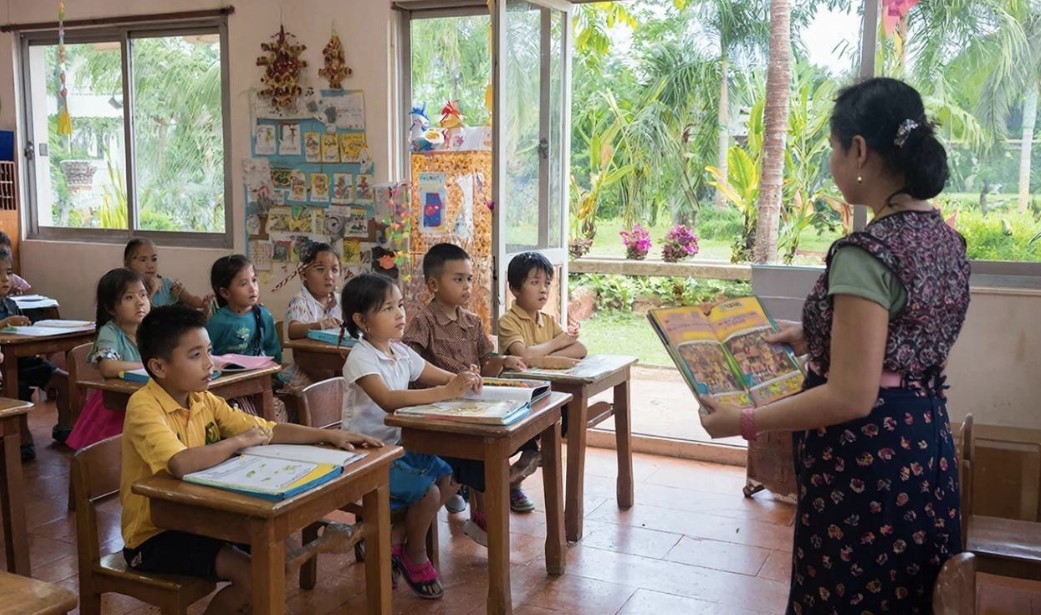
Indonesia Mandates 13-Year Compulsory Education Integrating Early Childhood Learning
Edited by: Olga Samsonova
The Indonesian Ministry of Basic and Secondary Education (Kemendikdasmen) is moving forward with the mandatory 13-Year Compulsory Education policy, known as Wajar 13 Tahun, which formally integrates one year of Early Childhood Education (PAUD) before primary schooling begins. This structural reform, slated to commence in the 2025/2026 academic year, aligns with the National Long-Term Development Plan (RPJPN) 2025–2045 objective of cultivating superior human capital. The mandated structure comprises one year of pre-school, nine years of basic education, and three years of secondary education, establishing a strategic foundation for developing globally competitive Indonesian human resources.
This policy places significant emphasis on ensuring that all children aged five to six years gain access to quality PAUD, which is considered vital for establishing cognitive, social, and emotional readiness for subsequent schooling stages. Dra. Mareta Wahyuni, M.Pd., articulated this necessity during a December 12, 2025, event hosted by the National Research and Innovation Agency (BRIN) in Jakarta. Supporting data from a 2021 Kemendikbudristek research indicated that 78 percent of children attending PAUD demonstrated superior readiness compared to only 45 percent of their counterparts without early exposure, corroborating 2020 UNICEF/Bappenas findings that rural PAUD attendees were 1.8 times more prepared for primary school.
Despite the clear developmental rationale, the 2025 implementation faces considerable logistical challenges, particularly concerning infrastructure and human resources. Kemendikdasmen data reveals a shortage of PAUD facilities, with 17,803 villages, representing 21 percent across the archipelago, currently lacking any early childhood education centers. Furthermore, a significant parity issue exists with teacher qualifications; only 50.21 percent of the nation's 3.03 million teachers in this sector hold the minimum required S1/D4 degree, and a mere 16 percent possess a teaching certificate.
The Ministry of Primary and Secondary Education has designated PAUD revitalization, including classroom construction and infrastructure improvement, as a priority to mitigate these access gaps. One proposed administrative solution involves establishing integrated PAUD-elementary schools under a single principal to oversee PAUD services while ensuring specialized preparation for educators. This push for universal access aligns with Indonesia's commitment to Target 4.2 of the Sustainable Development Goals (SDGs) 2030.
Budgetary considerations remain pertinent, as the Indonesia Smart Program (PIP) for 2026 has not yet allocated funds for PAUD recipients, despite the Ministry of Education and Culture requesting an additional Rp 52.9 trillion for ideal needs, which includes Rp 2.7 trillion specifically for the Early Childhood Education Assistance Program. The Ministry of National Development Planning (Bappenas) has detailed this acceleration of 13-year compulsory education within the Indonesian Education Roadmap 2025-2045, a key component of the broader strategy aiming to elevate Indonesia to high-income status by 2045.
12 Views
Sources
detikedu
Kemendikdasmen Ungkap Riset Anak PAUD Lebih Siap Masuk SD Dibanding NonPAUD
4 Tantangan Wajib Belajar 13 Tahun: Kurangnya Sekolah-Rendahnya Kualitas Guru
Ini Strategi Kemendikdasmen Tentang Wajib Belajar 13 Tahun - RRI
Tri Mumpuni Tegaskan Pentingnya Pendidikan Aliran Pemikiran Sejak Usia Dini untuk Bentuk Generasi Berkualitas - Pantau
Pemerintah Dorong Wajib Belajar 13 Tahun dan Pemenuhan Kualifikasi Guru PAUD-SD
Read more news on this topic:



Did you find an error or inaccuracy?
We will consider your comments as soon as possible.