


Hungary Vetoes EU General Affairs Council Conclusions on Enlargement Process
Edited by: Tatyana Hurynovich
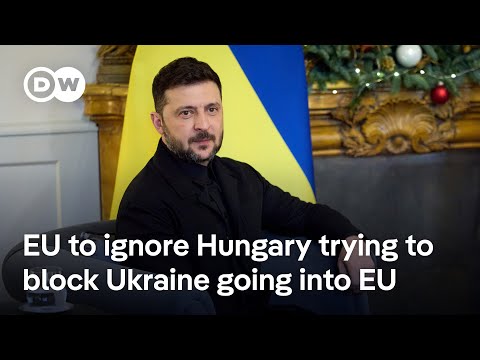
The European Union's General Affairs Council (GAC) meeting in Brussels on December 16, 2025, concluded without adopting its anticipated annual conclusions on enlargement, signaling a procedural halt to the yearly work plan for the accession process. The deadlock arose after Hungary, under the administration of Prime Minister Viktor Orban, vetoed the draft document due to its explicit opposition to including a positive assessment of Ukraine's progress toward EU membership within the same text.
In the absence of unanimity among the 27 member states, Danish Minister for European Affairs Mari Bjer, representing the rotating EU Presidency, confirmed that the draft conclusions would be recast as conclusions of the EU Presidency, endorsed solely by the 26 supportive member states. Minister Bjer expressed regret over the blockade, noting that the action sends a negative signal to candidate countries seeking Union membership. German Minister of State for Europe Gunter Krichbaum sharply criticized Budapest, characterizing the Hungarian government's conduct as "increasingly destructive" and asserting that the administration was actively "braking the EU."
Hungary justified its veto by citing Ukraine's significant post-accession financial requirements and the alleged disadvantage faced by the Hungarian minority within Ukraine. Prime Minister Orban has previously stated that Ukraine's accession could potentially "destroy the Hungarian economy." This stance contrasted with the progress noted for other partners in the draft, which welcomed Montenegro's advancements, specifically noting that 12 negotiation chapters had been provisionally closed. The European Commission's assessment from November 4, 2025, had positioned Montenegro as the most prepared country for membership.
The failure to adopt formal GAC conclusions affects the immediate annual planning for the entire enlargement portfolio, which was set to cover the six Western Balkans partners, Turkey, Moldova, and Georgia, in addition to Ukraine. Despite this procedural setback, European Commission officials indicated that the accession process for Ukraine continues at a technical level, with the country receiving guidelines on necessary reforms from the majority of member states. European Commission Commissioner for Budget Affairs Piotr Serafin expressed the expectation that technical preparatory work for negotiations with Ukraine and Moldova would proceed, alongside drafting the accession treaty for Montenegro.
This event occurred during a critical week for EU enlargement, preceding the European Council on December 18-19, 2025, where enlargement is framed as a "geostrategic investment." The situation underscores an ongoing structural tension within the EU: the geopolitical imperative to anchor post-war Ukraine to the West confronts the requirement for unanimous approval on accession milestones. The Commission’s December 2025 enlargement reports emphasized that solid, sustainable, and irreversible reforms are necessary for any aspiring country to join the bloc, a standard that the technical workaround known as 'frontloading' is attempting to facilitate for Ukraine's bid.
24 Views
Sources
vijesti.me
Outlook for the European Council meeting on 18-19 December 2025
It will be a critical week for EU enlargement in Brussels - The New Union Post
Leaders call on Orbán to remove Ukraine veto at Euronews' EU Enlargement Summit
2025 Enlargement Package shows progress towards EU membership for key enlargement partners
Zamah za proširenje visoko na listi prioriteta, poručili iz Evropske komisije u Paketu za 2025.
Read more articles on this topic:


Did you find an error or inaccuracy?We will consider your comments as soon as possible.