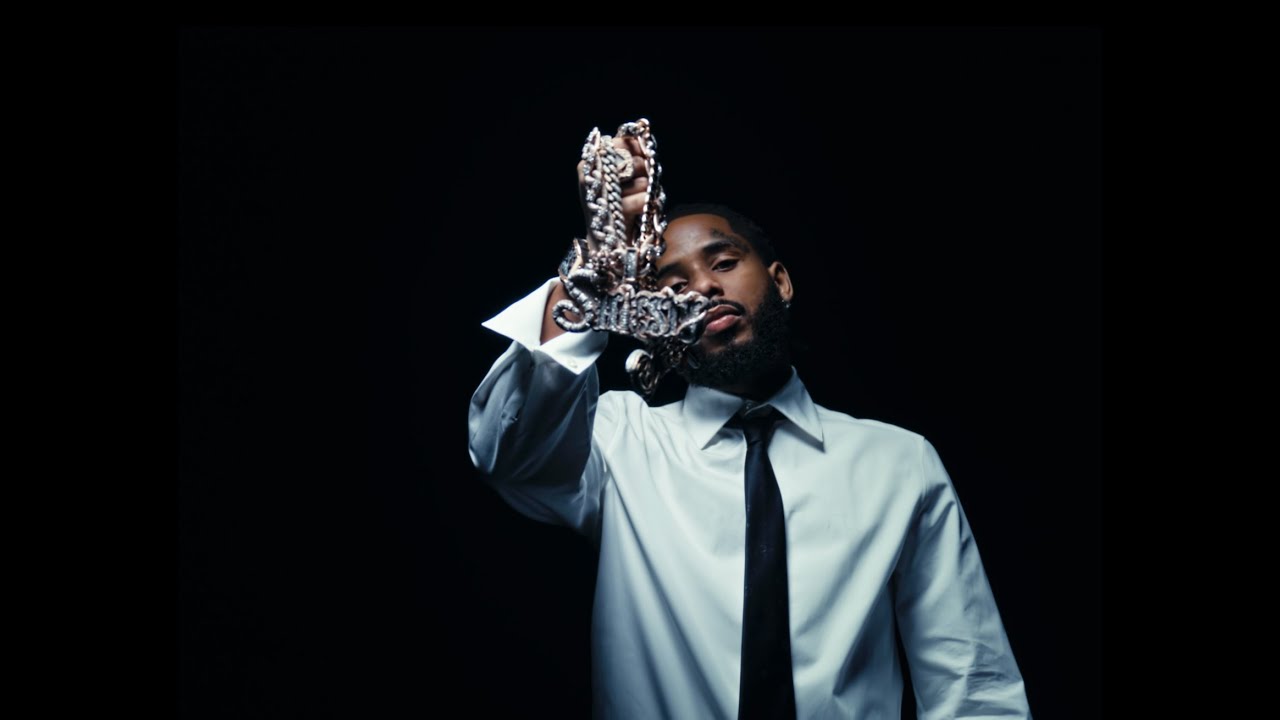
Shararat | Dhurandhar | Ranveer, Aditya Dhar, Shashwat, Jasmine, Madhubanti, Ayesha, Krystle
Share
Edited by: Inna Horoshkina One
Shararat | Dhurandhar | Ranveer, Aditya Dhar, Shashwat, Jasmine, Madhubanti, Ayesha, Krystle
Juju Productions and Saregama India Ltd. have jointly launched the global initiative known as 'Symphony Masala.' This ambitious project involves adapting iconic Bollywood compositions for performance by full-scale Western symphony orchestras. A corresponding video series is scheduled to debut on Saregama's official channel on December 14, 2025. Driven by Anuradha Juju Palakurty, the founder of Juju Productions, this cross-cultural endeavor aims to seamlessly integrate Indian melodies into Western concert halls using an accessible and portable format, thereby fostering musical harmony between cultures.
A small orchestral selection from the Symphony Masala project performed by the Budapest Scoring Orchestra, featuring Roger Kalia and Anuradha Juju — Bollywood classics in pure symphonic sound.
The foundation of this collection rests upon a unique assembly of performers and creators. Vocal duties are shared by Anuradha Juju Palakurty and Mithilesh Patankar, accompanied by the Budapest Scoring Orchestra under the baton of conductor Péter Illényi. The musical scores were meticulously crafted by an international team of arrangers, including DJ Sparr, Neville Franco, Kamlesh Bhadkamkar, Ishaan Chhabra, Bala Ji, and the late Bappi Lahiri. Final mixing and mastering were handled by sound engineer Vijay Dayal, who brings over two decades of experience, including work at YRF Studios.
A defining methodological characteristic of 'Symphony Masala' is the deliberate decision to omit traditional Indian instruments, such as the tabla or sitar, from the arrangements. This strategic choice establishes a universal performance blueprint. This design ensures that musicians globally—from student ensembles to seasoned professional orchestras—can accurately interpret the material, regardless of their prior exposure to the Bollywood genre.
This project builds upon the momentum generated by previous live performances, including showcases in 2023 and a major presentation in 2025 featuring the Chicago Sinfonietta, conducted by Roger Kalia. The involvement of Bappi Lahiri, a pioneer of Indian disco beats, in the arranging team firmly anchors the project in the golden age of Bollywood music from the 1980s and 1990s. Anuradha Palakurty, notably the first US-based artist to win a Radio Mirchi award for 'Best Independent Song,' emphasizes that the core mission was to render Indian melody approachable to Western audiences through an orchestral form rooted in profound musical respect.
There is a profound symbolism in Bollywood music, which has historically been inseparable from cinema and street soundscapes, now being presented as pure sheet music. Stripped of dance, vibrant costumes, and even the tabla and sitar, what remains is the orchestra, the notes, and the voice.
While Symphony Masala sounds experimental, it functions as a subtle revolution. Iconic melodies that defined an entire cinematic era are now transcribed for a symphony orchestra in a way that any ensemble—from a school band to a major philharmonic—can perform them. Bollywood ceases to be perceived as merely 'exotic'; it transforms into a language readily spoken in Budapest, Chicago, or any urban orchestra across Europe.
The exclusion of traditional Indian instruments is not a rejection of heritage, but rather an act of faith: the Indian melodic structure is robust enough to withstand a complete translation into the Western orchestral idiom.
The rhythmic and tonal memory of the tabla and sitar has been transferred to the percussion, strings, and brass sections. It is as if the orchestra has adopted the Bollywood timbre and declared, 'This story is now ours too.'
Key personnel underscore the project's depth. Bappi Lahiri’s participation connects Symphony Masala directly to the peak era of 1980s–1990s Bollywood disco. Furthermore, Anuradha Juju Palakurty’s voice, recognized both in India and the US, acts as a conduit, transporting this music across the ocean—from the realm of film soundtracks into the domain of classical symphonies.
The outcome is more than just a cross-cultural product; it is a new orchestral 'vessel for memory.' The very songs once heard in movie theaters and from cassette players can now resonate in academic halls, on school stages, or at festivals where the audience does not need prior knowledge of Bollywood to connect emotionally with the music.
This carries a warm message: music born from the voice of one cinematic language is becoming material for a shared symphonic speech, granting these celebrated melodies a passport for global citizenship.
Considering Beethoven’s assertion that music’s purpose is to convey the inexpressible and bring people closer, this project embodies that principle. The same Bollywood themes experienced by millions in theaters and on the streets are now entering the acoustics of philharmonic halls, subtly shrinking the perceived distance between cultural groups.
Ultimately, Symphony Masala builds another bridge in the world's soundscape—not just between genres, but between the memories of nations. If Mozart aimed for music to 'delight some and move many,' this project achieves precisely that: for some, it will be beautiful orchestral music; for others, it will be an unexpected feeling of home within a European venue. Both experiences are valid interpretations of the same composition.
NewsDrum
Devdiscourse
Hindustan Times
Hindustan Times
Visconti Arts Management Company
247tickets.com
INDIA New England News
Hindustan Times
Vertex AI Search
The Indian EYE
INDIA New England News
Did you find an error or inaccuracy?
We will consider your comments as soon as possible.