
Dry Cleaning's Quiet Manifesto: A Call for Growth in 'Let Me Grow'
Edited by: Inna Horoshkina One
In an era where music increasingly resides within digital streams and algorithmic curation, the band Dry Cleaning delivers something far more resonant than a simple hit single—they offer a profound state of being. Their latest offering, “Let Me Grow and You’ll See The Fruit,” functions as an appeal not only from an individual caught in the grip of hyperfocus and isolation but also from the music itself: grant me the requisite time, the necessary space, allow me the chance to mature.
The group, long recognized for their sharp, almost abrasive angularity, has suddenly introduced significant voids and breathing room into their latest track. Within these deliberate gaps, one can perceive a fundamental shift in the very architecture of their rock sound. The emphasis moves away from blunt impact toward sustained presence. Posturing yields to genuine candor, and the volume of the shout lowers, replaced instead by an attentive, almost whispered introspection directed inward.
Factually speaking, the details are straightforward and almost conventional. Their third studio album, titled Secret Love, is slated for release on January 9, 2026, via the 4AD label. This record follows their previous efforts, New Long Leg and Stumpwork—the latter notably earning the band a Grammy award for its packaging design. However, beneath this familiar framework lies a distinct pivot. Compared to the customary sharp edges and relentless guitar pressure, “Let Me Grow…” adopts a more measured tone. The music deliberately recedes slightly to create room for Florence Shaw’s vocals. Shaw herself characterizes the lyrics as a stream-of-consciousness diary entry, exploring themes of hyperfocus and solitude—less a public declaration and more the intimate internal monologue of someone acutely aware of their own thoughts.
The change in production personnel is palpable, feeling almost like a complete shift in perspective. Long-time collaborator John Parish has stepped aside, replaced by the Welsh musician Cate Le Bon, known for her work with acts like Wilco and Deerhunter. The album’s components were assembled piecemeal: initial jam sessions took place at Jeff Tweedy’s The Loft in Chicago. Further sessions occurred at Dublin’s Sonic Studios, involving Alan Duggan and Daniel Fox from Gilla Band. The final recordings were completed at the Black Box farm nestled in France’s Loire Valley. This eclectic process ultimately steers Dry Cleaning’s post-punk aesthetic toward an intersection where early 1980s American punk, stoner rock elements, and no-wave converge into a peculiar yet cohesive sonic geometry. Shaw’s spoken-word delivery evolves from a stylistic quirk into the very nervous system of the entire record.
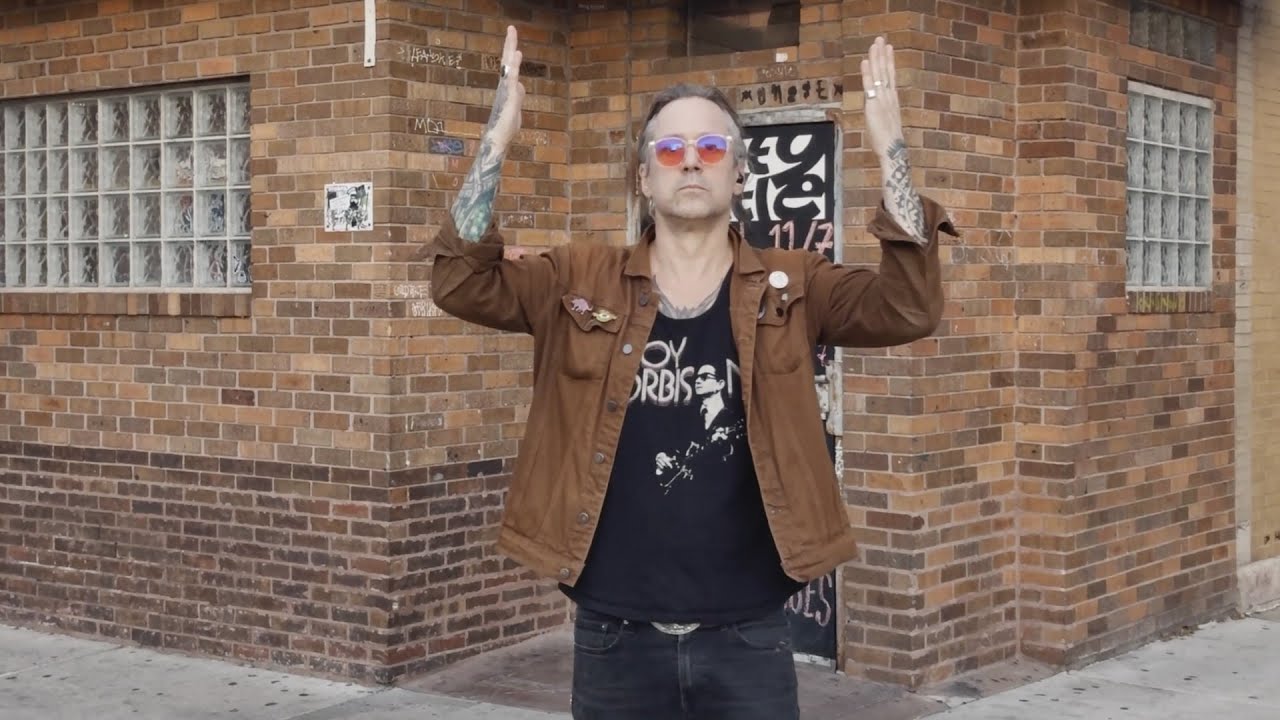
In the music video for “Let Me Grow and You’ll See The Fruit,” this internal process is physically manifested. The choreographic duo BULLYACHE translates the song into a cycle of movement, while Chicago-based musician Bruce Lamont—whose saxophone breath is audible on the track—dances as if every bodily tremor is intrinsically linked to every musical note. This visual presentation eschews the polished aesthetic of typical post-punk videos. Instead, it attempts to illustrate that growth is not merely an abstract concept but a physical exertion, demanding constant, minute adjustments to one’s footing.
Admittedly, the backdrop includes “hostile economic forces” that complicate touring schedules and make reaching the stage more challenging. Yet, within the grand scheme of global turbulence, these obstacles represent mere environmental friction. What truly matters is the music’s persistent insistence on the right to develop organically, rather than being pressured solely toward immediate burnout or guaranteed profitability.
The contribution this specific song makes to the current musical landscape can be summarized quite plainly. While many contemporary tracks strive for instant gratification, “Let Me Grow and You’ll See The Fruit” introduces a vital counter-melody to the prevailing chorus: not every piece of art is required to succeed immediately. Sometimes, music enters the world simply to state calmly: I am here, I am developing—pay attention not to the noise I generate, but to the results I eventually bear.
7 Views
Sources
Far Out Magazine
Wikipedia
Indie is not a genre
The Needle Drop
Our Culture Mag
Indie is not a genre
Read more news on this topic:


Did you find an error or inaccuracy?
We will consider your comments as soon as possible.