


Kenya Secures Landmark $2.5 Billion US Health Cooperation Framework, Setting Global Precedent
Edited by: Svetlana Velgush
On December 4, 2025, the Republic of Kenya achieved a historic milestone, becoming the first African nation to finalize a bilateral Health Cooperation Framework Agreement with the United States government. This development marks a significant pivot point for American global health assistance, as Kenya stands as the inaugural country worldwide to enter into this novel type of accord.
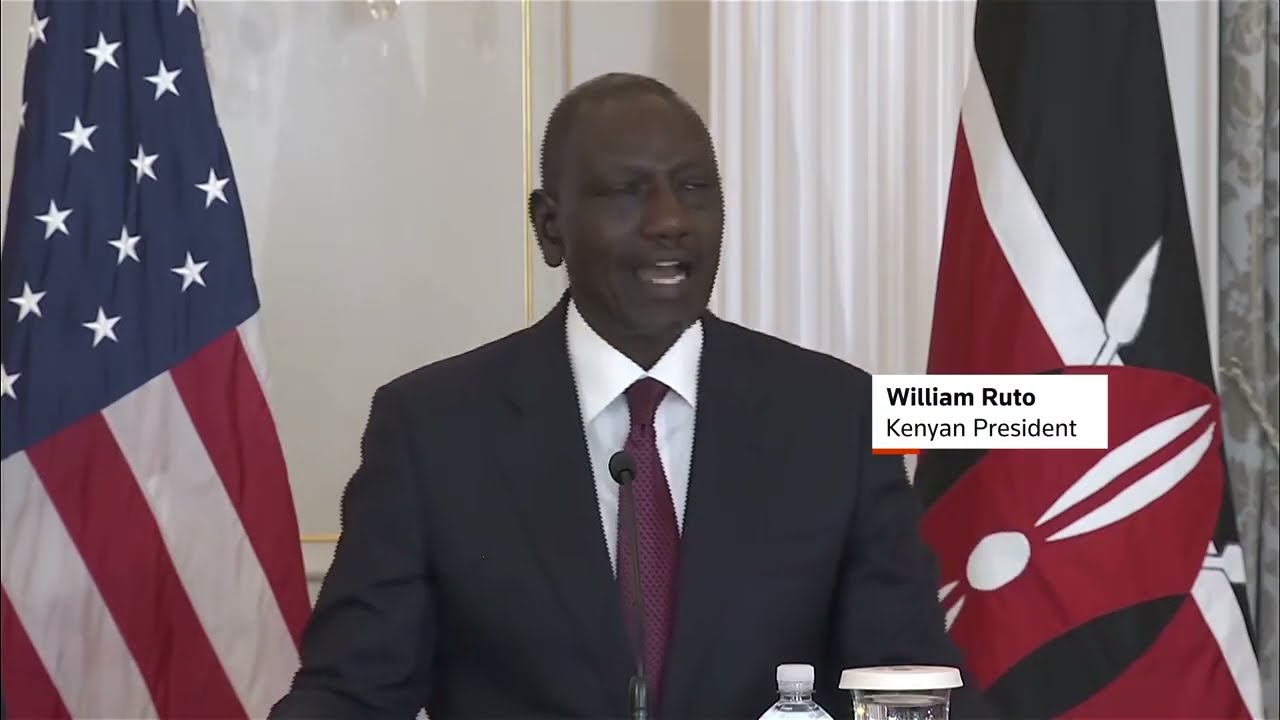
The formal signing ceremony took place in Washington, D.C. The pivotal document was executed by U.S. Secretary of State Marco Rubio—who secured Senate confirmation on January 20, 2025, via a unanimous 99-to-0 vote—and Kenyan President Dr. William S. Ruto. This comprehensive agreement spans a five-year duration and carries a total valuation of $2.5 billion. Crucially, it supersedes previous health governance mechanisms that were previously managed under the now-defunct U.S. Agency for International Development (USAID).
Under the terms of this memorandum, the United States has committed to channeling up to $1.6 billion over the five-year period to bolster core Kenyan health initiatives. These funds are earmarked for critical areas, including the ongoing fight against HIV/AIDS, tuberculosis (TB), and malaria, alongside efforts to enhance maternal and child health outcomes and eradicate polio. Furthermore, the investment aims to strengthen disease surveillance systems and overall outbreak preparedness. In a reciprocal commitment, the Kenyan government has pledged to increase its domestic health expenditure by $850 million within the same timeframe, signaling a strong willingness to assume greater financial stewardship.
The foundation of this Framework Program rests upon a government-to-government model. This structure mandates the direct channeling of funds into Kenyan state institutions. The objective behind this approach is twofold: to elevate operational efficiency and accountability, while simultaneously reinforcing national sovereignty over health matters by decreasing reliance on external non-governmental organizations (NGOs). Kenya’s Cabinet Secretary for Health, Aden Duale, confirmed that the requisite documentation pertaining to this agreement would soon be presented before Parliament for ratification.
Secretary Rubio emphasized that the agreement with Kenya serves as the vanguard for fifty similar bilateral pacts planned under the “America First Global Health Strategy.” This strategy, unveiled by the State Department on September 18, 2025, prioritizes strategic alliances with established partners and is explicitly designed to counter growing Chinese influence across the African continent. The deal also formally acknowledges Kenya’s vital role as a key U.S. ally, recognizing contributions such as its participation in international stabilization forces deployed in Haiti.
President Ruto characterized the accord as a monumental stride toward modernizing Kenya’s hospital infrastructure, workforce development, and national insurance schemes. The program outlines a phased transition for pharmaceutical procurement and the integration of medical personnel onto the Kenyan government payroll. Additionally, it champions the nationwide deployment of electronic health record systems. Kenya’s Head of Public Service, Musalia Mudavadi, was also present for the signing ceremony in Washington. This shift toward direct governmental oversight is expected to restore predictability and fortify national command over essential health programming.
Valued at an estimated equivalent of 208 billion Kenyan Shillings, the agreement underscores a significant departure from conventional donor-centric aid models, moving instead toward a paradigm of co-investment and mutual accountability. Deputy Secretary of State for Foreign Assistance, Humanitarian Assistance, and Religious Freedom, Jeremy P. Levin, stated that every dollar allocated must demonstrate clear justification in terms of American diplomacy and nation-building objectives. Meanwhile, Kenya’s Ministry of Health proactively addressed public concerns regarding data privacy, asserting that the agreement guarantees Kenya’s full ownership over its data, requiring the sharing of only aggregated information.
38 Views
Sources
Le Monde.fr
UNAIDS
U.S. Department of State
Kenyans
Marco Rubio - Wikipedia
Africa Confidential
Read more news on this topic:


Did you find an error or inaccuracy?We will consider your comments as soon as possible.