
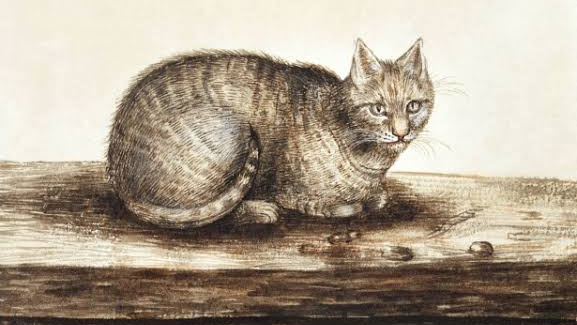
New Genetic Study Reveals Domestic Cats Arrived in Europe Far Later Than Previously Thought
Edited by: Katerina S.
A comprehensive genetic investigation is fundamentally reshaping long-held beliefs regarding the timeline of domestic cat arrival on the European continent. Researchers Ottoni and De Martino have published findings in the journal Science indicating that these animals only established themselves in Europe approximately 2,000 years ago. This dating places their arrival thousands of years later than earlier estimates suggested. This revised chronology shifts the historical focus away from the initial Neolithic migrations and points toward more recent historical periods, closely linked to the expansion of Mediterranean trade networks.
The previously prevailing hypothesis suggested that cats accompanied the first wave of farmers migrating from Anatolia roughly 6,000 to 7,000 years ago. However, the analysis of complete nuclear genomes has definitively refuted this model. Scholars, including Professor Greger Larson, an archaeology expert at Oxford University, point out that earlier conclusions often relied heavily on mitochondrial DNA analysis. Since mitochondrial DNA is inherited solely through the maternal line, it could have provided a skewed picture of the overall dispersal pattern. The new genetic evidence strongly suggests that the ancestors of today's domestic cats originated in North Africa, rather than the Levant, which was a key assumption in several older theories.
To reach this conclusion, the research team meticulously examined 225 feline remains sourced from 97 different archaeological sites spanning Europe and the Near East. Furthermore, they successfully sequenced 70 ancient genomes for direct comparison against the DNA of contemporary cats. The study established that the earliest genomes matching modern domestic cats appear in Europe during the zenith of the Roman Empire. This timing aligns perfectly with the peak period of active maritime commerce. This correlation strongly implies that Roman sailors and traders, perhaps transporting vital goods like Egyptian grain, were instrumental in spreading these animals across continental ports. Cats would have been invaluable for controlling rodent populations aboard ships and within storage facilities.
A significant challenge in accurately classifying ancient feline remains lies in the fact that the skeletal structures of wild and domestic members of the Felis genus are often morphologically indistinguishable. Earlier discoveries previously attributed to domestic cats—such as a skeleton found in Cyprus dated to about 9,500 years ago—are now more likely to belong to wildcats (Felis silvestris). These wild populations appear to have interbred with the African wildcat (F. lybica lybica). The analysis demonstrated that Neolithic wildcats from Asia Minor contained between 24 and 34 percent genetic admixture from F. catus or its direct ancestors, indicating interbreeding occurred before the mass introduction of fully domesticated individuals.
The true genetic signature characteristic of modern cats only becomes firmly established in European samples starting from the first century CE. The narrative of domestication itself likely began in North Africa, often termed the 'Egyptian phenomenon,' where a crucial shift in taming behavior occurred approximately 3,500 to 4,000 years ago. Unlike horses, the selection process for cats initially focused almost exclusively on behavioral traits rather than physical characteristics. The research team, operating under the umbrella of the Felix project and led by Claudio Ottoni, intends to continue its investigations. Their future work will concentrate on tracing migration routes more precisely across the territories of Italy, Greece, and Turkey.
9 Views
Sources
Telepolis
Archaeology Magazine
American Association for the Advancement of Science (AAAS)
The Times of India
ZME Science
New Scientist
Read more news on this topic:


Did you find an error or inaccuracy?
We will consider your comments as soon as possible.