
Preserving Sfyria: The Unique Whistled Language of the Greek Village of Antia
Edited by: Vera Mo
Linguists are currently engaged in vital research aimed at safeguarding Sfyria, a rare whistled language spoken exclusively in Antia, a small village situated on the Greek island of Evia in the Aegean Sea. This unique mode of communication, which relies entirely on whistles that mimic the sounds of modern Greek, is actively maintained by only a handful of the community's elderly residents. Due to its acoustic properties, messages conveyed through Sfyria can travel up to 4 kilometers, a distance far exceeding the range of conventional human speech.
Every distinct sound within Sfyria corresponds precisely to a single letter of the Greek alphabet. The sequence of these whistles then constructs words and meaningful phrases. Linguist Dimitris Chengkes describes Sfyria as essentially a whistled transcription of the Greek language, where every linguistic element is transformed into a specific tonal pattern. Historically, this system was passed down through generations of Antia's shepherds and farmers over centuries, strongly suggesting a deep connection to their agrarian way of life. While the precise origins of the language remain a subject of scholarly debate, some theories link its inception to ancient Greek and musical expression forms dating back more than 2,500 years.
One compelling hypothesis, highlighted in reports by PBS NewsHour, posits that Sfyria may have been developed by Persians defeated at the Battle of Salamis in 480 BCE. These defeated forces, stranded on the shores of Evia, allegedly used the language for covert communication. The global spotlight first fell upon Sfyria in 1969 following an airplane crash in the mountains near Antia. During the rescue efforts, authorities witnessed the language being used as shepherds exchanged information via whistles. Despite its undeniable cultural significance, the language faces a critical threat of extinction as the number of fluent speakers dwindles and the village population ages.
Reports indicate that in Antia, which has a total population of approximately 37 residents, fewer than six individuals can speak Sfyria fluently. Furthermore, around 25 older residents struggle to produce the necessary whistles due to the use of dental prosthetics. A significant step toward preservation occurred in 2019 when Sfyria was officially inscribed on the National Register of Intangible Cultural Heritage of Greece, marking a crucial move for its protection.
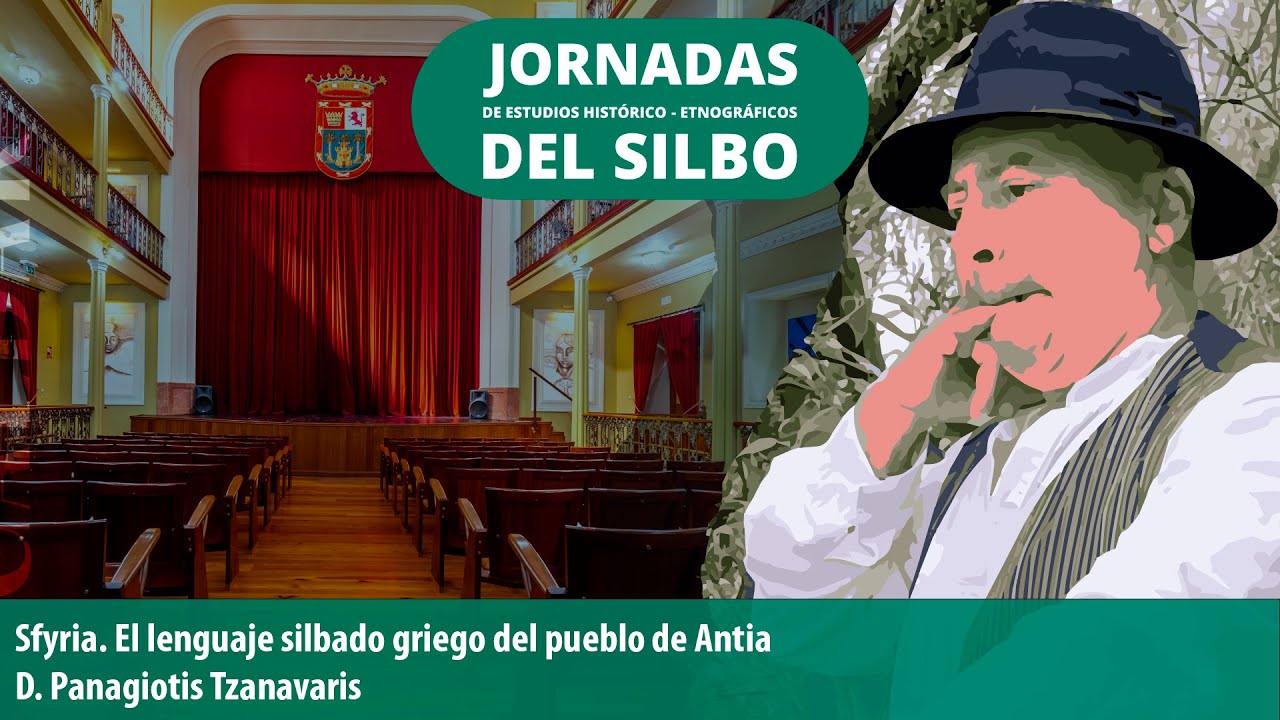
Panagiotis Tsanvaris, President of the Cultural Association of Antia, is actively championing Sfyria. He travels across Greece, visiting schools to introduce this linguistic phenomenon to younger generations. The very isolation that helped preserve the language is evident in the village's infrastructure history: roads, water supply, and electricity only arrived thirty years ago, and the first telephone in the village center was installed as late as 1997. This contrasts sharply with Silbo Gomero, the whistled language from the Canary Islands, which was recognized by UNESCO as Intangible Cultural Heritage in 2009 and adapted to Spanish. This distinction underscores Sfyria's unique status as the only known whistled transcription specifically of the Greek language.
9 Views
Sources
omegalive.com.cy
Κέντρο Ελληνικής Γλώσσας
Συνείδηση
Google Search
YouTube
Read more news on this topic:


Did you find an error or inaccuracy?
We will consider your comments as soon as possible.