


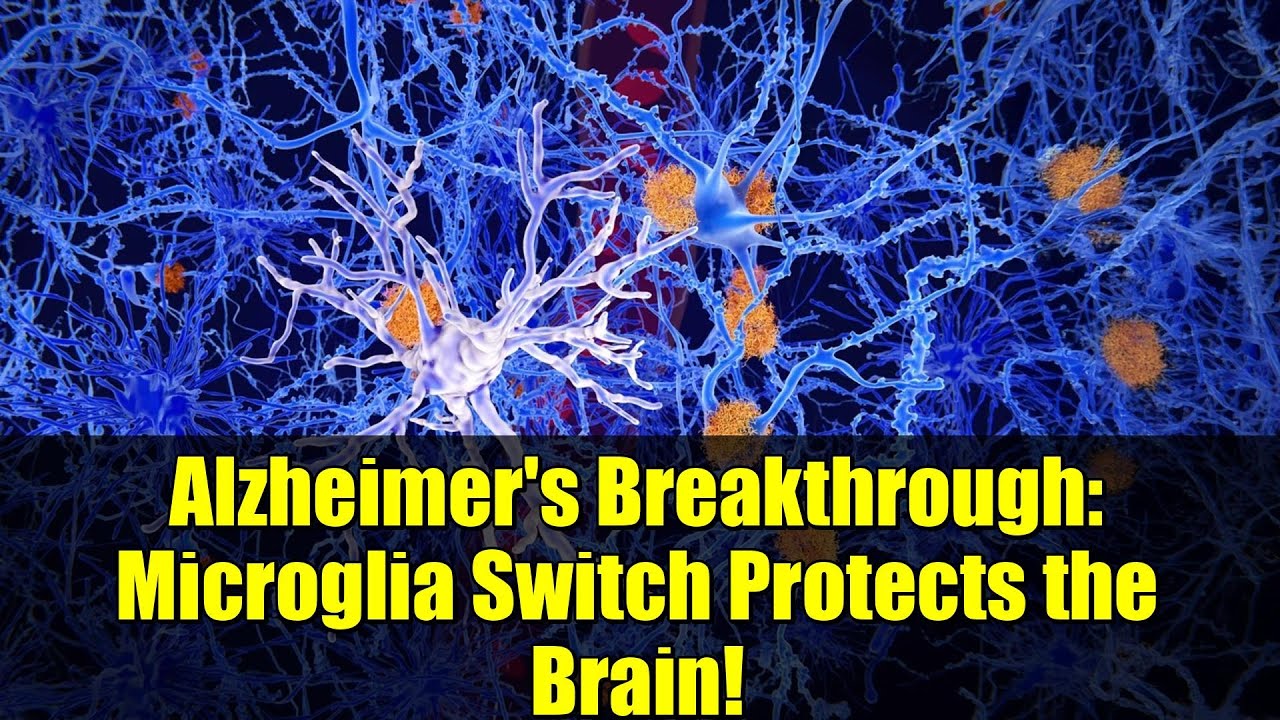
Molecular Switch in Microglia Unlocks Potential New Avenue for Alzheimer's Therapy
Edited by: Maria Sagir
An international consortium of researchers has pinpointed a novel therapeutic target for combating the pathology associated with Alzheimer's disease, as detailed in a significant paper published in the journal Nature on November 5, 2025. The core of this breakthrough lies in identifying a specific molecular pathway capable of reprogramming a subset of the brain's resident immune cells, known as microglia, into a neuroprotective state that actively counters the hallmark features of the debilitating condition.

PU.1-low/CD28+ microglia phenotype effectively restrains amyloid plaques and the spread of tau protein
The comprehensive investigation employed a multifaceted methodology, integrating data from mouse models engineered to exhibit Alzheimer's disease, in vitro studies using cultured human cells, and direct analysis of post-mortem human brain tissue samples. The critical mechanism driving this cellular transformation centers on the microglial phenotype. Upon encountering amyloid-beta proteins, these cells shift to a state characterized by reduced expression of the transcription factor PU.1, coupled with the co-expression of the receptor CD28. This specific profile—termed PU.1-low, CD28-positive—demonstrated remarkable efficacy in inhibiting the aggregation of amyloid plaques and halting the onward spread of toxic tau protein accumulation.
While prior genetic studies had already suggested a correlation between lower PU.1 levels and a diminished risk of developing Alzheimer's in human populations, this current work provides the first definitive molecular explanation for this protective association. The research effort drew upon expertise from several distinguished institutions, including the Max Planck Institute for the Biochemistry of Ageing, the Icahn School of Medicine at Mount Sinai, and Rockefeller University. Among the leading figures driving this discovery were Professor Alison Goate, epigeneticist Alexander Tarakhovsky, and Dr. Anne Schaefer.
Experimental validation underscored the vital protective role of this mechanism. When the synthesis of CD28 was artificially suppressed in laboratory settings, the beneficial microglial populations vanished. This absence led directly to a sharp escalation in neuroinflammation and a corresponding acceleration in amyloid deposit growth. This result firmly establishes that the CD28 receptor is indispensable for the beneficial properties exhibited by this particular microglial subtype. Dr. Schaefer emphasized that microglia possess inherent plasticity, allowing them to function as crucial defenders of the brain, while Professor Goate noted that these findings offer a mechanistic foundation linking reduced PU.1 levels to lower Alzheimer's susceptibility.
Microglia, which constitute approximately 10 percent of all cells within the central nervous system, have historically been primarily viewed through the lens of exacerbating neurodegeneration via inflammatory responses. This new discovery fundamentally shifts that perspective, highlighting their inherent capacity for self-regulation and defense. It opens the door to developing novel treatments for this pervasive public health challenge based on immune modulation. Understanding precisely how microglia transition between detrimental and beneficial functional modes represents the next crucial step in translating these laboratory insights into tangible clinical applications.
39 Views
Sources
Иновативност
Mount Sinai
The Rockefeller University
Icahn School of Medicine at Mount Sinai
BioWorld
CECAD Cologne
Read more news on this topic:


Did you find an error or inaccuracy?We will consider your comments as soon as possible.