

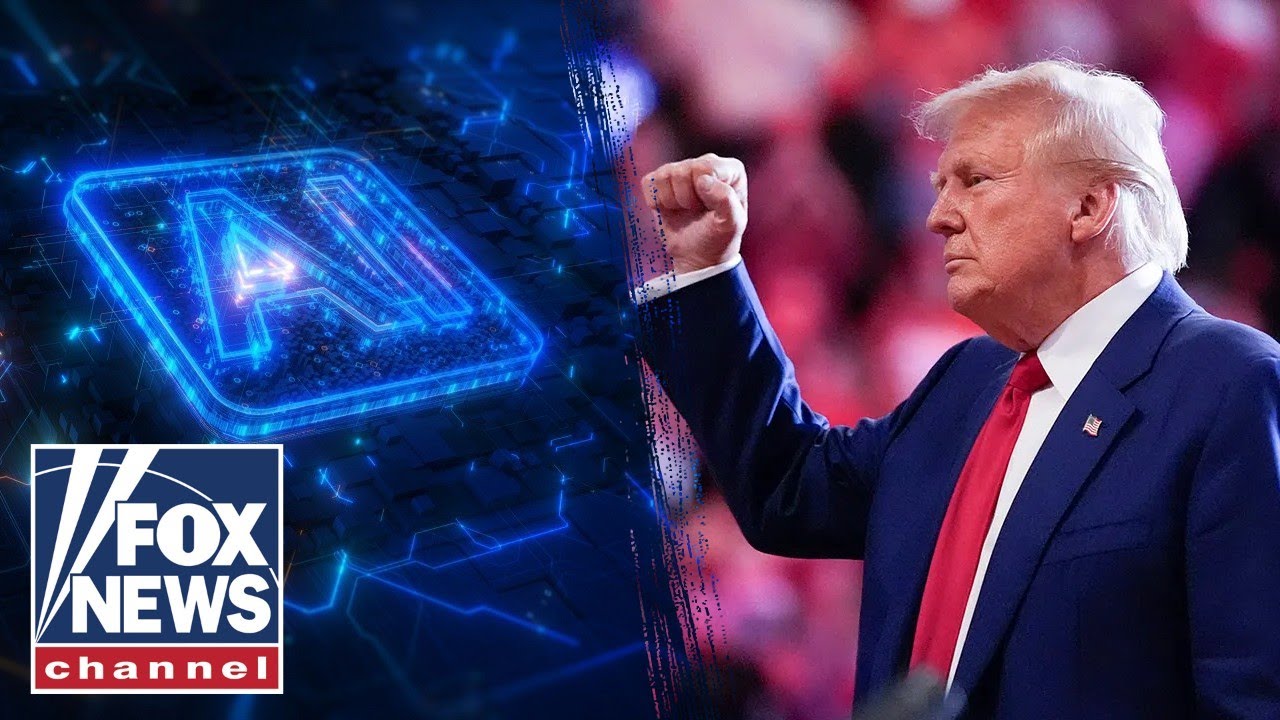
President Trump Preempts State AI Regulations with Executive Order
Edited by: gaya ❤️ one
On Thursday, December 11, 2025, President Donald Trump signed an executive order designed to prevent the development of independent, state-level regulations governing artificial intelligence technologies. The directive, titled “Ensuring a National Policy Framework for Artificial Intelligence,” establishes a unified federal approach, asserting that a fragmented regulatory environment across states hinders the United States' strategic goal of achieving global leadership in the AI sector. This action reinforces the White House’s stated industry-supportive stance on emerging technology governance by prioritizing a singular national standard over diverse local compliance regimes.
The order immediately directed the Department of Justice to initiate legal challenges against any state legislation found to conflict with the federal mandate for a minimally burdensome regulatory environment. To implement this, the order mandated the creation of an “AI Litigation Task Force” within the Justice Department, granting it the sole responsibility for contesting these state statutes. Furthermore, the directive instructed federal agencies to assess the feasibility of withholding federal financial assistance, including non-deployment Broadband Equity Access and Deployment (BEAD) program funds, from jurisdictions that adopt restrictive AI laws.
Commerce Secretary was specifically tasked with identifying state laws that conflict with national AI policy priorities, with potential targets including regulations that might compel AI models to alter their truthful outputs. This federal assertion extends the Trump Administration’s broader AI Action Plan, initially released in July 2025, which focused on removing regulatory obstacles to American technological leadership. President Trump stated that a singular national standard is essential for maintaining competitiveness against international rivals, such as China, arguing that requiring developers to secure fifty distinct state approvals creates an untenable barrier to investment.
David Sacks, the White House AI and Crypto Czar, clarified that the administration’s legal efforts would target the most onerous state regulations, while explicitly noting that child safety measures would not be opposed. Sacks, appointed to guide policy in AI and cryptocurrency, is described as a liaison between Silicon Valley and Washington, advising on innovation policy based on his technology experience. At the time of the signing, several states, including California, Colorado, Utah, and Texas, had already enacted legislation covering aspects like transparency requirements and algorithmic discrimination risk assessments, with the Colorado statute specifically cited as a probable subject of federal legal action.
This federal assertion of authority follows failed legislative attempts in Congress during July 2025 to formalize the preemption of state AI laws through measures like an amendment to the One Big Beautiful Bill Act. Reaction to the order showed a clear division among stakeholders. Industry organizations, such as NetChoice, issued statements supporting the move, contending that a unified federal standard is necessary to avoid bureaucratic entanglement that could impede the nation's competitive standing. Conversely, some Republican figures voiced opposition, citing traditional support for states' rights and concerns regarding potential adverse effects on public safety measures, including child protection.
Legal scholars have observed that the administration’s strategy will likely face significant judicial scrutiny regarding the constitutional division of authority between federal and state governments. Concurrently, the administration is directing technology advisors to draft new legislation aimed at formally establishing Congressional preemption over state AI laws. The BEAD program, which allocates $42.45 billion for high-speed internet expansion, represents a key funding mechanism the Commerce Department can utilize to enforce this uniformity, as its funds are designated to connect Americans to high-speed internet access.
24 Views
Sources
Stirile ProTV
The Guardian
CBS News
The Washington Post
Nextgov/FCW
The White House
Read more news on this topic:


Did you find an error or inaccuracy?We will consider your comments as soon as possible.