


Uber and Rivian Forge $1.25 Billion Strategic Alliance to Deploy Massive Robotaxi Fleet by 2031
Edited by: Tatyana Hurynovich
Uber Technologies has solidified a landmark strategic partnership with electric vehicle manufacturer Rivian Automotive, signaling a massive shift in the future of autonomous ride-hailing. Under the terms of this agreement, Uber has committed to investing as much as $1.25 billion into Rivian through the year 2031. This capital infusion is designed to facilitate the integration of up to 50,000 Rivian R2 SUVs into Uber’s network as fully autonomous robotaxis. The deal begins with a firm commitment to purchase 10,000 of these R2 vehicles, while Uber and its various fleet partners retain the option to acquire an additional 40,000 units beginning in 2030.
The rollout of these autonomous vehicles is scheduled to begin commercially in 2028, with initial operations launching in San Francisco and Miami. Following this debut, the companies plan to scale the service across 25 major cities throughout the United States, Canada, and Europe by the end of 2031. Financially, the agreement includes an immediate $300 million payment from Uber once the contract is signed and regulatory approvals are secured. The remaining portion of the $1.25 billion investment is contingent upon Rivian meeting specific performance milestones related to autonomous driving capabilities by predetermined dates. Rivian CEO RJ Scaringe emphasized that this collaboration will significantly accelerate the company’s progress toward achieving Level 4 autonomy, which is essential for building a safe and seamless autonomous transport platform.
This move reflects Uber’s broader strategy to diversify its autonomous vehicle suppliers rather than relying on internal development, a path the company abandoned in 2020. Uber CEO Dara Khosrowshahi pointed to Rivian’s vertical integration—which encompasses the vehicle design, computing platform, and software stack—as a primary reason for Uber’s confidence in the partnership. Furthermore, Rivian’s established manufacturing footprint within the United States provides a stable foundation for scaling. This new alliance does not replace but rather complements Uber’s existing relationships with other industry leaders like Waymo, Amazon’s Zoox, and Lucid Motors, cementing Uber’s role as the primary demand engine for the burgeoning robotaxi era.
However, the announcement comes amid heightened scrutiny of Uber’s operations and legislative influence in California. The non-profit organization Consumer Watchdog recently released a report detailing concerns over a 2026 ballot initiative being championed by Uber. Critics argue that the proposed measure is a strategic attempt by the company to limit its legal liability for injuries resulting from accidents involving its autonomous fleet. These observers point to Uber’s historical track record in the state as a reason for caution, suggesting that the company is prioritizing corporate protection over public safety as it transitions toward a driverless model.
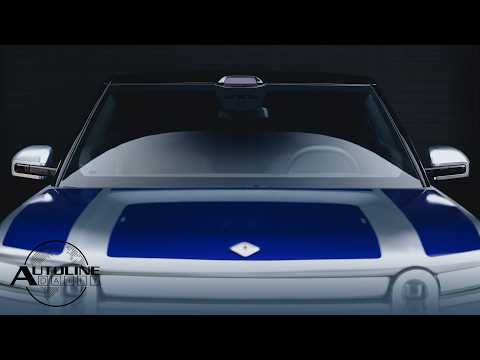
From Rivian’s perspective, the R2 model represents a pivotal moment for the company’s manufacturing scalability. Built on a new unified platform, the R2 is designed to be more compact and affordable than the larger R1S, with a price point ranging between $45,000 and $57,990. To achieve the necessary Level 4 autonomy, Rivian is outfitting the R2 with a sophisticated hardware suite consisting of 11 cameras, five radar units, and a single lidar sensor. Powering these systems are RAP1 chips capable of delivering approximately 1600 TOPS of computing power. Despite these technological advancements, California DMV records from late 2025 indicate that the R2 has not yet logged any official autonomous testing miles on public roads in the state.
The partnership underscores a significant bet on the future of urban mobility, where electric and autonomous technologies converge. By securing a massive fleet of R2 vehicles, Uber is positioning itself to maintain its market dominance while reducing its dependence on human drivers. For Rivian, the deal provides a guaranteed customer and a massive data-gathering opportunity that could prove invaluable in refining its self-driving algorithms. As the 2028 launch date approaches, the industry will be watching closely to see if this billion-dollar gamble can overcome the technical and regulatory hurdles that have slowed autonomous adoption in the past.
3 Views
Sources
Olhar Digital - O futuro passa primeiro aqui
WardsAuto
electrive.com
Electrek
Business Insider
Rivian Newsroom
Read more news on this topic:


Did you find an error or inaccuracy?We will consider your comments as soon as possible.