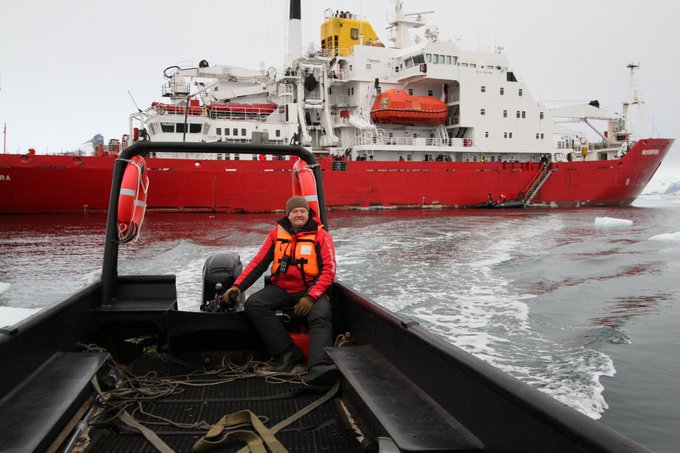
Near the Thwaites Glacier in Antarctica, hundreds of previously unidentified 'glacial earthquakes' were discovered.
Antarctica has emerged as a hotspot for increased geophysical activity, particularly concentrated around the Thwaites Glacier. This massive ice formation is frequently dubbed the "Doomsday Glacier" due to its critical influence on global sea level dynamics. A detailed geophysical analysis covering the period from 2010 through 2023 uncovered more than 360 glacial earthquakes. Strikingly, approximately two-thirds of these seismic events were registered near the marine edge of the Thwaites Glacier itself. The sheer magnitude of some of these tremors rivals the power generated by nuclear tests conducted by North Korea over the past two decades.
Sentinel-1 monitoring Antarctica
Thwaites Ice Shelf, 2017-2025 timelapse.
One of the biggest ice shelves in West Antarctica, though it is highly unstable and disintegrating rapidly.
Glacial earthquakes differ fundamentally from tectonic ones. They are triggered when substantial icebergs calve or overturn into the ocean, creating powerful, low-frequency vibrations upon impact with the main ice mass. The most intense phase of seismic recording, spanning 2018 to 2020, coincided precisely with satellite observations showing an acceleration in the flow rate of the Thwaites ice tongue as it advanced toward the open ocean. This correlation lends strong support to the hypothesis that the glacier's instability is primarily driven by oceanic conditions rather than solely by atmospheric temperature fluctuations. This finding has significant implications for sea-level rise projections extending toward 2025.
The Thwaites Glacier is an immense feature, comparable in size to the United Kingdom or the state of Florida. It currently contributes approximately 4% to the ongoing rise of the World Ocean level, shedding roughly 50 billion tons of ice annually. Scientists involved in the International Thwaites Glacier Collaboration (ITGC), which runs from 2018 through 2025, emphasize the urgent need for continued research to refine the timelines for potential future collapse scenarios.
Beyond the main cluster of seismic events centered at Thwaites, a secondary, though smaller, concentration of activity was detected near the Pine Island Glacier. However, these tremors occurred at a distance of 60 to 80 kilometers from the coastline. This geographical separation makes a direct link to iceberg overturning events unlikely, leaving the precise origin of these secondary quakes open for further scientific investigation.
The detection of hundreds of these glacial earthquakes in Antarctica—events that global monitoring networks previously missed due to their lack of high-frequency components—opens exciting new avenues for tracking the behavior of ice sheets. Data published in Geophysical Research Letters highlights that mechanical wear occurring at the points where ice contacts the seabed might be an underestimated factor in current climate models. Ultimately, efforts focused on mitigating climate change impacts, specifically decarbonization strategies, remain the paramount factor in delaying further ice loss across the Antarctic marine sectors.