


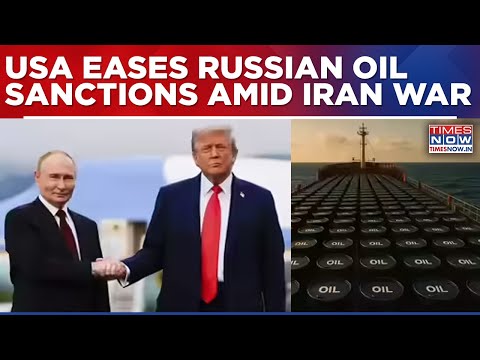
US Treasury Temporarily Eases Russian Oil Sanctions Amid Hormuz Strait Energy Crisis
Edited by: Tatyana Hurynovich
On Thursday, March 12, 2026, the United States Department of the Treasury, through the Office of Foreign Assets Control (OFAC), announced a strategic temporary easing of sanctions regarding Russian oil exports. This regulatory shift, formalized as General License 134, authorizes the offloading and sale of crude oil and petroleum products of Russian origin, provided they were loaded onto maritime vessels no later than March 12, 2026. This specific window of authorization is scheduled to remain in effect until April 11, 2026. US Treasury Secretary Scott Bessent characterized the move as a "highly specialized, short-term measure" designed to bolster global supply and alleviate the mounting pressures on international energy markets. Bessent further emphasized that the temporary reprieve would not result in substantial financial windfalls for the Putin administration.
The primary driver behind this sudden policy adjustment is the rapid escalation of hostilities in the Middle East. Following military strikes by the United States and Israel against Iranian targets on February 28, 2026, maritime traffic through the strategically vital Strait of Hormuz has been effectively paralyzed. The International Energy Agency (IEA) has identified this regional crisis as the most significant disruption to global oil supplies in history, surpassing the scale of the 1956 Suez Crisis. Current estimates suggest that the blockage has impacted approximately 10% of the world's total oil exports, creating a severe shock to the global energy infrastructure.
In a coordinated effort to mitigate the resulting energy shock, the United States has initiated the release of 172 million barrels from its Strategic Petroleum Reserve. This action is part of a broader international response, as other members of the IEA have collectively agreed to release a total of 400 million barrels to stabilize the market. The temporary lifting of restrictions specifically targets approximately 100 million barrels of Russian oil currently in transit. Kirill Dmitriev, the Russian Presidential Special Representative for Investment and Economic Cooperation, noted on Friday, March 13, 2026, that the global community is forced to recognize the "systemic role" of Russian energy resources, arguing that market stability is unattainable without Moscow's contributions.
Despite the increase in volume, Secretary Bessent maintained that the measure would not provide "significant financial benefit to the Russian government," noting that the bulk of state revenue is generated through taxes at the point of extraction rather than mid-transit sales. Financial reports indicate that while Russia's oil export revenues hit their lowest point since 2022 in February 2026, the subsequent surge in global prices following the Middle East conflict generated roughly 6 billion euros in oil and gas revenue for Moscow in the two weeks leading up to the announcement.
The impact of the supply crunch has been felt acutely in Europe, particularly in Germany. On March 12, 2026, the price of Super E10 gasoline surged past the 2.00 euro per liter mark for the first time since September 2022. This spike occurred as crude oil prices briefly eclipsed 120 dollars per barrel. Lars Klingbeil, who has served as Germany's Finance Minister since May 2025, voiced sharp criticism of energy corporations, suggesting that "price collusion" was exacerbating the burden on consumers during this period of volatility.
From the Kremlin, press secretary Dmitry Peskov described Washington's decision on March 13 as a "situational coincidence of interests" aimed at stabilizing energy markets. Peskov asserted that the global economy cannot achieve equilibrium without the inclusion of significant Russian oil volumes. Meanwhile, White House Deputy Stephen Miller reaffirmed the administration's dedication to driving down energy costs for the public. This temporary exception to the sanctions regime—originally established following the 2022 invasion of Ukraine—is being viewed by analysts as a pragmatic maneuver to prevent logistical bottlenecks for vessels already at sea. Notably, the OFAC license explicitly maintains a strict prohibition on any transactions involving Iran, highlighting a moment where market pragmatism temporarily outweighs the broader sanctions strategy.
1 Views
Sources
Le Figaro.fr
Le Huffington Post
Ärileht
Finanzen100.de
FinanzNachrichten.de
verkkouutiset.fi
Wikipedia
Business Insider
Malay Mail
Kurdistan24
Kyiv Post
The Guardian
BERNAMA
Boursorama
Les Echos
Boursier.com
Libération
Capital
The Guardian
IEA
U.S. Department of the Treasury
AP News
ADAC
nnz-online
ifo Institut
Auto-Medienportal.net
Bundesregierung
Wikipedia
The Hindu
Newsonair
belganewsagency.eu
Business Insider
Forbes
IEA
Read more news on this topic:


Did you find an error or inaccuracy?We will consider your comments as soon as possible.