


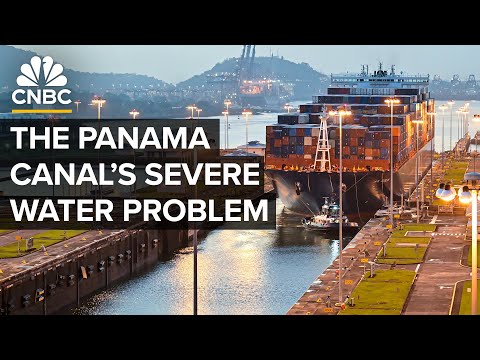
The Panama Canal is currently managing persistent water scarcity, a challenge exacerbated by El Niño patterns, though water levels in Gatun Lake have seen some improvement as of September 13, 2025. Daily transits remain below historical averages, leading to extended shipping durations and increased costs for global commerce.
The canal's operational capacity has been significantly affected, with daily transits reduced from the usual 36 to around 27 at times, and vessel drafts also restricted. This situation has prompted some shipping companies to seek alternative routes, such as sailing around the Cape of Good Hope, incurring additional time and expense.
To address the ongoing water challenges, Panama is progressing with the Rio Indio Reservoir Project, a significant undertaking aimed at increasing water storage capacity. Construction for this project is slated to begin in 2027. The Panama Canal Authority (ACP) is actively pursuing a range of solutions, including operational adjustments and exploring options beyond the immediate canal watershed, with a goal to achieve full operational normalization by 2025, contingent on favorable rainfall patterns. As of July 2025, the canal was operating at full capacity with a 50-foot draft, a return to normal operations after drought-related restrictions in 2023 and early 2024.
The ACP has also focused on strengthening its financial position, reducing debt and generating additional revenue through systems like the Long-Term Slot Allocation (LoTSA). The authority is exploring new infrastructure opportunities, including transhipment capacity and a potential liquefied petroleum gas (LPG) pipeline, to adapt to shifting trade flows and enhance long-term resilience.


