
The closest approach to Jupiter in 2026 almost exactly coincides with the radius of Jupiter's hill. The coincidence is 0,06 млн км, and the probability of coincidence is 1 in 26 000.
Interstellar Comet 3I/ATLAS's Precise Jupiter Flyby in March 2026 Fuels Debate Over Potential Technological Origin
Edited by: Uliana S.
The interstellar object designated 3I/ATLAS, the third confirmed visitor from beyond our Solar System following 'Oumuamua and 2I/Borisov, is on a trajectory for an exceptionally close flyby of Jupiter. This event, scheduled for March 16, 2026, is drawing considerable scientific attention. The predicted minimum approach distance aligns almost perfectly with the boundary of Jupiter's gravitational dominion—its Hill sphere. ATLAS was first spotted on July 1, 2025, by the ATLAS telescope system. Its hyperbolic trajectory, traveling at roughly 61 kilometers per second, provided immediate confirmation of its extrasolar origin.
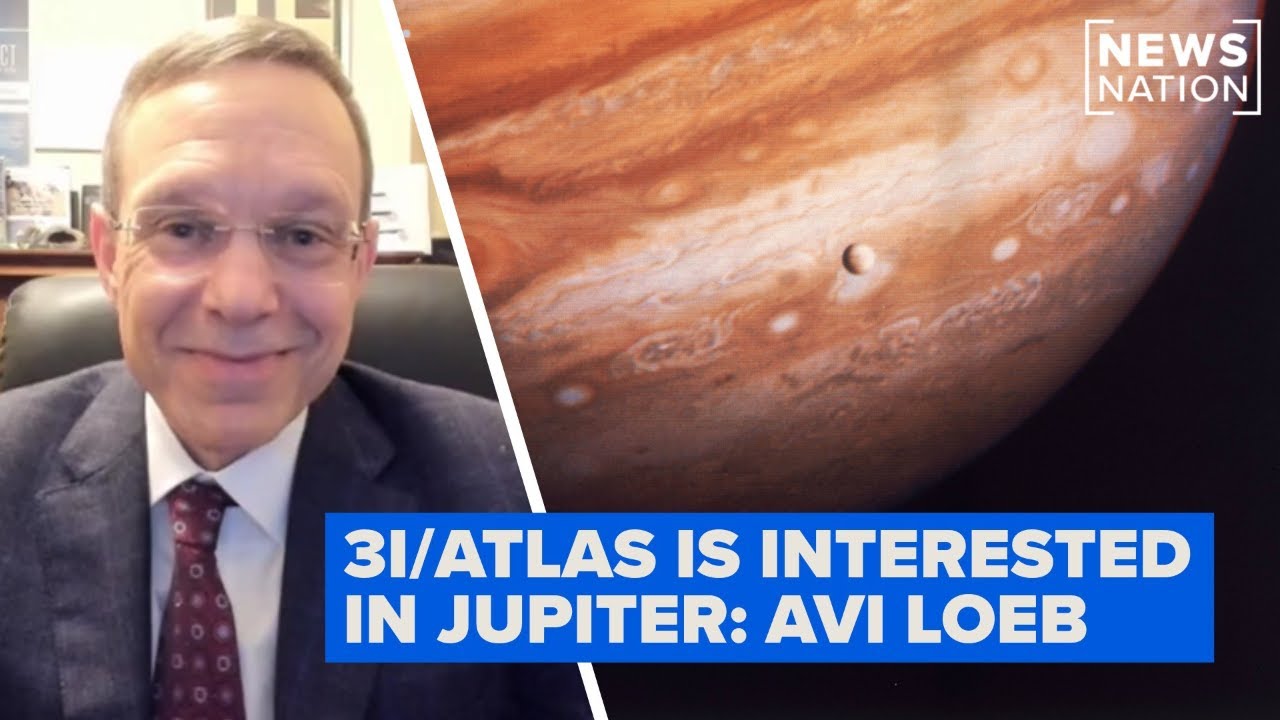
A crucial element contributing to this precise alignment is the observed non-gravitational acceleration experienced by the comet near its perihelion, which it passed on October 29, 2025. Data released by NASA's Jet Propulsion Laboratory (JPL) indicates this acceleration measured approximately 5 times 10 to the power of negative seven astronomical units per day squared. Harvard University astrophysicist Avi Loeb has put forth a hypothesis suggesting this acceleration might represent a deliberate course correction intended to bring the object into Jupiter's critical zone. Calculations utilizing the NASA JPL Horizons code project the closest approach distance to be 53.445 million kilometers, with a margin of error of plus or minus 0.06 million kilometers. This figure is remarkably close to the calculated Hill radius of Jupiter for that date, estimated at about 53.502 million kilometers, representing a statistical coincidence of roughly one in 26,000, considering Jupiter's orbit.
The Hill sphere defines the region where a planet's gravitational pull outweighs the tidal forces exerted by the central star, the Sun, allowing the planet to retain its satellite system. If 3I/ATLAS reaches this boundary, it could be interpreted as a calculated maneuver designed to release probes or devices at the L1 or L2 Lagrange points situated at the edge of Jupiter's gravitational influence. For an object moving at this speed—65.9 km/s—capture by Jupiter would necessitate a significant deceleration of 2.2 km/s, equivalent to the escape velocity. Interest in Jupiter as a prime target for potential extraterrestrial reconnaissance is escalating. The discovery of technologically advanced satellites within the Jovian system that were not deployed by terrestrial space agencies could serve as indirect validation of this theory.
Continuous observation of the comet remains paramount. Trajectory prediction data, including the measurement of this non-gravitational acceleration, has been gathered using instrumentation from agencies like the European Space Agency, specifically the ExoMars Trace Gas Orbiter. NASA has mobilized up to 12 of its assets, including the Perseverance rover and the Mars Reconnaissance Orbiter, to capture detailed imagery. Despite the ensuing speculation, official sources, including NASA Deputy Administrator Amit Kshatriya, maintain that all observable characteristics unequivocally point toward 3I/ATLAS being a comet of natural provenance. There is potential for NASA's Juno spacecraft, currently orbiting Jupiter, to be utilized for further study of the object as it nears its closest approach in March 2026. Projections indicate that the comet will exit the Solar System toward the constellation Gemini by the early 2030s.
55 Views
Sources
Economic Times
3I/ATLAS - Wikipedia
ESA pinpoints 3I/ATLAS's path with data from Mars - European Space Agency
Anomalies of 3I/ATLAS, Organized by Likelihood | by Avi Loeb | Nov, 2025 - Medium
Avi Loeb Identifies New Anomaly As 3I/ATLAS Targets Jupiter With Precision Raising Theories on Tech Origins and Intelligent Materials - USA Herald
Read more news on this topic:


Did you find an error or inaccuracy?
We will consider your comments as soon as possible.