


European Commission Demands US Adherence to Trade Pact Following New Tariff Implementation and Court Ruling
Edited by: Tatyana Hurynovich
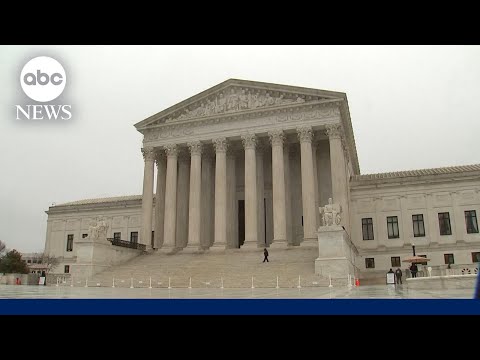
On Sunday, February 22, 2026, the diplomatic and economic relationship between the European Commission and the United States faced a severe test as trade tensions reached a new peak. This friction intensified following a landmark ruling by the U.S. Supreme Court on Friday, February 20, 2026, which effectively dismantled the President's legal standing to impose sweeping tariffs under the International Emergency Economic Powers Act (IEEPA). The court's decision was seen as a major blow to the administration's trade policy, yet the executive branch's subsequent actions have only served to deepen the divide between Washington and its European allies.
Rather than retreating in the face of the court's decision, President Trump moved with unprecedented speed to implement a new 15% global import duty, shifting his legal justification to the Trade Act of 1974. This strategic pivot caused immediate alarm in Brussels, prompting the European Commission to issue a stern demand for the United States to honor the trade commitments it made in a joint statement in August 2025. European leaders warned that such unilateral moves ignore established diplomatic protocols and threaten to introduce a period of profound market instability that could harm global supply chains.
The European Commission has remained firm in its stance that the United States must abide by the specific terms of the August 2025 agreement, which was designed to provide a ceiling of 15% on American tariffs for the majority of products exported from the EU. This agreement was viewed as a cornerstone of transatlantic stability, but its future is now in doubt. EU Trade Commissioner Maroš Šefčovič and U.S. Trade Representative Jamieson Greer, who were previously praised for their constructive engagement, now find themselves at the center of an escalating conflict that threatens to undo months of careful negotiation and cooperation.
Highlighting the severity of the situation, Bernd Lange, the chairman of the European Parliament's trade committee, labeled the current environment as "tariff chaos" and suggested that the European Union may have no choice but to retaliate. One proposed measure is the immediate suspension of the ratification process for the broader EU-US trade deal, which was originally set for Tuesday, February 24, 2026. With the 2024 trade volume between the two regions totaling 1.7 trillion euros, the stakes could not be higher. The current lack of executive predictability in the U.S. puts this massive economic partnership at risk, necessitating an urgent resolution to protect the interests of businesses and consumers on both sides of the Atlantic.
4 Views
Sources
Yahoo! Finance
The Budget Lab at Yale
Insights
KSAT
Indo Premier Sekuritas
Brussels Morning Newspaper
Read more articles on this topic:


Did you find an error or inaccuracy?We will consider your comments as soon as possible.