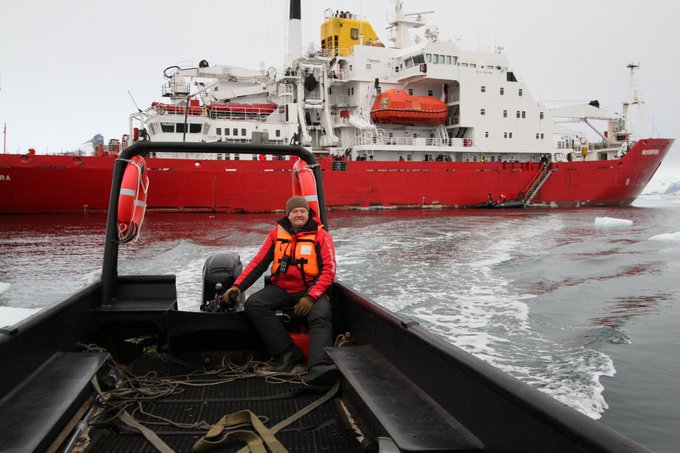
The tenth national Antarctic scientific expedition officially began with the departure from Istanbul of 17 scientists and a delegation.
On January 27, 2026, the Republic of Turkey officially inaugurated its tenth National Antarctic Scientific Expedition, marking a significant milestone in the nation’s polar research history. The mission is comprised of seventeen Turkish researchers and one international specialist, representing a collaborative effort to expand the boundaries of Turkish science. The primary objective of this deployment is to conduct sophisticated climate research and advance Ankara’s strategic goal of attaining consultative status within the Antarctic Treaty system. All scientific operations are currently centered around Horseshoe Island, a location that has been earmarked as the future site for a permanent Turkish Scientific Research Institute.
Одна из главных целей экспедиции — получить статус «консультативного государства» в рамках системы Договора об Антарктике и создать постоянную турецкую научно-исследовательскую базу в Антарктиде.
This latest expedition is the culmination of nearly a decade of sustained effort, building upon foundations laid in 2017. Since the inception of these polar missions, Turkey has successfully managed more than 150 distinct research projects, often working in close coordination with 35 international scientific organizations. Burcu Ozsoy, the coordinator of the expedition, has described the Antarctic continent as a "frozen archive" that is indispensable for scientists attempting to model future climate scenarios for the entire planet. The current mission's technical tasks include the detailed bathymetric mapping of the seabed in the Horseshoe Island vicinity and the collection of vital meteorological data from existing observation posts.
Turkey’s long-term vision involves a permanent and sustainable presence on the icy continent. The nation already maintains a temporary scientific station there, which was established during the third expedition between 2019 and 2022. This facility consists of three modular units with a total weight of six tons, which were transported to the island using a complex logistical chain of barges, Zodiac boats, and helicopters. In a move to foster future scientific interest, the mission also includes three high school students who were winners of the Teknofest Polar Research Project Competition. This deployment is further bolstered by the participation of Turkish Naval officers, highlighting a comprehensive national strategy for polar engagement.
The successful execution of these Antarctic objectives traditionally serves as a stepping stone for Turkey’s subsequent polar activities, including preparations for the sixth Arctic Scientific Expedition. Turkey's interest in these remote regions is not merely contemporary; it is supported by historical precedents such as the 1513 map by the Ottoman cartographer Piri Reis, which included depictions of lands near the Antarctic circle. A major geopolitical driver for these missions is the pursuit of consultative status under the Antarctic Treaty, which was signed on December 1, 1959. Currently, 29 of the 56 participating nations hold this status, which provides voting rights on the governance of the continent. To achieve this, a country must demonstrate "substantial scientific research activity," which is the core purpose of these ongoing expeditions.
In addition to its southern hemisphere initiatives, Turkey remains highly active in Arctic affairs. The country applied for observer status in the Arctic Council in 2015 and has since formalized its intentions through the "National Polar Research Strategy for 2023–2035." Scientific inquiry in the polar regions has been institutionalized through the establishment of the TÜBİTAK MAM Polar Research Institute, widely known as KARE. These strategic efforts, which include bathymetric and hydrographic studies conducted by the Turkish Navy’s Department of Navigation, Hydrography, and Oceanography, are designed to enhance both navigation and logistical capabilities in polar waters, ensuring Turkey remains at the forefront of global polar science.