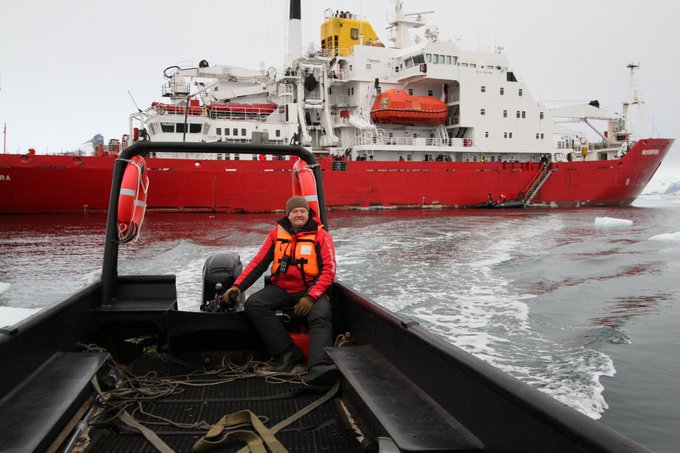
In Antarctica, the Thwaites Glacier is losing its footing as crevasses form faster than the ice melts.
The International Thwaites Glacier Collaboration (ITGC) has issued a sobering 2025 report detailing the accelerated retreat of Thwaites Glacier, famously dubbed the "Doomsday Glacier." This massive ice formation, situated in West Antarctica and comparable in size to the United Kingdom or the state of Florida, represents one of the most rapidly changing ice systems globally. The collaboration, which has united scientists from the United States and the United Kingdom since 2018, has uncovered a complex and highly dynamic environment demanding continuous, rigorous monitoring.
A deep dive into satellite data spanning the period from 2002 to 2022 revealed a dramatic escalation in surface crevasses across the Thwaites Eastern Ice Shelf (TEIS). These fissures have effectively doubled in length, extending from an initial 160 kilometers to now exceeding 320 kilometers. This exponential growth in cracking, predominantly concentrated in the central region of the TEIS, is now outpacing the ice loss attributed to basal melt from warm ocean currents. Consequently, the mechanical stability of the entire ice shelf is being significantly undermined. Researchers, including those from the University of Manitoba, have documented that progressive fracturing around the primary shear zone, located upstream of the grounding line, is systematically compromising the shelf's structural coherence.
While the intrusion of warmer ocean currents beneath the glacier, leading to the formation of internal cavities, was previously considered the paramount threat, recent findings suggest that internal disintegration driven by crevasse formation is now the principal destabilizing factor. A critical feedback mechanism has been identified: the melting of ice generates cooler water that mixes with the warmer ambient ocean water. This interaction intensifies turbulence, which in turn accelerates further melting at the glacier's base.
The ITGC confirms that while an immediate, catastrophic collapse is not on the immediate horizon, the glacier is nevertheless destined for a faster rate of retreat across the 21st and 22nd centuries. The complete disintegration of Thwaites Glacier holds the potential to eventually raise global sea levels by as much as 3.3 meters, with the glacier's mass alone accounting for a 65-centimeter rise. Currently, Thwaites contributes approximately 4% to the regional sea-level rise rate in the Amundsen Sea, which stands at 4.5 mm per year.
Experts within the ITGC stress that the decisions made within the current century will dictate the pace of future developments. They emphasize that immediate and sustained global decarbonization is recognized as a vital measure to slow the rate of ice loss and to prevent the onset of similar unstable retreat patterns in the marine sectors of East Antarctica. The scientists caution that the glacier's retreat will continue to accelerate, necessitating an urgent reassessment and refinement of current predictive timelines.