


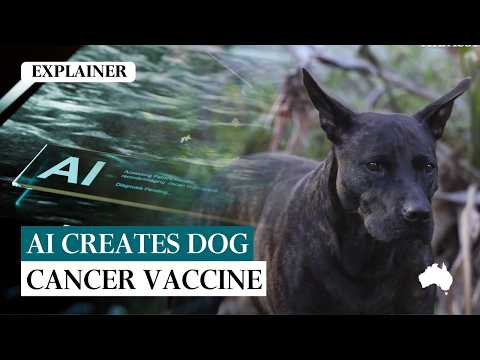
A personalized messenger RNA (mRNA) cancer vaccine, designed using artificial intelligence, has demonstrated significant initial efficacy in a Staffordshire Bull Terrier mix named Rosie, who was suffering from terminal mast cell cancer. The experimental treatment was initiated in late 2024 after conventional therapies failed to halt the progression of the disease.
The protocol was developed by data scientist Paul Conyngham, who utilized seventeen years of machine learning experience to construct the novel treatment. The process began with genomic sequencing of the tumor tissue, obtained from the Ramaciotti Centre for Genomics at the University of New South Wales (UNSW), costing approximately A$3,000. Conyngham compared the tumor's genetic data against healthy cells to map the specific anomalies driving the malignancy. This complex information was processed using advanced AI tools, including ChatGPT as a research assistant and Google DeepMind's AlphaFold to model mutated protein structures for target identification.
Proprietary machine learning algorithms then pinpointed the most effective neoantigens—mutated proteins likely to trigger a targeted immune response. This analytical output was translated into a physical therapeutic agent by Professor Pall Thordarson's team at the UNSW RNA Institute, who synthesized the custom mRNA vaccine based on Conyngham's concise protocol. The entire development and synthesis pipeline was reportedly compressed from a potential multi-year timeline to under two months, a speed attributed to the AI-assisted methodology.
The experimental vaccine was administered to Rosie in Gatton, Queensland, in December 2025, followed by booster injections in January 2026. Professor Rachel Allavena, a researcher at the University of Queensland's School of Veterinary Science and the sole Australian veterinarian with ethics clearance for this specific experimental treatment, administered the doses. Early assessments by March 2026 indicated a substantial response, with one of Rosie's tumors shrinking by approximately 75% within weeks of the initial injection. Anecdotally, Rosie's physical condition improved, allowing her to resume activities such as jumping fences.
Experts involved maintain a measured view, emphasizing that this remains a single case study and the cancer has not been entirely eradicated, with Professor Thordarson noting the treatment has bought time rather than providing a definitive cure. Conyngham is currently developing a second vaccine to target the tumor that showed incomplete response to the initial formulation. This application of genomics, machine learning, and veterinary science offers potential translational lessons for human oncology trials by demonstrating a rapid sequence-model-design pipeline using currently available tools.


