


European Commission Unveils EastInvest Financial Mechanism to Bolster EU Border Regions
Edited by: Tatyana Hurynovich
On Thursday, February 26, 2026, the European Commission (EC) hosted a landmark inaugural event in Brussels to celebrate the official launch of the EastInvest Financial Instrument. This newly established funding platform is specifically designed to provide strategic and targeted support to regions within the European Union that share land borders with the Russian Federation, the Republic of Belarus, and Ukraine. The initiative represents a significant effort to mitigate the complex economic and security challenges that have surfaced as a direct result of the persistent conflict in Ukraine, ensuring that these frontline territories remain resilient in the face of geopolitical pressure.
The EastInvest initiative serves as a fundamental component of the more comprehensive EU Strategy for Eastern Regions, which was formally adopted by the European Commission on February 18, 2026, under the programmatic title "Stronger Regions for a Safer Europe." This strategy identifies five critical priority areas for regional development: Security and Resilience, Growth and Regional Prosperity, Leveraging Local Strengths, Connectivity, and People. The EastInvest financial mechanism itself is valued at €20 billion and is intended to facilitate easier access to both credit facilities and professional advisory support for private and public project initiators located in the affected border territories.
Projections indicate that the EastInvest instrument will mobilize a minimum of €28 billion in total private and public investment through its various programs. The platform's operational success relies on the collaboration of several major international financial institutions, including the European Investment Bank (EIB) Group, the European Bank for Reconstruction and Development (EBRD), the Nordic Investment Bank, and the Council of Europe Development Bank. Additionally, national development banks from the nine member states directly involved are participating in the scheme. During the conference, EC President Ursula von der Leyen underscored the strategic importance of the project, stating that the security and stability of these border regions are absolutely vital for the safety of the entire European Union.
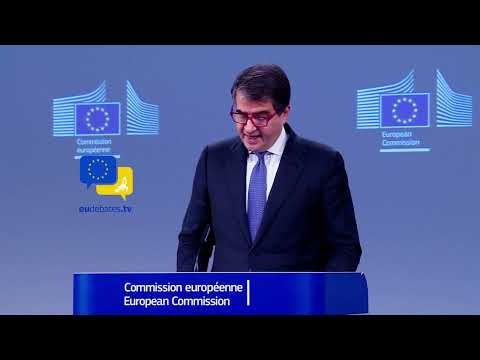
Raffaele Fitto, the European Commission’s Executive Vice-President for Cohesion and Reforms, provided further context by highlighting the unique geographical challenges faced by these areas. He noted that the border regions, which span more than 3,500 kilometers of land boundaries with Russia and Belarus and nearly 1,500 kilometers with Ukraine, have experienced a radical transformation in their operating environments since February 24, 2022. Regions across nine specific countries—Finland, Estonia, Latvia, Lithuania, Poland, Slovakia, Hungary, Romania, and Bulgaria—have been forced to contend with the realities of hybrid warfare, the instrumentalization of migration flows, sudden economic shocks, and a concerning trend of demographic decline.
As part of the strategy’s implementation, a high degree of focus is being placed on the modernization of infrastructure and the enhancement of energy security. This includes the critical integration of the Baltic electricity system into the broader European power grid and the development of sophisticated cross-border hydrogen infrastructure. Romanian Prime Minister Ilie Bolojan remarked during the event that the EU's eastern flank is rapidly becoming a central pillar of cohesion, resilience, and security, thanks to initiatives like EastInvest. He also emphasized that developing robust infrastructure is a necessary step in preparing these border nations to support the eventual recovery and reconstruction of Ukraine. The Brussels event, which included the participation of EIB President Nadia Calviño and the Prime Ministers of Estonia, Latvia, Lithuania, and Romania, concluded with the signing of a formal declaration of intent to establish the Fund.
In addition to its financial provisions, the strategy encompasses several innovative measures aimed at strengthening regional security, such as the "European Drone Wall" initiative, which is designed to significantly enhance monitoring capabilities along the EU's eastern frontiers. By investing in military mobility and tripling the available funding for border management, the European Union seeks to establish the level of stability required to attract new private investments into diverse sectors, including renewable energy, agriculture, and forestry. This multifaceted approach ensures that the regions are not only secure but also positioned for long-term economic sustainability despite the surrounding geopolitical volatility.
Ultimately, the EastInvest mechanism represents a long-term commitment by the European Union to its most exposed territories. By combining financial liquidity with strategic security measures, the EC aims to transform these border regions into bastions of stability and economic growth. The initiative acknowledges that the prosperity of the eastern flank is not merely a local concern but a fundamental requirement for the collective prosperity and defense of the European project as a whole. Through this coordinated effort, the EU is building a framework that can withstand external shocks while fostering a vibrant economic environment for the millions of citizens living along its eastern borders.
10 Views
Sources
Business24
Centre for European Democracy Studies
The Sofia Globe
European Commission, official website
Visegrad Insight
Ziarul Lumina
Read more articles on this topic:


Did you find an error or inaccuracy?We will consider your comments as soon as possible.