


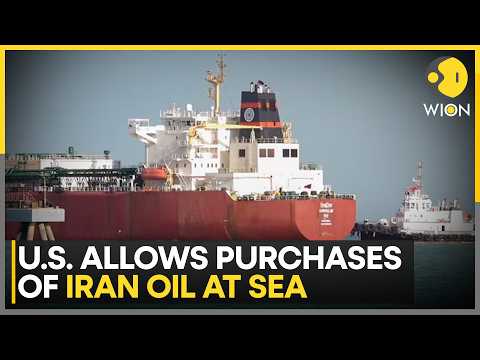
US Treasury Issues Temporary Sanctions Waiver on Iranian Oil to Stabilize Global Energy Markets
Author: Tatyana Hurynovich
On March 20, the United States Department of the Treasury officially released a specific license designed to mitigate immediate energy supply pressures. This regulatory adjustment provides a 30-day window during which the prohibition on the purchase and sale of Iranian crude oil and refined petroleum products is temporarily suspended. However, this waiver is strictly limited to cargo that was already loaded and in transit as of the date of issuance, explicitly prohibiting the initiation of any new commercial agreements.
Under the terms of the license issued by the Office of Foreign Assets Control (OFAC), the offloading, sale, and transportation of approximately 140 million barrels of oil are now permitted, provided they were loaded before 00:01 Eastern Time on March 20. Treasury Secretary Scott Bessent clarified the administration's position via a statement on X, emphasizing that the move is intended to stabilize the global market without providing financial windfalls to Tehran. Bessent was careful to note that this does not represent a long-term softening of the sanctions regime but is a tactical measure to prevent existing maritime volumes from remaining stagnant and causing further supply shortages.
The geopolitical urgency stems from a blockade of the strategic strait that began in late February 2026, an event that effectively paralyzed nearly 20% of the world's total oil supply. This disruption triggered a dramatic surge in energy costs, with Brent crude prices skyrocketing beyond the $120 per barrel mark. While the United States, Europe, and Japan have collectively condemned Iranian actions and supported the International Energy Agency (IEA) in releasing emergency reserves, the global deficit has continued to worsen, necessitating more direct intervention.
Despite the American move, Iranian officials have expressed skepticism regarding the actual impact of the waiver on global supply. Samana Goddousi, an official spokesperson for the Iranian Ministry of Petroleum, stated that the country currently possesses virtually no surplus oil on maritime vessels or available for international distribution. According to Goddousi, the statements made by the U.S. Treasury Secretary are primarily intended to provide a false sense of hope to international buyers rather than reflecting the reality of available Iranian inventory.
The broader context of this decision involves the significant damage dealt to Tehran's energy infrastructure during recent military operations conducted by the United States and Israel. Key export facilities, including the critical terminals located in Hormuzgan, were severely impacted. Former President Trump previously remarked that it would take Iran at least a decade to fully restore its production capabilities. Nevertheless, the ongoing maritime blockade forced Washington into a strategic compromise to protect global economic interests.
This temporary policy shift has received backing from regional allies, specifically Saudi Arabia and the United Arab Emirates. Both nations have agreed to increase their domestic oil production to compensate for the eventual loss of Iranian volumes in the global market. However, energy experts note that these Gulf nations require a technological lead time of approximately 30 to 60 days to fully scale up their output, making the current 30-day U.S. license a critical bridge for global energy security.
3 Views
Read more news on this topic:


Did you find an error or inaccuracy?We will consider your comments as soon as possible.