NASA launched a second scientific balloon from Antarctica
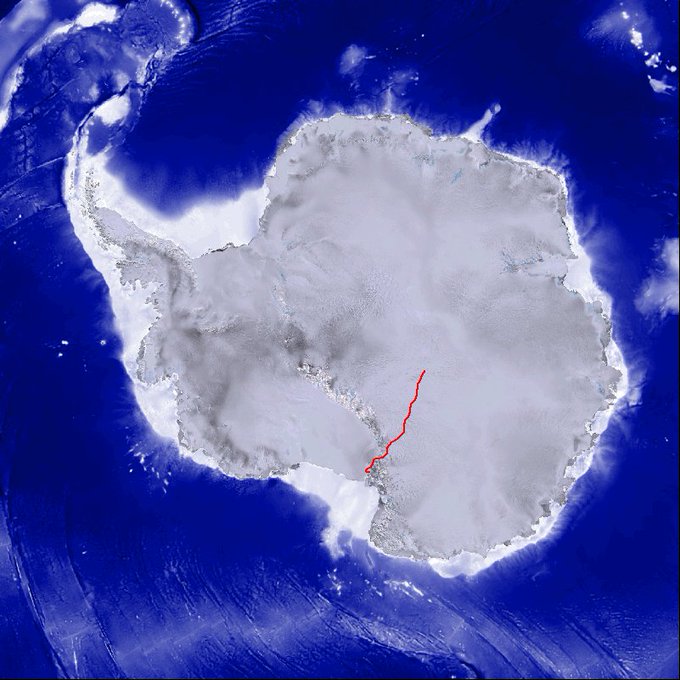
The Payload for Ultrahigh Energy Observations (PUEO) mission, a component of NASA's Antarctic scientific balloon campaign, has successfully reached its target operational altitude of approximately 120,000 feet within the stratosphere. The launch occurred on Saturday, December 20, 2025, near the U.S. National Science Foundation's McMurdo Station, situated on the Ross Ice Shelf. This high-altitude placement is essential for these long-duration flights, utilizing the stable, predictable polar winds that enable the balloon to circumnavigate the continent for potentially several weeks.
The PUEO instrument is designed to detect the radio signals generated when ultra-high energy neutrinos, originating from powerful astrophysical events across the cosmos, strike the expansive Antarctic ice sheet. These high-energy particles serve as crucial messengers, conveying data about phenomena such as the formation of black holes and the mergers of neutron stars. Additionally, the mission seeks to identify radio pulses resulting from extensive air showers caused by ultra-high energy cosmic rays interacting with the Earth's atmosphere.
This deployment marks the first balloon launch under NASA's Astrophysics Pioneers program, an initiative established in 2020 with a cost ceiling of $20 million, often employing smaller hardware than missions under the traditional Explorers Program. The PUEO payload represents a technological advancement over its predecessor, the Antarctic Impulsive Transient Antenna (ANITA) mission, incorporating advanced filtering and an interferometric phased array trigger to achieve sensitivity improvements exceeding an order of magnitude, particularly below energies of 30 EeV.
Dr. Abigail G. Vieregg of the University of Chicago is the Principal Investigator for the PUEO project, leading a collaboration that includes institutions such as Washington University, which previously contributed to the power system and gondola structure for the ANITA program. The 2025 Antarctic Long-Duration Balloon (LDB) campaign is also supporting the General AntiParticle Spectrometer (GAPS) mission, which launched earlier to investigate potential dark matter-related particles. The LDB flights, managed by NASA's Wallops Flight Facility, rely on zero-pressure balloons operating optimally during the constant daylight of the Antarctic summer, supported in the field by Peraton's Columbia Scientific Balloon Facility operations team near McMurdo Station.
The PUEO mission is positioned to either achieve the first significant measurement of the cosmic neutrino flux above 1 EeV or establish the most stringent constraints to date, building upon ANITA's four successful flights conducted between 2006 and 2016. The scientific community anticipates that the enhanced sensitivity will yield new insights into the universe's most energetic processes by leveraging the Antarctic ice as a vast, natural detector.