


ROV pilots with the Schmidt Ocean Institute had a rare treat recently, having spotted the elusive giant phantom jellyfish (Stygiomedusa gigantea) during a descent to explore the Colorado-Rawson submar
Deep-Sea Frontiers: Argentina Unveils Massive Reef and Hidden Ecosystems
Edited by: Inna Horoshkina One
In a landmark achievement for marine science, an Argentine-led expedition aboard the state-of-the-art research vessel R/V Falkor (too), operated by the Schmidt Ocean Institute, concluded its mission in January 2026. This voyage has fundamentally reshaped our understanding of the South-West Atlantic's biodiversity, revealing hidden worlds that had remained undisturbed for millennia beneath the waves. The findings provide a new perspective on the ecological richness of the region's deep-water territories.
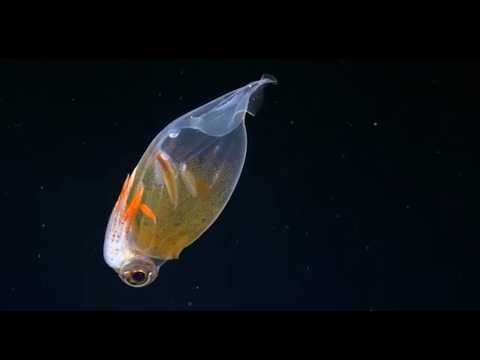
Welcome to the Midwater! | Animals as Living Bioreactors PART 1
One of the most significant findings was the identification of the largest cold-water reef of Bathelia candida documented to date. Spanning an area of at least 0.4 square kilometers along the Argentine continental shelf, this massive biological structure was located approximately 600 kilometers further south than scientists had previously predicted. This discovery significantly expands the known range of this indicator species, which is vital for identifying Vulnerable Marine Ecosystems (VMEs) in the deep ocean.
The expedition's success was not limited to geological and structural findings; it also served as a biological goldmine. Researchers captured footage and collected samples of 28 potentially new species previously unknown to science. This diverse group includes various types of marine worms, corals, and anemones, offering a rare glimpse into the evolutionary secrets of the deep. These discoveries were often documented in real-time, providing a direct window into the abyss for researchers watching from the surface.
Furthermore, the team located an active cold seep ecosystem covering roughly 1 square kilometer at depths of several hundred meters. Unlike most life on Earth, which relies on sunlight, this community thrives on chemical energy through chemosynthesis. This specialized environment supports a dense population of mollusks, crabs, and other associated organisms that have adapted to survive in the absence of photosynthesis, forming a unique oasis of life on the seafloor.
Deep within the Argentine Basin, the mission achieved another milestone by documenting a deep-sea "whale fall" at a staggering depth of 3890 meters. This represents the first time such an event has been recorded in this specific region. The carcass of the whale has become a temporary island of life, fueling a complex food chain that includes Osedax, the specialized "bone-eating" symbiotic worms that process skeletal remains and sustain long-lived deep-sea communities.
Utilizing the advanced ROV SuBastian, which is capable of diving to depths of 4500 meters, the team also captured rare footage of the giant "phantom" jellyfish, Stygiomedusa gigantea. Beyond this ethereal sighting, the ROV explored ancient deep-sea coral gardens, including impressive stands of Paragorgia arborea within the Malvinas Trough. These landscapes reveal a complex and ancient architecture that serves as a foundation for countless other marine organisms.
These revelations are far more than mere scientific curiosities; they serve as definitive proof of the intricate connectivity of life across the planet's oceans. From the sprawling coral cities to the chemical-driven oases of the seep ecosystems, these environments are highly sensitive to human-induced pollution and are notoriously difficult to restore once damaged. Consequently, the mapping and sampling conducted during this mission provide a critical baseline for future conservation efforts and international cooperation.
15 Views
Sources
Ocean News & Technology
Marine Technology News
The Economic Times
Schmidt Ocean Institute
Infobae
Schmidt Ocean Institute
Read more articles on this topic:


Did you find an error or inaccuracy?We will consider your comments as soon as possible.