
Newly Identified Endemic Solanum Species in Peru Classified as Endangered
Edited by: An goldy
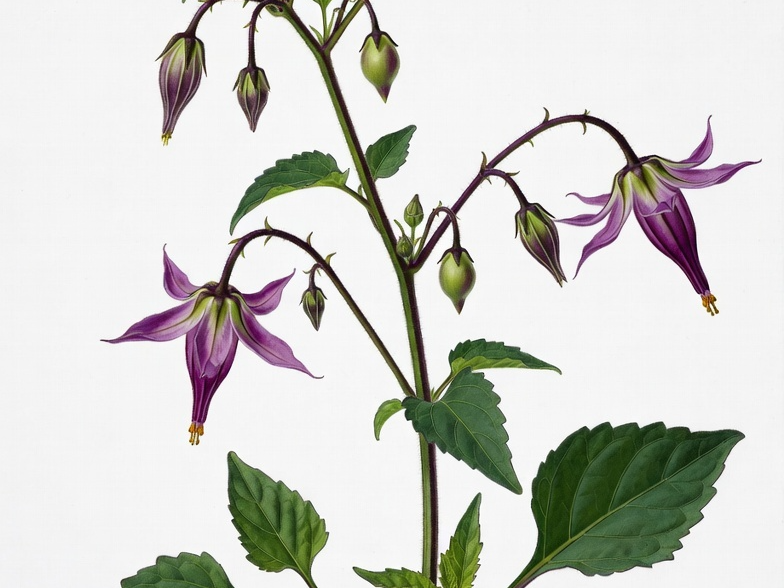
The scientific community officially documented a novel plant species, Solanum stellaticalycinum, in November 2025. This significant discovery was made within the high-altitude forests of Peru, specifically inside the Yanachaga-Chemillén National Park (PNYCh). The identification arose from a detailed taxonomic review conducted on the Solanaceae family within the park's boundaries. This new member of the genus Solanum is distinguished from closely related species, such as S. anceps, S. angustialatum, and S. incurvum, by several key characteristics. These include its purple pedicels, elongated and sharply pointed fruits, and a distinctive star-shaped calyx, which ultimately inspired its specific epithet.
The geographical range of Solanum stellaticalycinum is remarkably restricted, spanning an area of only approximately 111.9 square kilometers within the Oxapampa province. Based on preliminary assessments utilizing the criteria set by the International Union for Conservation of Nature (IUCN), the species has been assigned an 'Endangered' (EN) status. This classification is supported by criterion B1ab (i, iii), signaling the plant's high vulnerability. The primary threats jeopardizing its survival stem from human activities, notably the expansion of agricultural lands and the construction of new roadways encroaching upon its delicate habitat.
Yanachaga-Chemillén National Park itself, established on August 29, 1986, is situated in the Pasco region and covers roughly 122,000 hectares. This protected area holds considerable ecological importance, having served as a Pleistocene refuge. It boasts extraordinary biodiversity, housing nearly 5,000 plant species, which represents a quarter of all plant diversity found across the entirety of Peru. Oversight and management of the park are the responsibility of the National Service of Natural Protected Areas (SERNANP).
The identification of S. stellaticalycinum enriches our comprehension of the taxonomic complexity within the Solanum genus, a group comprising around 1,500 species globally, with the Andes of South America being a major center of diversity. Notably, another endemic species, Solanum oxapampense, was previously described in this same geographical area. Field collection efforts yielded specimens that were flowering between August and November, and fruiting in April and October. These samples were gathered from specific sectors, including Abra Yanachaga, San Alberto, and Chacos.
Ensuring the conservation of this newly found species is paramount, especially considering the broader protected status of the region. Since June 2010, the Yanachaga-Chemillén Park has also formed the core zone of the Oxapampa-Asháninka-Yanesha Biosphere Reserve, designated by UNESCO. Furthermore, the park acts as a vital sanctuary for iconic fauna, such as the spectacled bear (Tremarctos ornatus) and the jaguar (Panthera onca). Given the species' limited distribution and the persistent pressure from human development, implementing targeted management strategies and rigorous monitoring within the park’s buffer zone will be crucial to avert any further decline in the population of this rare plant.
7 Views
Sources
Inforegion
vertexaisearch.cloud.google.com
vertexaisearch.cloud.google.com
PhytoKeys
ResearchGate
vertexaisearch.cloud.google.com
Read more news on this topic:

Did you find an error or inaccuracy?
We will consider your comments as soon as possible.