



Indian Scientists Discover 7,000-Year-Old Black Carbon In Antarctica: What Does It Mean For The Planet? etvbharat.com/en/technology/… Indian scientists doing research in Antarctica

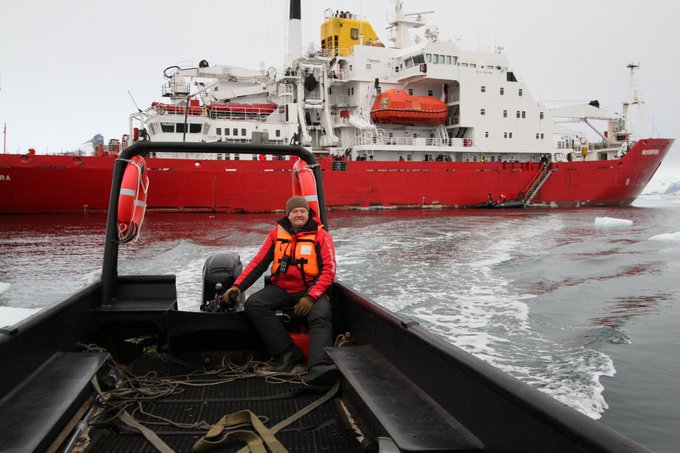
Indian scientists doing research in Antarctica.
Share
Edited by: Uliana Soloveva
Indian Scientists Discover 7,000-Year-Old Black Carbon In Antarctica: What Does It Mean For The Planet? etvbharat.com/en/technology/… Indian scientists doing research in Antarctica
Indian scientists doing research in Antarctica.
Scientists hailing from India's National Centre for Polar and Ocean Research (NCPOR) in Goa have announced a significant paleoclimatic breakthrough originating from East Antarctica. During their analysis of sediment cores retrieved from Pup Lagoon Lake, situated within the Larsemann Hills, researchers successfully identified traces of black carbon dating back approximately 7,000 years. The Larsemann Hills area is a crucial site for scientific investigation, recognized as a rare ice-free coastal oasis spanning roughly 40 square kilometers in the Prydz Bay region, distinguished by its unique geological features.
Indian scientists doing research in Antarctica

Indian scientists doing research in Antarctica
Black carbon, commonly known as soot, ranks as the second most potent warming agent following carbon dioxide. Its capacity to absorb solar radiation is hundreds of times greater than that of ice, a property that critically accelerates the process of ablation, or melting. The research undertaken by NCPOR is specifically focused on determining how historical concentrations of this pollutant influenced ice melt rates, a finding directly pertinent to contemporary climate challenges. The detection of 7,000-year-old black carbon strongly suggests the transcontinental transport of soot originating from ancient wildfires, thereby illustrating the long-term potential for this pollutant to achieve global dispersal.
The National Centre for Polar and Ocean Research in Goa studies Antarctica

The National Centre for Polar and Ocean Research in Goa studies Antarctica
The potential ramifications associated with the accelerated melting of the Antarctic ice sheet are a source of considerable global concern. Current warming trajectories suggest that global sea levels could rise by as much as 50 centimeters within the next five to six decades. This projection poses a direct and imminent threat to India’s densely populated coastal regions, underscoring the urgency of the ongoing scientific inquiries. Studies conducted in Antarctica, particularly those examining ice loss, serve to highlight the inherent fragility of polar ecosystems and the absolute necessity for precise future change predictions.
India started studying Antarctica in 1981

India started studying Antarctica in 1981
The Larsemann Hills, which host India’s Bharati research station, were jointly nominated in 2007 by India, Australia, China, Romania, and the Russian Federation to be designated an Antarctic Specially Managed Area (ASMA) to ensure robust environmental protection. This region functions as a vital logistical hub, hosting scientific operations from several nations, including Russia's Progress station, China's Zhongshan station, and Romania's Law-Racoviță station. Examining ancient contaminants, such as this 7,000-year-old black carbon, provides scientists with essential data to calibrate climate models, thereby refining the accuracy of future projections.
In the broader context of global environmental shifts, researchers also point out that the extent of surface melt across Antarctica's ice shelves may have been significantly underestimated—potentially by a factor of two. This underestimation stems from the difficulty in accurately mapping the slushy snow layer, or firn, which accounts for approximately 57% of the total area affected by meltwater. Consequently, the historical data provided by cores extracted from locations like Pup Lagoon Lake, nestled among over 150 lakes in the Larsemann Hills, becomes invaluable. The discovery made by the Indian research team thus represents a substantial contribution toward understanding the long-term dynamics of key climate forcing agents.
The New Indian Express
ETV Bharat News
ETV Bharat
ETV Bharat
NCPOR
ResearchGate
Times of India
GS TIMES
ETV Bharat
Business Standard
Vostok, Antarctica bottomed out at −76.4°C (−105.5°F) sometime between 12:00 UTC yesterday and 00:00 this morning. 🇦🇶 If confirmed, this sets a new continental and worldwide record low temperature for March. 🌡️🏆 But you won't hear a peep about it in the press.

🇦🇶🇺🇦 The annual crew rotation at Vernadsky Station has been completed. The 31st Ukrainian Antarctic Expedition has fully commenced operations at the station, whilst the 30th UAE has set off for home. A long journey lies ahead for the polar explorers. First, r/v ‘Noosfera’, will


Microbes In Antarctica Survive The Freezing And Dark Winter By Living On Air #Microbes #Antarctica #Survive #Freezing #Dark #Winter #Living #Factory #Output #Production #Appliance #Equipment dlvr.it/TRW5Qw


