
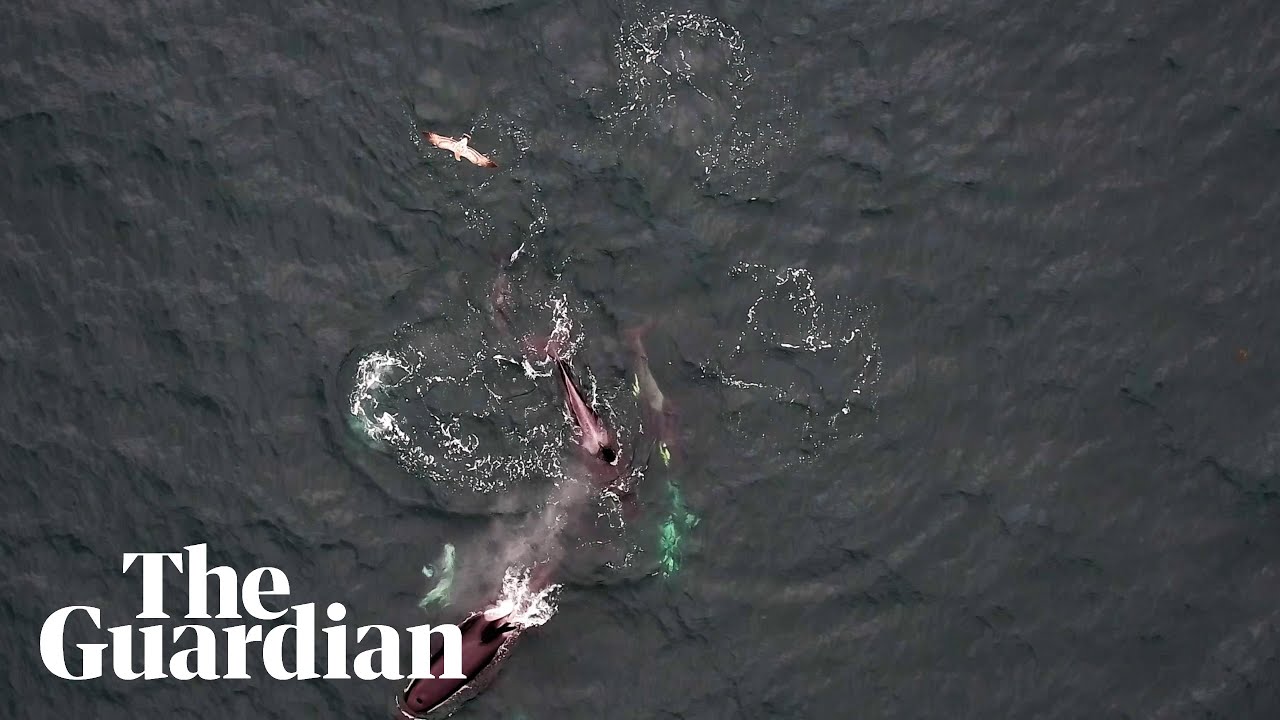
Drone footage of hunting whales shows an example of the Fibonacci spiral occurring in nature, where the two whales can be seen working together to create a bubble net surrounding fish.
The Whale Civilization: 52 Hz, the Golden Spiral, and the Planet's Breath
Author: Inna Horoshkina One
Imagine the human skull as containing its own ocean—an expanse of electrical waves. Most of the time, this internal sea features the familiar surf: alpha, beta, and theta rhythms.
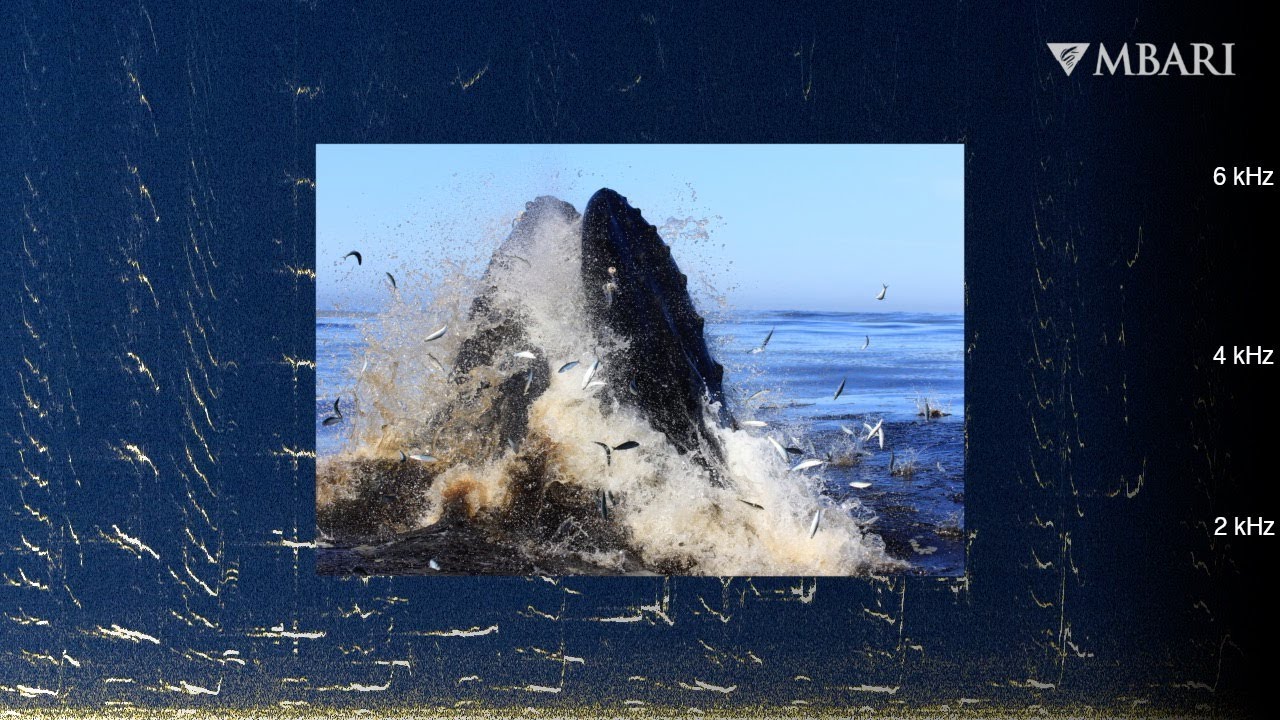
Immerse yourself in songs of humpback whales: Spring in Monterey Bay
However, when we truly focus our thoughts, maintain concentration, and experience something vividly and consciously, gamma rhythms emerge. These are rapid oscillations, generally ranging from 30 to 80 Hz, with scientific focus often centering around the 40 Hz zone.
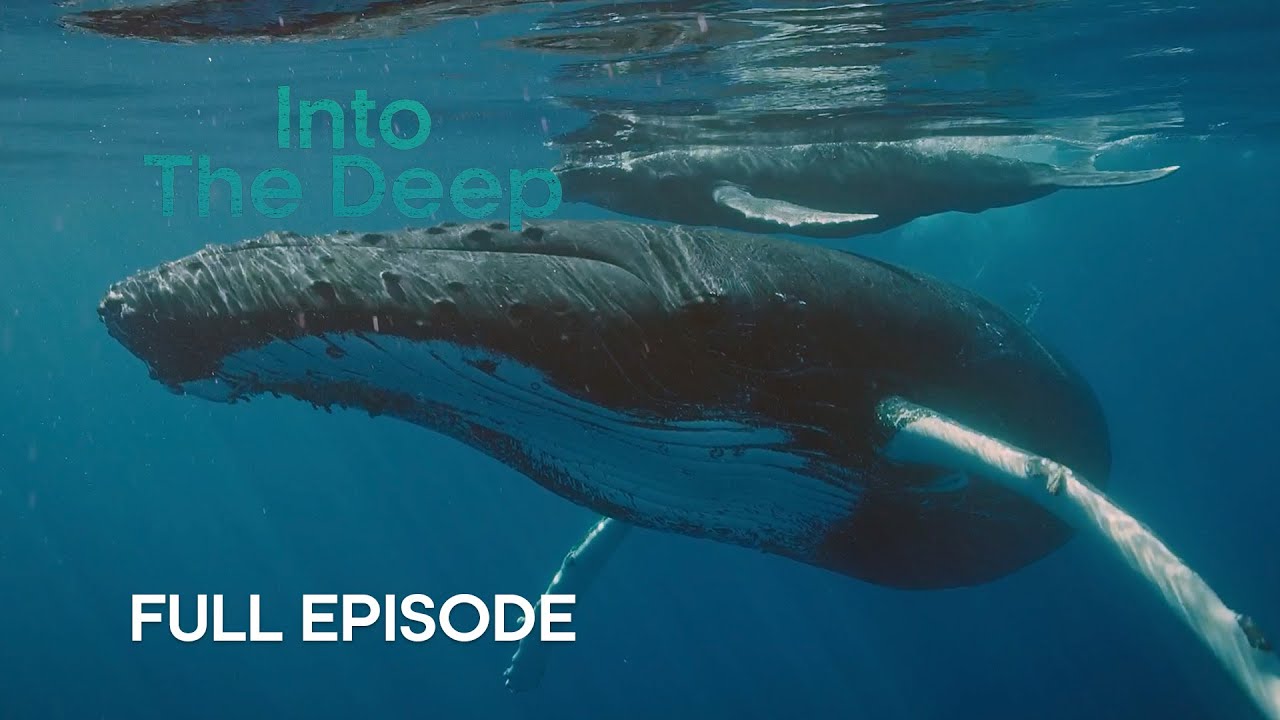
Are Humpback Whales the Pop Stars of the Ocean? | Into The Deep | BBC Earth
Experiments demonstrate that when a person solves a problem, holds an image in mind, or intently studies a complex picture, various brain regions begin to 'vibrate' synchronously within this frequency band. Disparate neural firings coalesce into a unified pattern of experience, signaling:
'I understand.'
'I recall.'
'I perceive meaning.'
Put simply, gamma frequencies represent clear thought—the moment internal noise resolves into a focused signal.
Living almost adjacent to this range is another distinct voice: that of the enigmatic whale, broadcasting at approximately 52 Hz. In popular culture, the 52-hertz whale has become a metaphor for solitude, a theme reflected in the 2017 Thai musical film '52 Hz, I Love You' and the 2021 documentary 'The Loneliest Whale,' produced by Adrian Grenier and Leonardo DiCaprio.
This whale does not create mere static or background noise; instead, year after year, it transmits an unusual yet consistent impulse into the ocean. It is not interference but the rare, recognizable voice of a species, standing out against the sea's background just as distinctly as gamma waves stand out amid the brain's multitude of signals.
It turns out this is not the only parallel between our 'inner ocean' and the actual ocean surrounding us.
How We Learned to Listen to Whales
The songs of what we now term the 'wise civilization of the ocean' were first encountered accidentally.
During the 1950s, military hydrophones picked up peculiar underwater sounds. Initially, no one linked these to living creatures; they were simply categorized as 'ocean noise' on recordings, a byproduct of submarine surveillance.
By 1970, bioacoustician Roger Payne released the album Songs of the Humpback Whale. For the first time, the mass public heard the complexity and beauty of humpback songs. The record became an unexpected bestseller, igniting a global wave of empathy for whales and launching campaigns against commercial whaling.
In 1977, NASA launched the 'Golden Record' aboard the Voyager spacecraft into interstellar space. Among greetings in 55 languages and music by Bach and Chuck Berry, a segment of humpback whale songs was included—the sole non-human voice in Earth's interstellar greeting package.
Connecting these milestones reveals an arc: first, we detected whales incidentally without recognizing them as sentient beings; next, we became captivated by their voices, effectively saving them from extinction through a single record release; finally, we included their sound in humanity's message to the cosmos.
It seems the ocean quietly signaled to our civilization: 'I, too, have a voice,' and from that moment, whale song became integral to how Earth represents itself to the universe.
The Whale Civilization: Not Background Noise, But the People of the Ocean
We typically reserve the term 'civilization' for entities that construct cities, roads, networks, and towers. Yet, if we momentarily step down from our pedestal and simply listen, it becomes clear: one of Earth's most ancient civilizations resides not on land.
It exists within the water and sound medium. This is the people of the ocean.
Scientifically speaking:
Whales and dolphins possess large, intricate brains.
They have regions associated with emotion, social intelligence, and long-term memory.
Some species exhibit the same specialized von Economo neurons found in humans, which activate during complex emotional and social experiences.
They do not live solitary lives but in stable pods and clans, maintaining alliances, migratory routes, and shared histories across decades. They transmit:
Hunting techniques.
Migration paths.
Specifics of their 'dialect' and song styles.
What we term culture exists in the ocean too. Instead of libraries, they possess the memory of the pod. Instead of books, they have songs.
The Song That Outlives the Body
For humpback whales, songs are far more than simple declarations like 'I am a male, I am here.' They represent an entire sonic architecture.
Research indicates:
Their vocalizations are hierarchically structured: sounds lead to syllables, syllables to phrases, and phrases to themes.
Statistically, this structure closely mirrors human language.
These songs evolve over years in waves: motifs become more complex, then might abruptly shift to a new 'hit of the season,' with the revised song spreading across the ocean from one population to another. This demonstrates cultural dynamics, not mere reflexes.
In human terms, this means:
They maintain a repertoire.
Changes occur not randomly but through collective agreement.
Each new season involves rewriting the species' shared score.
In the language of the Earth: the ocean remembers itself through song.
Sound as Language, Map, and the Sea's Nervous System
Water conducts low frequencies exceptionally well. A large whale's voice can travel hundreds of kilometers, sometimes nearly a thousand.
To us, this is 'a song from far away.' To the ocean, it functions simultaneously as:
Language—indicating identity, location, and status.
A Beacon—a fixed point from which routes can be charted.
An Entry in the Ecological Chronicle—changes in songs correlate with food availability, migration patterns, heatwaves, and other ecosystem shifts.
Scientists now use the whale chorus as a living sensor for ocean health: when the sea is 'sick' and resources are scarce, songs decrease and alter; when the system recovers, the sound returns.
This is where the so-called 'magic of ecology' begins—which is, in reality, just honestly calculated physics.
Whales as Climate Technology
Large whales are ecosystem engineers:
Their bodies sequester significant carbon; upon death, this carbon sinks and can be entombed for centuries—a form of 'blue carbon.'
They operate as the whale pump: feeding in the depths, surfacing, and releasing plumes of iron- and nitrogen-rich feces. This fertilizes phytoplankton—the ocean's microscopic 'trees'—which produce oxygen and absorb a substantial portion of atmospheric CO₂.
Their migrations transport nutrients across entire ocean basins, connecting regions that would otherwise be isolated from nutrient cycling.
Whales are Earth's sonic civilization; their voices function as language, climate technology, and the ocean's ancient self-communication system. By living their lives, whales help the ocean remain productive and assist the planet in breathing.
The Spiral Where the Ocean Reveals Its Mathematics
Occasionally, the ocean itself draws what we label as sacred geometry: spirals of bubbles, concentric circles, and wave patterns eerily resembling the Golden Ratio and Fibonacci spirals. For us, these are mandalas and formulas; for whales, they are practical trajectories for movement, feeding, and coordination. Where we see a 'sacred design,' the ocean is simply continuing to live, breathe, and sustain the cycle of life.
One Geometry of Life: From DNA to the Sea
We too possess an internal ocean—one of cells and molecules. Within every cell, the nucleus holds DNA, and we now understand that not only the sequence of letters matters, but also how it is physically arranged.
Research into 'genome geometry' shows that exons, introns, and the 'empty' spaces between genes in the human genome are not randomly placed but adhere to strict spatial rules. They fold into small volumes inside the nucleus where genes can conveniently switch on and off. This allows the cell to create a long-term yet flexible memory of what it should be and how it should act.
To put it plainly: life records itself not just in the sequence of DNA letters, but in the pattern formed when those letters are assembled spatially.
Outside lies the aquatic ocean. In it, whales sing for decades, churn the water, lift nutrients, and transfer carbon and heat between regions. Their bodies and sounds create a pattern—a geometry of currents, choruses, and routes—that sustains the planet's respiration.
If whales, while feeding, trace a golden spiral in the water, and our DNA unfolds within the nucleus according to geometric laws, perhaps we are not inventing a Unified Harmony—
we are remembering it. Each on their own level?!
What This Adds to the Planet's Soundscape
When we view everything together—the 40 Hz thought-generation in the brain, the 52 Hz lonely whale, songs that endure beyond their singers, the spirals of bubbles, and the spirals of DNA—it becomes clear: these are not mere beautiful coincidences.
This is the planet reminding itself of its own cohesion.
Whales contribute several layers to Earth's soundscape:
A layer of memory—songs that preserve ocean history.
A layer of stewardship—climate work that ensures we have air to breathe.
A layer of trust—they continue to serve life even when our behavior is, to put it mildly, less than ideal.
Against this backdrop, our 40 Hz gamma rhythm ceases to look like the 'pinnacle of evolution' and reveals itself as what it truly is: another register within the Unified Sound, where the brain, the ocean, DNA, and whale songs simply play their respective parts.
What changes in the planet's soundscape when we acknowledge this:
Whales are no longer background noise but an equal sonic civilization.
We are no longer 'in charge' but one voice among many.
The world is not a stage and a resource, but an orchestra we are just learning to fit into.
Here, Beethoven's words about music's mission—to approach the Divine and 'spread its rays through the human race'—find new resonance. Today, those rays pass not only through us. They travel through whales, through water, through the silent spirals of DNA, through every life form capable of making a sound.
We can either disrupt this orchestra or finally take our place in the score—so that 40 Hz, 52 Hz, the ocean chorus, and the rhythm of our hearts coalesce into one simple truth:
The planet has been singing for ages, and no one here is meant to be a soloist; the honor is to be pure consonance.
17 Views
Read more news on this topic:


Did you find an error or inaccuracy?
We will consider your comments as soon as possible.