
Pope Leo XIV Urges Unified Strategy for AI's Role in Youth Development
Edited by: Olga Samsonova
Guiding emerging generations in their engagement with artificial intelligence represents a critical imperative for fostering maturity and responsibility across society. This endeavor necessitates a unified strategy involving political bodies, established institutions, commercial enterprises, financial sectors, educational frameworks, communication channels, citizenry, and religious communities. The overarching objective remains ensuring that artificial intelligence functions as a tool for the common good, rather than facilitating the consolidation of wealth and power among a select few.
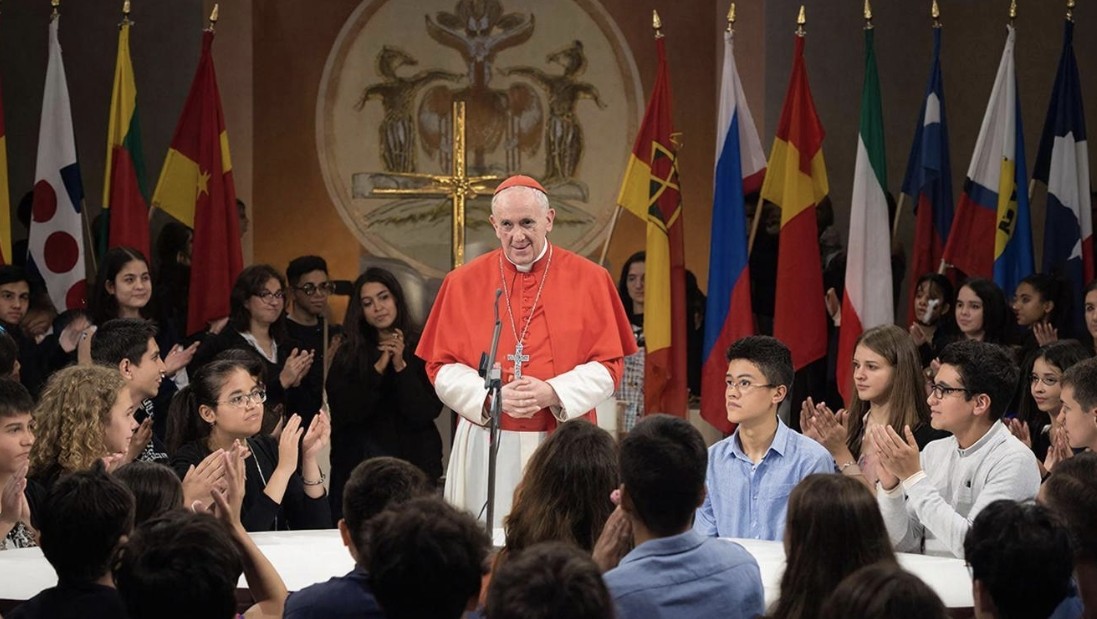
This central thesis was articulated by Pope Leo XIV during a significant address delivered on Friday, December 5, 2025. The Pontiff's discourse was a keynote feature at the conference titled "Artificial Intelligence and Care for Our Common Home," an event co-organized by the Centesimus Annus Pro Pontifice Foundation and SACRU. This gathering served as the platform for presenting a comprehensive report that evaluated the multifaceted impact of AI across numerous societal domains. During his address, Pope Leo XIV underscored a fundamental distinction: the mere acquisition of data does not equate to the derivation of genuine meaning, a process that inherently demands confronting profound existential inquiries.
Pope Leo XIV specifically exhorted educators and parents to instruct young individuals on leveraging technology with their inherent human intelligence to pursue verifiable truth and enhance their capacity for sound decision-making. He asserted that constructing a positive future hinges upon reinforcing confidence in humanity's capacity to actively steer AI's development, rejecting the notion that its advancement is an unstoppable, predetermined trajectory. This necessary stewardship must take precedence over partisan political interests or the pursuit of profit concentrated within narrow corporate or financial circles.
Artificial intelligence has already instigated profound societal transformations, influencing fundamental cognitive functions such as critical thinking, discernment, established methods of learning, and the nature of interpersonal relationships. The conference grappled with essential questions, including the mechanisms required to guarantee that AI serves the broader common good and the evolving definition of what it means to be human in this new technological epoch. The Pontiff placed strong emphasis on the necessity of reflecting upon the freedom and the internal, spiritual life of youth as they interact with technology's pervasive influence on their developmental stages.
He maintained that human beings must operate as active co-workers in the ongoing process of creation, actively shaping outcomes, rather than passively consuming content generated solely by artificial intelligence systems. This active role is essential for safeguarding distinctively human characteristics and intellectual autonomy. The Centesimus Annus Pro Pontifice Foundation, established in 1993, focuses its research on the social doctrine of the Church, examining technological shifts through an ethical lens, while the SACRU organization frequently collaborates with Vatican bodies to provide technical and ethical guidance on emerging technologies. The December 2025 conference followed earlier discussions, such as the 2024 Vatican meeting on digital ethics, which highlighted the urgency of establishing robust governance frameworks.
25 Views
Sources
vaticannews.va
AgenSIR
Avvenire di Calabria
Fondazione Centesimus Annus Pro Pontifice
Crux Now
Fondazione Centesimus Annus Pro Pontifice
Read more news on this topic:



Did you find an error or inaccuracy?
We will consider your comments as soon as possible.