


After a quarter-century of endless negotiation rounds, mutual recriminations, and nearly abandoned hopes, the free trade agreement between Mercosur and the European Union has officially entered into force. The announcement, made just two hours ago, feels almost surreal: a document whose negotiations began in the mid-1990s has finally weathered political storms, environmental scandals, and numerous changes in government. It now becomes a functional mechanism that will bind the economies of the two continents more tightly and profoundly than any previous partnership declarations.
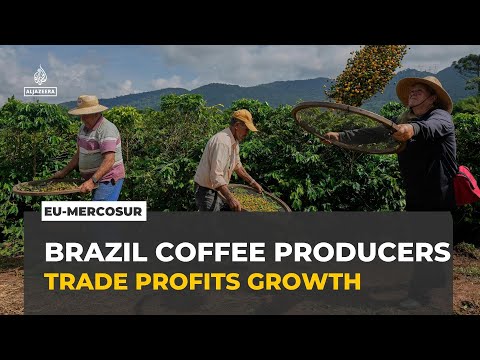
The stakes are difficult to overstate. For Brazil, Argentina, Uruguay, and Paraguay, a direct path is opening to the world’s wealthiest consumer market, accompanied by sharp tariff reductions on beef, sugar, ethanol, coffee, and soy products. Meanwhile, European manufacturers will gain significantly improved access to South American markets for automobiles, machinery, pharmaceuticals, and financial services. Preliminary estimates suggest that the annual growth in bilateral trade could exceed 20 billion euros in its initial years, though precise figures will only emerge once actual logistical chains are operational. This is more than just a commercial transaction; it is a calculated attempt to counterbalance China's growing influence in Latin America while simultaneously pushing back against the protectionist sentiments rising on both sides of the Atlantic.
Yet, beneath the celebratory facade lies a deep-seated tension that has not dissipated. European farmers have spent years warning that competition from South American meat and grain could jeopardize entire agricultural regions in France, Poland, and Ireland. In response, South American partners have frequently pointed to European agricultural subsidies that have distorted the global market for decades. A particularly sensitive issue remains the environment. Critics of the deal, including many European environmental organizations, fear that lowering trade barriers will incentivize Brazil to further expand grazing lands at the expense of the Amazon rainforest. Although the current Brazilian administration promises rigorous oversight, history demonstrates how quickly political pledges can diverge from reality on the ground.
Notably, the agreement itself only became possible due to a rare alignment of interests. The European Union sought a symbolic victory for its open-trade policy following a series of setbacks with other partners. Mercosur, meanwhile, was searching for new markets amidst economic instability and mounting pressure from Asian giants. The result is a compromise that includes not only tariff concessions but also chapters dedicated to sustainable development, labor standards, and dispute resolution. Of course, many of these provisions are couched in general terms, and their actual effectiveness will hinge on monitoring mechanisms that have yet to be fully established.
A parallel can be drawn to the long and difficult renovation of an old house: the parties spent years bickering over paint colors and window placement until they finally realized the building would collapse without a shared foundation. Today, that foundation has been laid. However, the renovation is only just beginning. The parliaments of Mercosur countries and the national assemblies of European states must still finalize internal procedures, while businesses need to reconfigure their supply chains to meet the new regulations. Those expecting an instantaneous economic miracle are bound to be disappointed. Real change will be both gradual and uneven.
Nevertheless, the mere fact that the agreement has entered into force is a game-changer. In a world where multilateral arrangements are increasingly sidelined by bilateral deals and raw power, Mercosur and the EU have proven that patience and persistence can still prevail. The fundamental question now is whether both sides can transform this document into a tool for not just mutual profit, but for a genuine strategic alignment that can weather the next shift in political winds. The answer to that will be written not in Brussels or Brasília, but in the fields, ports, and assembly lines of two continents that are now more closely linked than ever before.


