


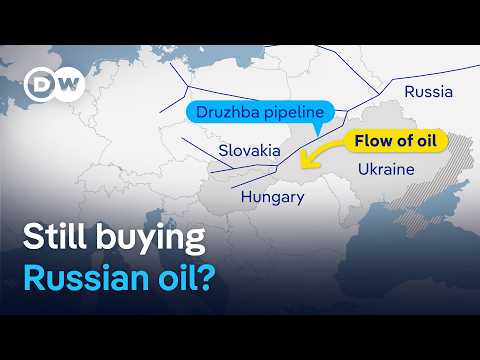
When Slovakia announced it would continue receiving Russian oil through the Druzhba pipeline even if Kyiv halts transit, the news sent shockwaves through Brussels. According to an Associated Press report, Slovak authorities emphasized they have sufficient reserves while simultaneously voicing frustration over a potential supply cutoff directly linked to Ukraine's stance. This seemingly technical dispute immediately exposed a fundamental issue: EU unity on energy remains fragile even after years of war and sanctions.
The internal dynamics of the Union are currently defined by a deep rift between nations willing to pay any economic price for strategic independence from Russia and those like Slovakia and Hungary, which prioritize national economic interests over the collective stance. AP News details how the pipeline crossing Ukrainian territory remains the final legal channel for Russian oil deliveries to these countries, despite numerous rounds of sanctions. This exemption, originally granted for practical reasons, has now evolved into a constant source of friction within the bloc.
Multilateral financial support for Ukraine—comprising hundreds of billions of euros from the EU, the U.S., and international institutions—is serving as more than just an act of solidarity; it has become a powerful tool of leverage. Official statements from European officials indicate that aid is tied to the requirement for reforms and a commitment to the shared position on Russia. However, as the Slovak case demonstrates, the more funds are allocated to Kyiv, the stronger the resistance becomes from EU members feeling the brunt of the energy crisis and rising prices.
This mechanism creates a complex system of incentives. Brussels uses these financial flows to keep Ukraine within its orbit while simultaneously attempting to discipline "problematic" member states. According to the report, Slovakia has already received substantial macro-financial assistance from the EU, making its position particularly telling: while receiving funds for economic stabilization, the country maintains its energy ties with Moscow. Such duality weakens the EU's negotiating position in its dialogue with both Russia and other global players.
As an old Czech proverb goes, "when neighbors quarrel, a third party always benefits." In the current situation, the third-party beneficiary is not only Russia, which continues to reap oil revenues, but also China, which is closely monitoring Europe's inability to forge a unified energy policy. The EU's internal contradictions make it appear less predictable and less reliable to the Global South.
Long-term consequences are already beginning to surface. The more actively the EU uses financial aid as a geopolitical instrument, the more frequently questions arise regarding the consistency of its foreign policy. Preliminary reports from diplomatic circles suggest growing irritation in Eastern Europe: countries that have completely abandoned Russian oil are rightly questioning why their neighbors continue to indirectly fund the Russian war machine.
Ultimately, the EU's ability to align its internal dynamics with its multilateral financial assistance will determine how effectively the bloc can influence its global partners in the future.


