
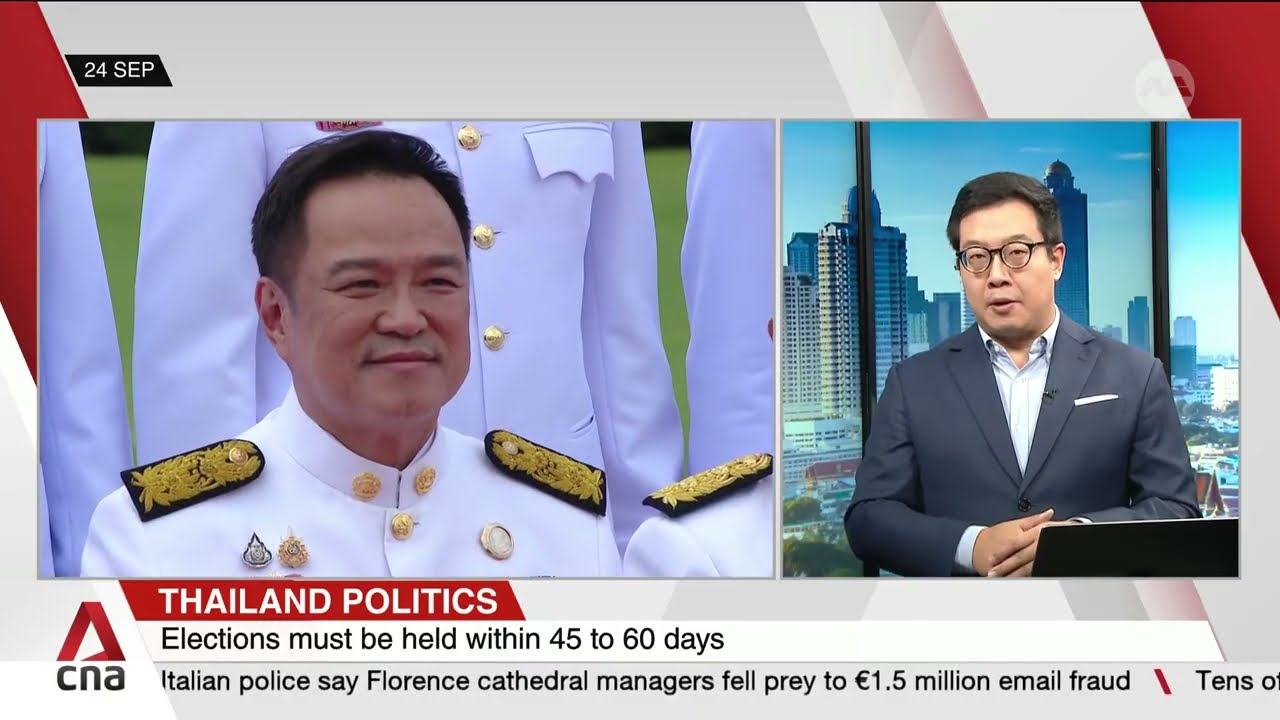
Thai Prime Minister Anutin Charnvirakul Dissolves Parliament Amid Border Escalation
Edited by: Svetlana Velgush
On Friday, December 12, 2025, Thailand’s Prime Minister, Anutin Charnvirakul, formally announced the dissolution of Parliament. This pivotal move immediately sets the stage for a general election, which is mandated to take place within the subsequent 45 to 60 days. The decision, formalized through a Royal Decree approved by King Maha Vajiralongkorn, was publicly framed as a necessary step to "return political authority to the people."
Anutin Charnvirakul, who leads the conservative Bhumjaithai Party, assumed the premiership of a minority government following the removal of his predecessor, Paetongtarn Shinawatra. Ms. Shinawatra was ousted on August 29, 2025, by a ruling from the Constitutional Court due to ethical violations stemming from a phone conversation with former Cambodian leader Hun Sen. Mr. Charnvirakul was sworn in on September 24, 2025, and his administration has operated under constrained authority from its inception.
The political maneuver to dissolve the legislature occurred against the backdrop of a simmering border conflict with Cambodia, which saw casualties on both sides during December 2025. While the official justification cited the administration’s status as a "minority government," which Anutin argued hindered stable governance amidst current challenges, the timing is notable. The decision was hastened by the threat of a no-confidence vote from the People's Party (PP), the largest parliamentary bloc. Their dissatisfaction stemmed from Anutin’s alleged failure to adhere to agreements regarding a referendum on constitutional amendments.
The border escalation, which reignited violently on December 7, 2025, provided a critical context for this political shift. These recent clashes, involving artillery and air power, are an extension of the conflict that initially flared up on May 28, 2025. According to Thai authorities, the recent fighting has necessitated the evacuation of approximately 400,000 residents from border districts in Thailand. Although Anutin asserted that the parliamentary dissolution would not disrupt ongoing military operations, the nation’s persistent political instability—having cycled through three administrations since August 2023—raises serious questions about the long-term strategy for resolving the unresolved border issues.
Anutin Charnvirakul will now head the caretaker government until the elections, which are anticipated to occur by early February 2026. His administration had previously outlined a focus on short-term economic stimulus measures. However, the current dissolution signals a continuation of internal elite power struggles within the country. The outcome of the upcoming vote will ultimately determine the nation’s trajectory as it navigates sustained regional tensions along its border.
33 Views
Sources
Deutsche Welle
Deutsche Welle
EFE
Wikipedia, la enciclopedia libre
SWI swissinfo.ch
Spanish.xinhuanet.com
Reuters
The Washington Post
CNA
Wikipedia
Wikipedia
Read more news on this topic:


Did you find an error or inaccuracy?
We will consider your comments as soon as possible.