
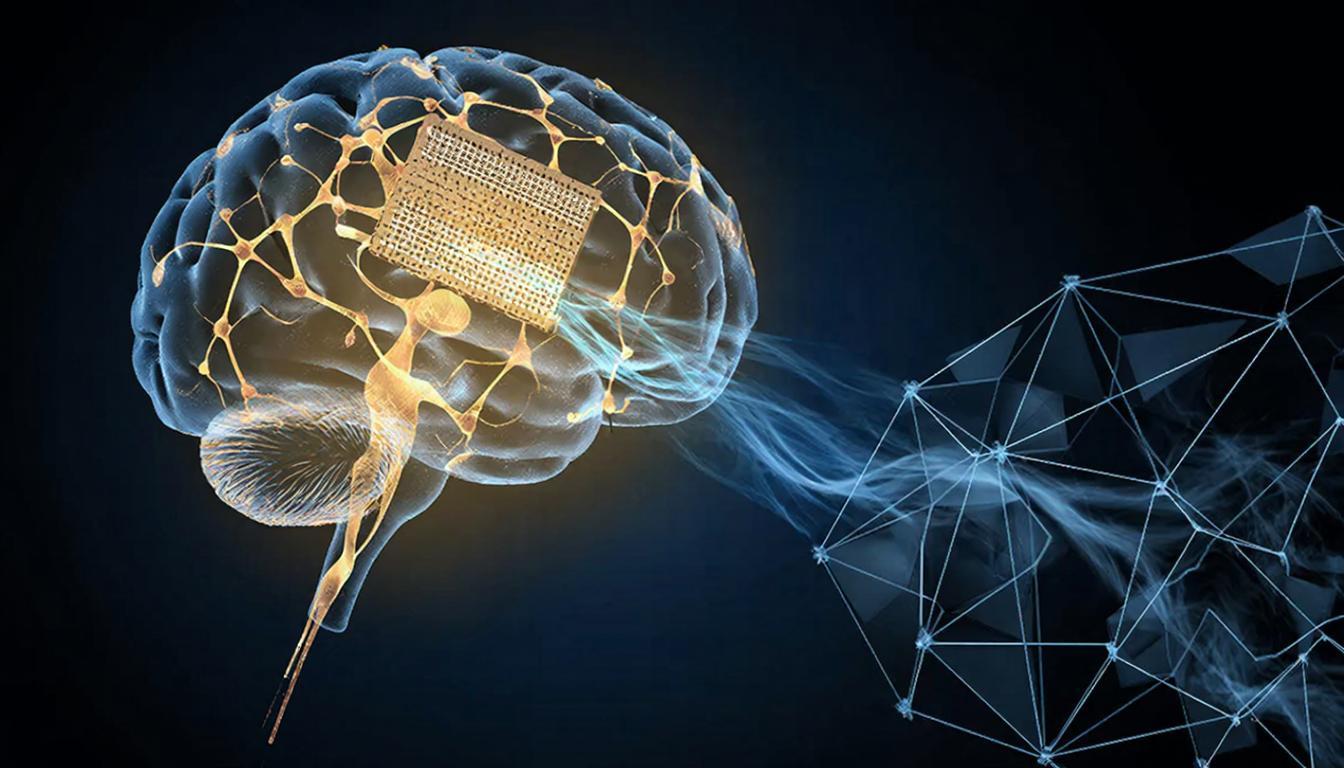
BISC Minimally Invasive Neuro-Interface Achieves High-Speed Wireless Brain-Computer Communication
Edited by: Maria Sagir
A groundbreaking neurotechnology system, dubbed the Biological Interface with the Cortex (BISC), marks a significant leap forward in brain-computer interfaces. This development offers a highly efficient, wireless communication pathway between the human brain and external computing platforms, distinguished by its minimally invasive nature. Key details surrounding this innovation were formally introduced to the scientific community on December 8, 2025, via publication in the esteemed journal Nature Electronics. The BISC project is the culmination of collaborative efforts involving researchers from several leading institutions: Columbia University's Fu Foundation School of Engineering and Applied Science, NewYork-Presbyterian Hospital, Stanford University, and the University of Pennsylvania.
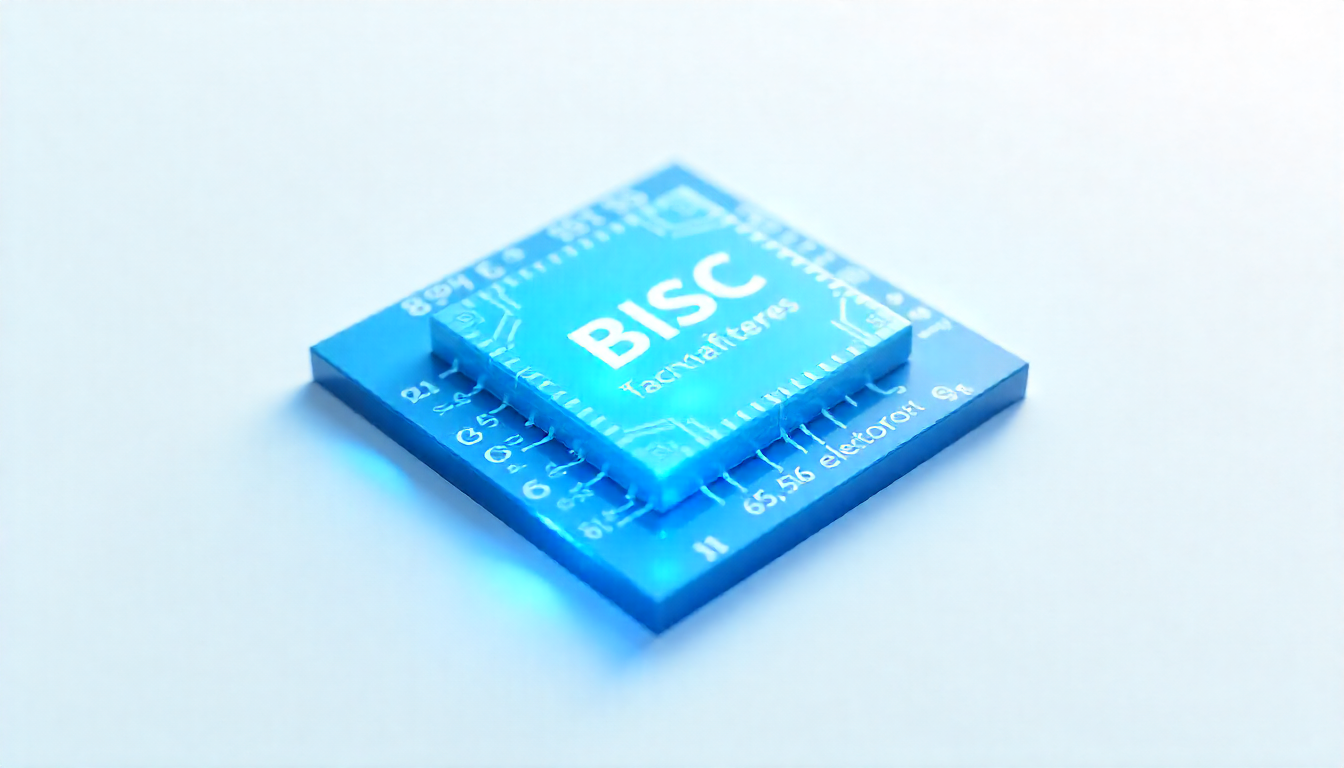
The defining characteristic of the BISC system is its remarkably thin, custom-designed silicon chip. Measuring a mere 50 micrometers in thickness, this flexible component is engineered to rest directly upon the surface of the cerebral cortex. It is positioned precisely between the skull and the brain tissue, functioning much like a “moist blotting paper.” Unlike older interface technologies that necessitated bulky, implanted hardware, BISC consolidates all essential functionalities—data acquisition, processing, wireless transmission, and power management—onto a single, integrated Complementary Metal-Oxide-Semiconductor (CMOS) microchip. Professor Ken Shepard of Columbia University emphasized that this streamlined approach successfully miniaturizes computational power, previously requiring substantial space, into an implantable format, resulting in interfaces that are simultaneously smaller, safer, and significantly more potent.
Technically speaking, BISC boasts impressive specifications for a neuro-interface device. The chip is equipped with 65,536 electrodes, facilitating the simultaneous recording of neural activity across 1,024 channels, alongside 16,384 channels dedicated to stimulation. The system achieves a remarkable data transmission rate of up to 100 Megabits per second (Mbps) utilizing a portable, battery-powered relay station. According to the development team, this performance level surpasses the capabilities of existing wireless Brain-Computer Interface (BCI) systems by more than a hundredfold. This relay station establishes the wireless link to an external computer, effectively connecting the brain to digital networks. Professor Andreas Tolias from Stanford noted that BISC fundamentally transforms the cortical surface into an effective portal, enabling both reading and writing data exchange with artificial intelligence.
The therapeutic potential inherent in BISC is vast, promising to broaden the scope of treatment options for severe neurological disorders. The creators assert the system’s capability to manage epileptic seizures and restore motor, speech, and visual functions in patients suffering from conditions such as epilepsy, spinal cord injuries, Amyotrophic Lateral Sclerosis (ALS), stroke aftermath, and blindness. To expedite its transition into clinical practice, the researchers have established a new venture named Kampto Neurotech. Dr. Nanyue Zeng, a principal engineer on the project and a founder of Kampto Neurotech, characterized BISC as representing “a fundamentally different way of creating BCI devices,” whose capabilities dwarf those of competing technologies by orders of magnitude.
Integrating BISC with cutting-edge machine learning techniques and deep neural networks allows for the sophisticated decoding of complex human intentions and perceptions. Professor Brett Youngerman, the project’s lead clinical partner at Columbia University, highlighted that the combination of ultra-high-resolution recording capabilities, complete wireless operation, and advanced decoding algorithms brings the future of seamless brain-AI interaction closer to reality, benefiting both research endeavors and patient care. Further investigations conducted within the motor and visual cortices have validated the system’s efficacy. Moreover, its extreme miniaturization paves the way for future implantable technologies that could interact with the brain using light or sound, as suggested by Professor Brett Pesaran of the University of Pennsylvania.
42 Views
Sources
okdiario.com
New Paper-Thin Brain Implant Could Transform How Humans Connect With AI
Silicon Chips on the Brain: Researchers Announce a New Generation of Brain-Computer Interface | Columbia Engineering
New Era of Brain-Computer Interface Unveiled | Mirage News
Scientists reveal a tiny brain chip that streams thoughts in real time | ScienceDaily
Electrical Brain Computer Interfaces and Human Translation - BIOEE – Columbia University
Read more news on this topic:



Did you find an error or inaccuracy?
We will consider your comments as soon as possible.