


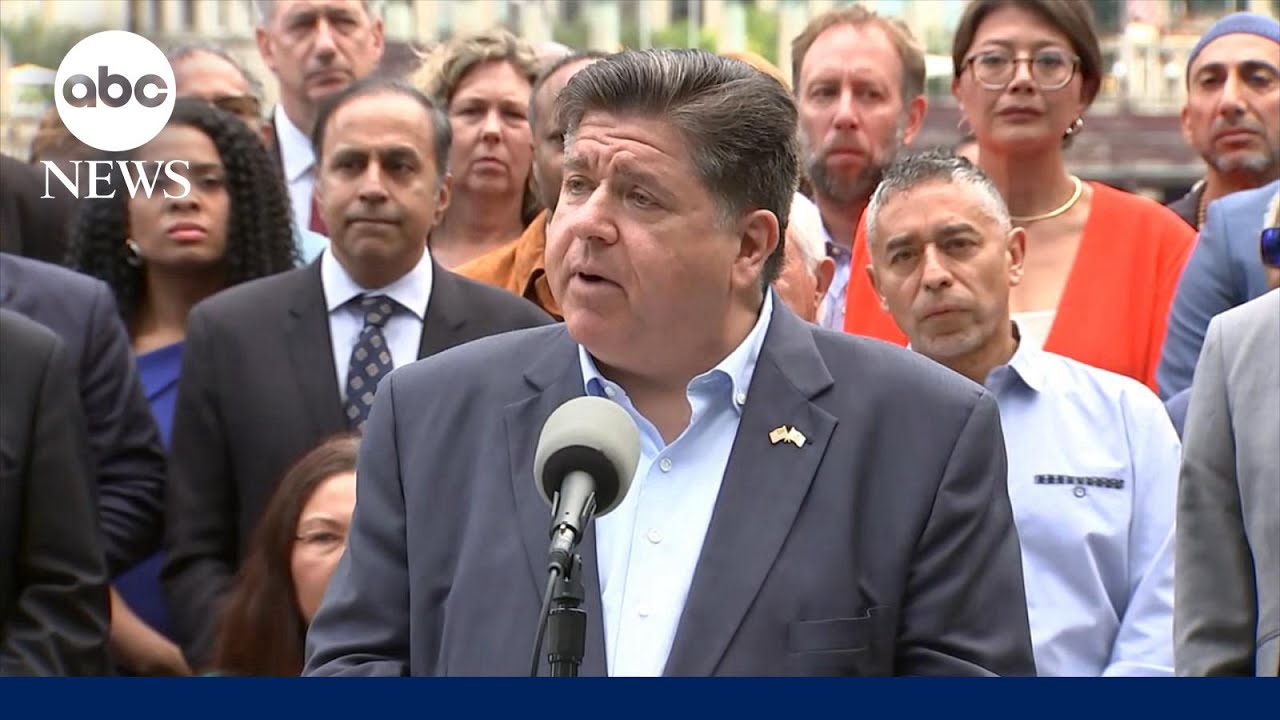
Chicago Leaders Denounce Potential Federal Troop Deployment Amidst Crime Rate Declines
Edited by: gaya ❤️ one
Chicago's elected officials are strongly opposing any potential deployment of National Guard troops to the city, a move suggested by President Donald Trump in August 2025 to address crime rates. Governor J.B. Pritzker and Mayor Brandon Johnson, along with other state and local leaders, have labeled such a deployment an unconstitutional overreach and a potential disruption to the city's progress in public safety.
President Trump characterized Chicago as a "hell hole" and suggested residents were seeking federal intervention. However, local data indicates a significant reduction in violent crime. In the year preceding August 2025, shootings decreased by 37%, homicides by 32%, and overall violent crime by over 22%. Mayor Johnson's office reported even more substantial year-to-date declines for 2025, with homicides down 32.3% and shootings down 37.4% compared to the previous year.
Governor Pritzker stated that Illinois had received no requests for federal assistance and had made no requests for intervention, emphasizing his commitment to legally opposing any deployment. He highlighted the Insurrection Act of 1807 and the Posse Comitatus Act, noting that unilateral federalization of the National Guard typically requires a governor's consent, though exceptions exist. Pritzker vowed to challenge any deployment in court, asserting the president lacks the authority to unilaterally place federalized troops on city streets.
Community advocates share concerns that military intervention could undermine recent public safety gains, advocating instead for community-focused prevention and reform initiatives. Historically, President Trump has frequently commented on Chicago's crime rates, dating back to his 2016 campaign. Despite these past statements, recent data from the Chicago Police Department presents a more nuanced picture, showing a notable decline in violent crime across the city, with homicides reaching a five-year low by 2024 and continuing to decline into 2025.
15 Views
Sources
Pulse24.com
AP News
Illinois Business Journal
WTTW News
Read more news on this topic:


Did you find an error or inaccuracy?We will consider your comments as soon as possible.