


Nigeria Grants Asylum to Guinea-Bissau Presidential Candidate Following Coup
Edited by: Tatyana Hurynovich
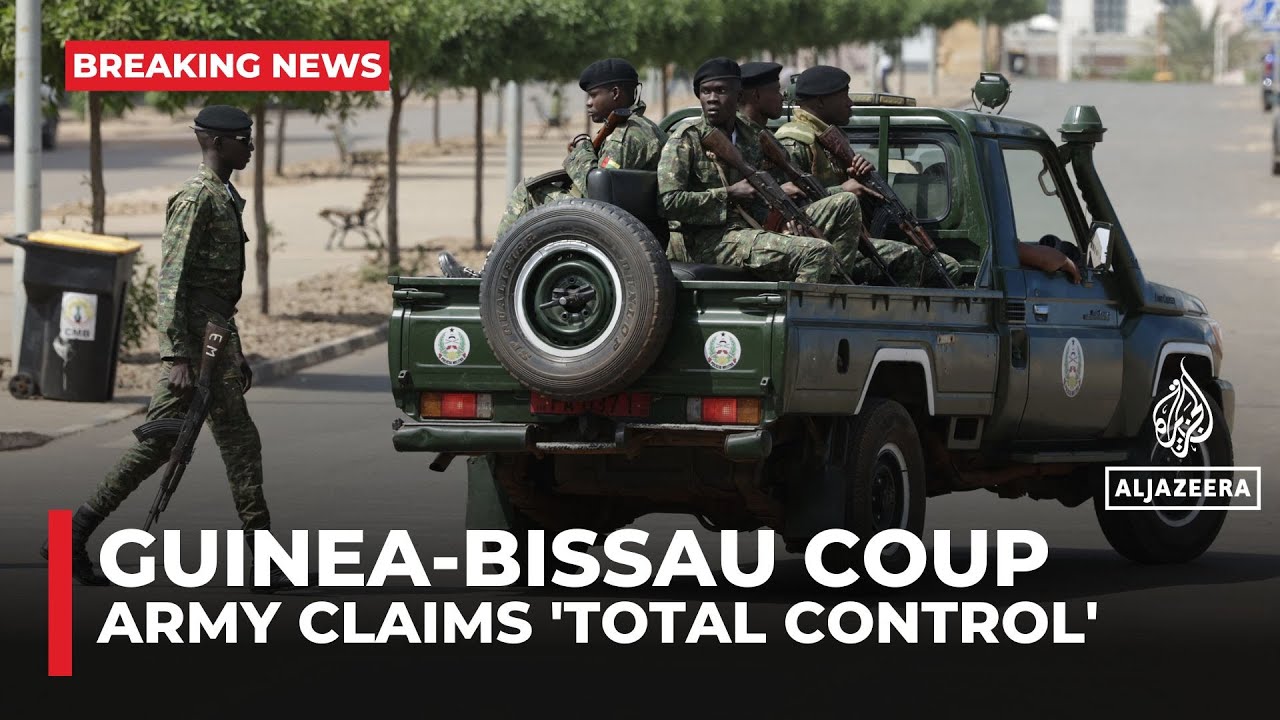
The Nigerian Government, under President Bola Ahmed Tinubu, formally extended asylum and protection to Fernando Dias da Costa, an independent presidential candidate in Guinea-Bissau, on November 30, 2025. This diplomatic measure followed a military seizure of power four days earlier, on November 26, 2025, which suspended the nation's democratic process and the presidential and legislative elections originally scheduled for November 23, 2025. Da Costa, who also presides over the Social Renewal Party (PRS), confirmed his sanctuary at the Nigerian Embassy in Bissau, citing immediate threats to his safety after the military removed the sitting President, Umaro Sissoco Embaló.
Official communication detailing Nigeria's protective action was conveyed in a formal letter signed by Minister of Foreign Affairs, Yusuf Tuggar. Minister Tuggar characterized the asylum grant as a necessary step to guarantee Mr. Da Costa's safety amid the volatile political environment. The Nigerian government explicitly stated its commitment to safeguarding the "democratic aspirations and sovereign will of the good people of the Republic of Guinea-Bissau" through this intervention, aligning with regional efforts to uphold constitutional governance in West Africa.
In response to the constitutional breach, the Economic Community of West African States (ECOWAS) swiftly mobilized a high-level delegation to engage directly with the military-backed transition government. The declared transition president, General Horta Inta-A, has publicly set a maximum transition period of one year, a timeline slated for formal review at the next ECOWAS summit on December 14. Concurrently, the African Union (AU) reacted to the unconstitutional change by imposing an immediate suspension on Guinea-Bissau, signaling continental disapproval.
Fernando Dias da Costa has condemned the military's actions, asserting that the armed forces illegally installed a "transition president" outside the constitutional framework, thereby invalidating the electoral process. The political instability also involved the temporary detention of electoral personnel; however, five magistrates from the Public Ministry and members of the National Elections Commission (CNE) secretariat were later released following the takeover. Da Costa’s background includes previous roles as Vice-President of the People's National Assembly and Minister of Territorial Administration and Local Power.
Nigeria's decision to shelter a political opponent of the coup leaders serves as a significant diplomatic signal, reinforcing the principle of political asylum for democratic figures when national institutions falter. This situation presents a critical test for regional bodies like ECOWAS in enforcing protocols against military coups, especially concerning the one-year transition timeline proposed by General Inta-A. The situation remains fluid as the December 14 ECOWAS summit approaches, which is expected to shape the next phase of regional engagement with the Bissau transition authorities.
12 Views
Sources
Deutsche Welle
EFE
Expresso das Ilhas
RTP
Santiago Magazine
Wikipédia
Read more news on this topic:


Did you find an error or inaccuracy?We will consider your comments as soon as possible.