


Assassination of Iran's Supreme Leader Triggers Regional Military Escalation
Edited by: Aleksandr Lytviak
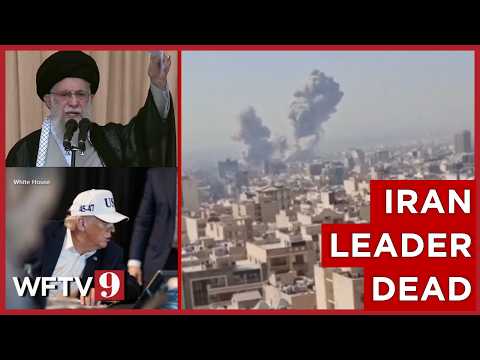
The Islamic Republic of Iran confirmed the death of its Supreme Leader, Ayatollah Ali Khamenei, on Sunday, March 1, 2026, following a massive, coordinated military action executed the previous day. The initial strikes, designated Operation Epic Fury by the United States and Operation Roaring Lion by Israel on Saturday, February 28, 2026, targeted Iranian infrastructure and leadership in Tehran. Khamenei, who had served as the nation's paramount religious and political authority since 1989, was 86 years old at the time of his death, marking the end of an era spanning over 35 years and immediately plunging the region into a high-stakes military confrontation characterized by extensive Iranian retaliation.
Iran’s immediate response involved launching multiple waves of retaliatory missile and drone strikes against Israel and U.S. military installations across Gulf countries, including Qatar, Kuwait, Bahrain, and the UAE. The Islamic Revolutionary Guard Corps (IRGC) vowed to deliver severe and decisive punishment to the entities responsible for the assassination. The initial Saturday strikes, which targeted Khamenei's residence in Tehran, reportedly resulted in the deaths of several other high-ranking officials, including Defense Minister Gen. Aziz Nasirzadeh, Army Chief of Staff Gen. Abdol Rahim Mousavi, IRGC Chief Gen. Mohammad Pakpour, and Security Adviser Ali Shamkhani. Iranian state media cited a preliminary casualty count of 201 dead and 747 injured from the initial Saturday bombardment, with 108 fatalities reported specifically in Minab.
The military action, occurring against a backdrop of internal unrest that began escalating in late 2025, carries profound geopolitical ramifications, most immediately signaled by Iran's threat to close the Strait of Hormuz. This narrow passage is critical, as approximately one-fifth of global oil consumption transited through it in 2025, raising expectations of a sharp spike in international energy prices. Furthermore, the retaliatory strikes caused tangible damage in the Gulf; the UAE Ministry of Defense reported that while most of the 137 missiles and 209 drones launched by Iran were intercepted, four individuals were injured at Dubai International Airport (DXB) concourse, and one fatality and seven injuries were reported at Abu Dhabi's Zayed International Airport. Qatar also sustained damage from an estimated 65 missiles and 12 drones, resulting in eight injuries.
The decapitation of the Iranian leadership has immediately activated constitutional mechanisms for governance transition. A Provisional Leadership Council, comprising interim leader President Masoud Pezeshkian, Judiciary Chief Gholam-Hossein Mohseni-Ejei, and a Guardian Council jurist selected by the Expediency Council, has assumed temporary authority until a new Supreme Leader is chosen by the 88-member Assembly of Experts. Potential candidates for the lifetime position include Mojtaba Khamenei, the deceased leader's son, though a dynastic transfer could incite internal system conflict. The Israeli Defense Forces (IDF) Chief of Staff, Lt. Gen. Eyal Zamir, characterized the operation as an unprecedented action that eliminated the 'top security leadership of the Iranian terror regime.'
In the United States, the operation has exposed a deep political schism regarding its justification. President Donald Trump framed the action as retribution and the 'single greatest chance for the Iranian people to take back their country,' promising overwhelming force against any Iranian retaliation. Conversely, prominent US Democrats, including Senator Tim Kaine, condemned the strikes as an 'act of war' executed without the requisite Congressional authorization, labeling it a 'colossal mistake.' This kinetic engagement is the second major U.S. military action against Iran in eight months, following Operation Midnight Hammer in June 2025, which targeted nuclear facilities. Analysts have drawn comparisons between this 'war of choice' and the 2003 invasion of Iraq, suggesting a strategic objective of regime change. The conflict's immediate human toll extended to American citizens, with reports of professional athletes, including Destiny Littleton, Tiffany Mitchell, and Mikiah Herbert Harrigan, who were playing in Israel, caught in the escalating exchange.
34 Views
Sources
Deutsche Welle
Al Jazeera Online
Deutsche Welle
New York Post
Deutsche Welle
Deutsche Welle
IOL
Deutsche Welle
Daily Mail Online
Daily Mail Online
Deutsche Welle
Deutsche Welle
Al Jazeera Online
The New York Times
Daily Mail Online
The Washington Post
The Guardian
Wikipedia
CBS News
Wikipedia
The Guardian
ARAB NEWS
Wikipedia
Middle East Eye
The Straits Times
The Mirror US
The Washington Post
AP News
CBS News
WUSA9
CBS News
The Washington Post
The Times of Israel
The Guardian
Iran International
RTS
Radio Slobodna Evropa
The Guardian
CBS News
N1
The Guardian
The Times of Israel
Wikipedia
The Washington Post
Manara Magazine
The Guardian
The Times of Israel
Al Jazeera
The Washington Post
Wikipedia
24 Канал
INTERFAX.RU
Reuters
УНН
The Washington Post
Grand Pinnacle Tribune
NBC Sports
Wikipedia
San Francisco Chronicle
Gonzaga University Athletics
The Guardian
The Guardian
The White House
Wikipedia
GOV.UK
Deutschlandfunk
ZDFheute
Wikipedia
Wikipedia
Heute.at
Українська правда
Укрінформ
ТСН
UAinfo
РБК-Україна
Xinhua
Al Jazeera
Wikipedia
The Guardian
AP News
The Washington Post
Wikipedia
CBS News
The Guardian
CSIS Events
CBS News
Reuters
Al Jazeera
The Japan Times
The Washington Post
Read more articles on this topic:


Did you find an error or inaccuracy?We will consider your comments as soon as possible.