


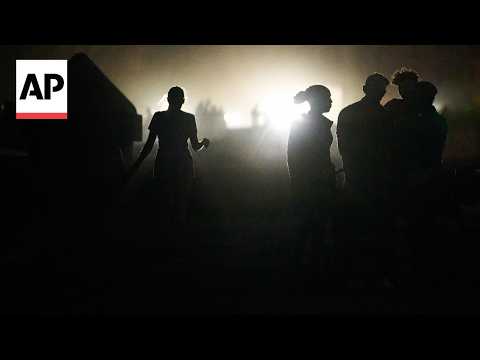
On Saturday, March 21, 2026, the Republic of Cuba was plunged into darkness once again as the national power grid suffered a total collapse. This marks the third time in the month of March that the island's energy infrastructure has failed, highlighting a state of critical instability. According to the Ministry of Energy and Mines, the initial disruption was triggered by an unforeseen technical malfunction in a generating unit at the "Nuevitas" Thermal Power Plant (TPP), located in the province of Camagüey. This single failure initiated a devastating cascade effect, knocking out all connected equipment and resulting in a nationwide cessation of electricity.
In response to the crisis, the Cuban Electric Union immediately implemented emergency protocols to establish localized "micro-islands." These isolated grids are designed to maintain power for essential infrastructure, including medical facilities, vital emergency centers, and water supply systems—a standard measure for large-scale outages. This latest blackout follows closely on the heels of another nationwide failure that occurred just five days prior, on Monday, March 16, 2026. Authorities have confirmed that the resulting power loss affected more than 10 million residents across the country.
The energy situation is further complicated by a chronic fuel deficit that President Miguel Díaz-Canel admits has reached a breaking point. For three consecutive months, Cuba has not received oil shipments from its international partners. Currently, the nation produces only about 30,000 barrels of oil per day, which covers approximately 40% of its economic requirements, far short of the 110,000 barrels needed daily. This severe fuel shortage had already forced the government to implement strict rolling blackouts, which in some regions have lasted up to 12 hours a day.
President Díaz-Canel and the Cuban government maintain that the energy crisis is being exacerbated by external geopolitical pressures, specifically an energy blockade intensified by the United States. Officials pointed to a warning issued by President Donald Trump in January 2026 regarding the imposition of tariffs on nations supplying oil to the island. Under this pressure, reports indicate that the U.S. successfully halted Venezuelan oil shipments, which previously satisfied a major portion of Cuba's energy needs. Furthermore, public statements by President Trump regarding a potential "seizure" of Cuba have prompted the Cuban leadership to declare their readiness for a possible "attack."
Historically, the island's energy system remains deeply vulnerable due to its reliance on aging Soviet-era technology. Much of the existing equipment was not designed to process the heavy, high-sulfur crude oil that Cuba is now forced to use in the absence of lighter imports—a systemic issue dating back to the 1990s following the collapse of the Soviet Union. These recurring failures have become more frequent over the last two years, leading to the arrival of international humanitarian convoys in Havana this March. This development underscores the growing risk of a humanitarian catastrophe, a concern previously voiced by the United Nations.


