


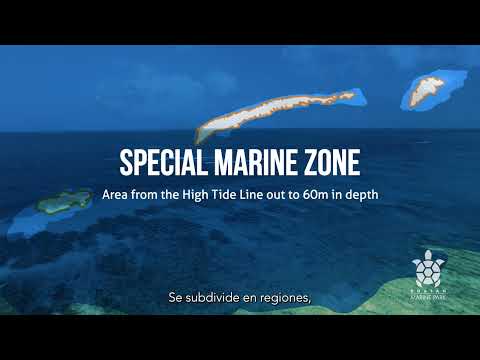
Video about Honduras' largest marine protected area, the Bay Islands — the region where a pilot project for coral restoration is being implemented.
Share
Edited by: Irina Davgaleva
Video about Honduras' largest marine protected area, the Bay Islands — the region where a pilot project for coral restoration is being implemented.
The Canary Islands are evolving far beyond their traditional image as a sun-and-beach destination, establishing themselves as a strategic partner in the global pursuit of sustainable development. A landmark agreement signed between the archipelago's regional government and the Central American Bank for Economic Integration (CABEI) has positioned the islands as a vital hub for exporting knowledge and technology across the Atlantic, specifically targeting the burgeoning markets of Latin America.
This historic move represents the first instance of a Spanish autonomous community formalizing a technical and financial cooperation framework with CABEI. The partnership is centered on the advancement of sustainable tourism, the growth of the "blue economy," and the seamless transfer of engineering expertise between continents. Through this agreement, Canarian businesses—particularly small and medium-sized enterprises—can now participate in international tenders backed by the bank's financial guarantees, opening doors to dynamic markets from Panama to Colombia.
In practice, the Canary Islands are solidifying their role as a strategic bridge connecting the continents of Europe, Africa, and Latin America. This initiative simultaneously bolsters the region's international reputation as a sophisticated laboratory for sustainable tourism practices and innovative environmental solutions. By leveraging its unique geographic position, the archipelago is transforming into a center of excellence for cross-border cooperation.
Tangible projects under this new framework are already being implemented on the ground. In Honduras, an initial initiative has focused on coral restoration within the Bay Islands, a project designed to safeguard fragile marine ecosystems while providing essential support to local coastal communities. This effort demonstrates how environmental preservation can be integrated with economic resilience in sensitive maritime regions.
A second major project is currently underway in Belize, focusing on the sustainable management of tourism flows. This initiative involves the ecological modernization of border crossings and the implementation of energy-efficient solutions to reduce the environmental footprint of travel. Such projects highlight the practical application of Canarian expertise in managing complex tourism infrastructure in a sustainable manner.
Representatives from CABEI, an institution founded in 1960 that has maintained a partnership with Spain since 2005, emphasize that this collaboration is more than a simple exchange of ideas. It represents the launch of a sophisticated cooperation model among Atlantic nations, where the tourism sector serves as a primary driver for both technological innovation and climate-conscious policy making.
The financial commitment from the Canary Islands to this program is set at 204,001 euros. This specific sum represents more than 50% of the equity participation in the project, a figure that symbolically and practically underscores the region's leadership in the initiative. CABEI is responsible for covering the remaining costs, with the full implementation of these collaborative projects scheduled to continue through the end of 2026.
The archipelago's unique economic landscape provides a strong foundation for such international ventures. The Canary Islands Special Zone (Zona Especial Canaria, or ZEC), which has been in operation since 1986, offers a significant 50% reduction in corporate tax for a period of eight years. This fiscal regime makes the islands an exceptionally attractive destination for international investment and a stable base for companies looking to expand globally.
The strategic economic weight of the region is further evidenced by recent trade data. In 2023, the volume of mutual trade between the Canary Islands and the rest of Spain reached nearly 19 billion euros, a figure that highlights the archipelago's vital role within the national economy. This internal strength is now being projected outward through the partnership with CABEI, allowing Canarian firms to showcase their consultancy and engineering prowess.
Thanks to this international cooperation, Canarian companies are now well-positioned to offer their leadership in engineering and specialized consulting to nations such as Guatemala, the Dominican Republic, and Costa Rica. This expansion allows the region to diversify its economic influence and establish long-term professional ties with some of the most rapidly developing economies in the Western Hemisphere.
Modern tourism in the current era is no longer defined solely by hotel capacity or physical infrastructure; it now encompasses advanced ecological practices, cutting-edge digital solutions, and deep engagement with local communities. The Canary Islands, having become a primary showcase for European "green" policies, are demonstrating how a traditional tourist destination can reinvent itself as a global source of innovation and specialized knowledge.
This strategic pivot is particularly symbolic for the islands as they enter a new phase of development, transitioning from a well-known holiday spot to an international center of excellence for smart territories and sustainable practices. By building robust economic links and enhancing Spain's global standing in sustainability, the Canary Islands are proving that the future of tourism lies not in mass consumption, but in the exchange of expertise and responsible solutions that define the new Atlantic economy.
La Voz de Lanzarote
Portal de Noticias del Gobierno de Canarias
Canarias apuesta por la internacionalización para reforzar el valor de su industria turística
Canarias se consolida como el gran 'hub' Atlántico
Manuel Domínguez González - Wikipedia, la enciclopedia libre
Proexca y Excelcan firman en Fitur el acuerdo que marcará las acciones conjuntas de 2026


