


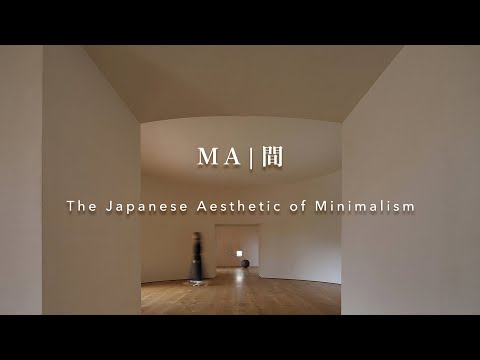
Japanese Concept of 'Ma' Offers Counterpoint to Modern Design Overload
Edited by: Irena II
The Japanese philosophical concept of 'Ma' (間), which broadly translates to space or interval, is gaining traction as a critical counter-narrative to prevailing Western design philosophies. This principle asserts the inherent value of emptiness, treating the void as a multi-layered entity that warrants deliberate utilization. This perspective contrasts with Scandinavian ideals such as 'hygge,' which emphasizes coziness, and 'lagom,' which focuses on balance and sufficiency. Projections indicate that 'Ma's' influence on global design trends is expected to shape the landscape by 2026. Beyond aesthetics, this philosophy is resonating in Western contexts as a vital framework for mitigating pervasive information overload.
The ideogram for 'Ma' (間) itself provides insight, visually combining the characters for 'gate' (門) and 'sun' (日), symbolizing light passing through an empty doorway. In practical application, this translates into design as a temporal or spatial gap, assigning significance to the areas intentionally left 'un-designed' around objects. This emphasis on negative space is philosophically linked to the relationship between Yin and Yang, highlighting its importance for energy flow and light within a composition. 'Ma' promotes the active presentation of the void, shifting design focus toward experiential value over mere aesthetics, distinguishing it from interpretations of minimalism that focus solely on the absence of clutter.
'Ma' is deeply embedded in Japanese thought, extending beyond physical space into realms of time and social interaction. It functions as a core tenet of Zen philosophy, manifesting as the silence between musical notes or the pause between spoken words, which grants clarity and distinctiveness to what is present. In social contexts, this translates to a deliberate pause before action, allowing for contemplation, or in conversation, where the unsaid often carries greater significance than the spoken word. Cultural adherence to this concept is so strong that a failure to observe necessary pauses can result in being labeled 'Ma-nuke,' or a fool, for speaking without due thought.
This cultural emphasis on the interval is evident in traditional Japanese arts. In Ikebana flower arrangement and Sumi-e ink painting, the empty contours between elements are considered as vital as the elements themselves. Architecturally, the principle is seen in structures prioritizing flow and harmony through purposeful gaps, contrasting with Western architecture's tendency toward filling space. This concept is powerfully illustrated in Tadao Ando’s Church of the Light, completed in 1989 near Osaka, Japan, where a concrete volume is cut by a cross-shaped void, allowing light to define the space. This intentional subtraction creates a duality between solid and void, grounding spirituality in physical reality, and is also reflected in the traditional concept of 'ma-dori,' which emphasizes adaptable dwelling arrangements through sliding doors over static form. By demanding intentionality in what is kept and what is removed, 'Ma' fosters a sense of calm and balance, offering a profound counterpoint to the constant consumption driving the contemporary design landscape, which is also seeing a trend toward 'Imperfect by Design' in 2026.
68 Views
Sources
womenonly.skai.gr
WomenOnly
JAPAN HOUSE Los Angeles
Our Culture Mag
Ricepaper Magazine
Uism
Read more articles on this topic:

This is great for real estate advertising. @DraftedAI lets you create a blueprint for your own house and design the interior, walls and colors as you like. And you can set the buildable area, the rooms and imagine what you could build on an empty lot.


Did you find an error or inaccuracy?We will consider your comments as soon as possible.