
Remember your true sound, the one you were born with — before words, before roles, before 'how it's supposed to be'.
Vocal Resonance Offers Pathway to Somatic Regulation and Nervous System Balance
Author: Inna Horoshkina One
The opening declaration, “In the beginning was the Word,” sets the stage for this piece, which continues the series titled “Music Remembers Us.” We are introduced to the fundamental concept that our existence begins not in silence, but with sound.
Two voices, one OM. Two singing hearts on one frequency
The very first act of life is an inhalation, immediately followed by the generation of sound. A newborn infant possesses no knowledge of musical genres or established performance techniques. Their initial expressions—a cry, a wail, or soft cooing—are pure assertions to the world:
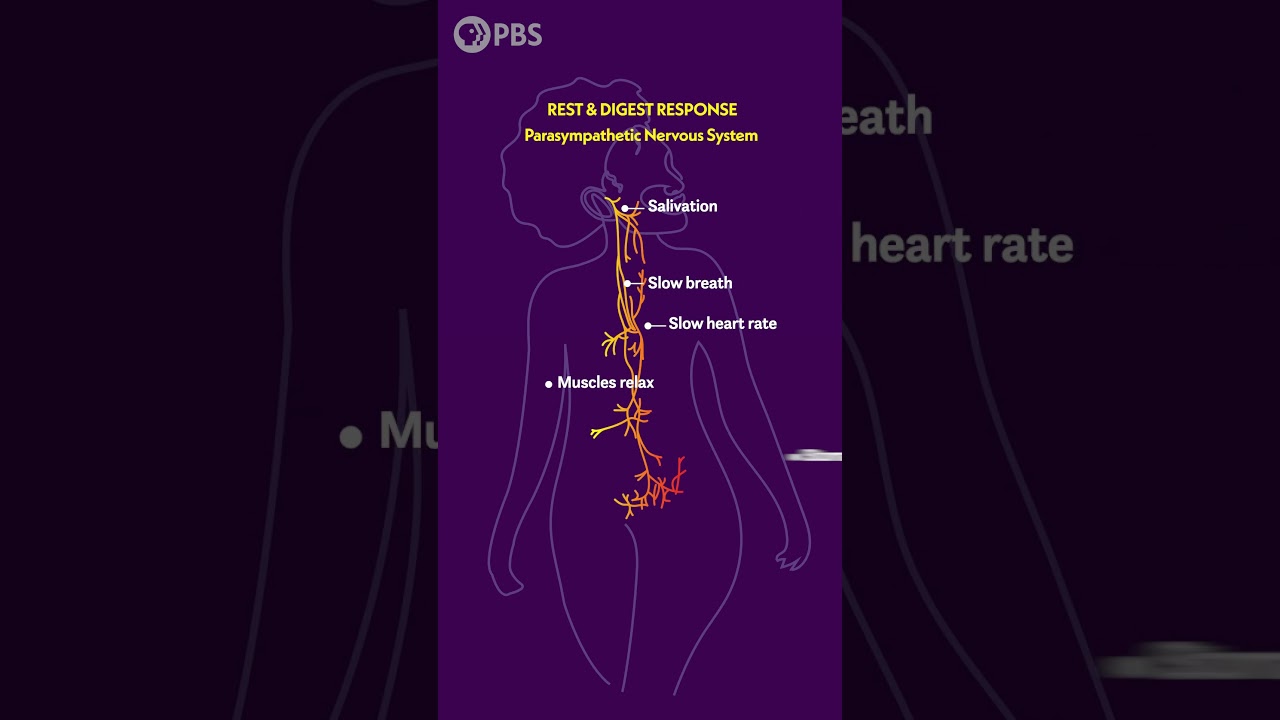
How Does Humming Help Calm Your Nervous System?
“Yes. I am here. I EXIST.”
The psychological benefits of humming | BBC Global
This primal sound is where everything originates. Sound predates formal speech, social standing, and assigned roles. It serves as a vital reminder that music’s genesis lies not in external devices like speakers or instruments, but deep within the living body itself.
The Science Behind HUMMING for Instant Stress Relief
1. The Lesson of Infancy: Embracing the Childlike State
Infants are, in essence, masters of sonic expression. They vocalize without inhibition, shifting instantly from full-throated cries to laughter, or producing gentle hums and singing their small “ahhs” and “mms” on the exhale.
They shout with their entire being,
transition to laughter in a flash,
and hum, coo, and sing their little vowel sounds as they breathe out.
They do not require “singing lessons”; they simply embody and voice their current experience.
The Gospel suggests a parallel: “Unless you turn around and become like children, you will not enter the Kingdom of Heaven.” When translated into the language of the body, this becomes an invitation to return to a state of unburdened trust, playfulness, and simplicity—a place where sound flows from the core rather than from rigid control or self-criticism.
Fascinatingly, modern science quietly corroborates this spiritual metaphor. States characterized by joy, curiosity, and gentle presence correlate directly with:
healthier Heart Rate Variability (HRV),
enhanced recovery metrics,
and greater overall brain plasticity.
Therefore, adopting a “childlike” approach is more than just a spiritual analogy; it represents a measurable and highly beneficial operational mode for the nervous system.
2. Humming: A Tangible Antidote to Stress
The most profound forms of efficacy often emerge from practices that seem almost too simple to be effective.
Bhramari: Our Simple “Mmmm…”
A growing body of research is focusing on Bhramari, a breathing technique that involves humming a soft “mmmm” or a gentle, bee-like buzz on the exhale.
In a pilot study conducted in 2023, scientists monitored the Heart Rate Variability (HRV) of 23 subjects across four distinct conditions: humming, physical activity, emotional stress, and sleep.
The findings were remarkable:
The stress index registered its lowest point during the humming phase.
Total HRV power surpassed that of all other states—in some parameters, it even proved more favorable than during sleep.
Additional studies confirm that humming respiration can:
boost HRV,
lower blood pressure in hypertensive individuals,
and strengthen the parasympathetic branch of the nervous system—the body’s dedicated recovery mode, as opposed to its fight-or-flight response.
In plain terms, dedicating just 60 to 90 seconds to a conscious “mmmm…” can significantly shift the autonomic nervous system toward regeneration—performing as well as, or sometimes faster than, a subsequent workout or a short nap.
Humming is not merely a poetic concept; it is a quantifiable method to guide the body out of stress and into restoration.
3. Om and the Voice: Gentle Vagal Nerve Stimulation
Deep within our physiology resides an extraordinary conductor: the Vagus Nerve. This nerve connects the brain to the heart, lungs, and digestive system, profoundly influencing whether we live under chronic tension or can regularly return to a state of calm.
When examining the brain via fMRI, the results become even more compelling. Studies involving the chanting of “OM”—resonating with the singular sound of OM, which many traditions regard as the universe’s primordial vibration—demonstrate that its calm repetition reduces activity in key limbic structures:
the amygdala,
the hippocampus,
the insula,
and the orbitofrontal cortex—
precisely the areas that activate during experiences of fear, anxiety, or pain.
Researchers draw a comparison between this pattern and the effects of invasive Vagus Nerve Stimulation—a medical intervention used for severe depression and epilepsy. Here, a similar calming circuit is activated without surgery or devices, utilizing only the vibrating sound produced during exhalation.
Recent reviews of OM practices consistently report:
a reduction in subjective stress levels,
a decrease in severe, depressive emotions,
improved regulation of internal states,
and a stable shift of the nervous system into the parasympathetic mode, enabling self-repair.
It is fair to conclude that your own voice functions as an inherent, natural analogue for a gentle vagal nerve stimulator.
4. The Sigh as a Frequency Switch: An Internal View
Examining the body’s inner logic clarifies why these phenomena are possible. The body is far more than just “flesh and bone”; it is a living informational system.
Cells undergo constant renewal.
Structures quietly reorganize themselves.
The organism accurately mirrors our internal landscapes—our thoughts, emotions, and reactions to the world.
In the body’s language:
every emotional state corresponds to a specific frequency,
breathing acts as the channel selector,
and the voice delivers the command dictating how the body should retune.
When we sigh because something feels “impossible,” the body is not acting randomly. A deep inhale followed by a long exhale is the organism’s attempt to pull us out of a stuck mental loop and shift us to a new experiential frequency.
Adding sound to this breath transforms it from mere respiration into a clear vibrational message to the cells: “Change mode. Shift from mobilization to recovery. Move from constant defense to living.”
In this context, the voice is not merely an embellishment or a talent; it is a Divine Instrument for bodily calibration.
5. State as Vibration
Everything discussed ultimately converges on one concept: STATE.
One can hum mechanically while remaining panicked. One can repeat “OM” out of habit, and the nervous system will register tension, not presence. The crucial element is the state from which the sound originates.
Childlike laughter,
genuine surprise,
a warm “wow” at life,
quiet gratitude—
these are not just fleeting moods; they are frequencies that cause cellular behavior to change.
Research confirms that in such states:
HRV tends to increase,
recovery improves,
and adaptive flexibility rises.
Thus, when we urge someone to “be like a child,” on a physical level, this translates to: “Recall that state where the world is a marvel, and your sound is natural, not judged.”
From this state, let the sound emerge: a soft “mmmm…,” a resonant “OM…,” your own name, or any word that signifies Life to you.
6. The Simple “Mmm…” as an Internal Pharmacy
There are no complex protocols or rigid rules here. This is not an obligation but an invitation to remember oneself as a sounding being.
90 Seconds of “Mmm…” Daily
Choose any moment: immediately upon waking, when anxiety strikes, or even while scrolling on your phone. Sit or stand comfortably.
Inhale through the nose.
On the exhale, allow a long, soft “mmmm…” to flow, as if purring gently from your chest.
Six to eight such breaths take about 60 to 90 seconds.
The key is to allow the sound to flow naturally, as it can in that moment, rather than forcing it.
The Sound of Joy
Once daily, pose a simple question to yourself: “If I were a child feeling truly wonderful right now, how would I sound?”
This might manifest as:
a brief phrase,
a giggle,
a drawn-out “aaaaah…,”
or a radically honest “Thank you.”
Then, permit that sound to emerge at least once aloud—not for social media, not for recording, but simply so the body can register: “I am still alive. I can sound out more than just pain; I can sound out joy.”
7. The Body Is Designed to Sound Through, Not to Be Fixed. The Body Is a Divine Instrument.
The universe is often simpler than we assume. The body is not a collection of defects awaiting failure; it is a finely tuned instrument needing only to recall its original settings—its internal golden standard of resonance.
It is not an inert machine destined for decay, but a living, continuously updating system that honestly reflects our states and is ready to recalibrate when we alter the frequency.
We do not need to become someone else. We need to recall our native sound—the one we brought into this world with our first breath and first cry.
8. When Life Begins to Sing Through You
The universe is not a silent image; it is a field of resonance where every life form possesses its unique note: the stars, the ocean, our hearts, and our voices.
Every time you:
do more than just listen to music,
but allow yourself to be the sound,
you are doing more than just practicing; you are tuning your body to a frequency where it is easier to:
recover,
feel,
and simply be oneself.
Something beautiful emerges here: the phonetic closeness and essential connection between the words “voice” and “Logos.”
LOGOS represents the Original Word, the Meaning, and the resonant Order from which the world arises. VOICE is how that Meaning becomes audible through an individual—through you, right now.
One could state that: The Logos is the Word spoken by Creation. The Voice is the Logos remembering itself within a human being.
At that point, what we call Life ceases to merely happen *to* you—it begins to sing through you.
Yes. I am here. I sound in resonance with You.
236 Views
Sources
Humming (Simple Bhramari Pranayama) as a Stress Buster Holter-исследование HRV в четырёх состояниях: гуление, физическая активность, эмоциональный стресс и сон. Cureus, 2023, G. Trivedi et al.
1. Bhramari и гипертония: рандомизированное исследование (2024) Revathy A. et al. (2024). Effect of Bhramari Pranayama on Heart Rate Variability in Hypertension Patients.
Woo M. et al. (2025). Effects of slow-paced breathing and humming breathing on heart rate variability and affect
Warkari R. et al. (2025). Effect of OM meditation on cardiovascular parameters.
Shao R. et al. (2024). The Effect of Slow-Paced Breathing on Cardiovascular and Emotion Functions: A Meta-Analysis and Systematic Review.
Read more news on this topic:



Did you find an error or inaccuracy?
We will consider your comments as soon as possible.