


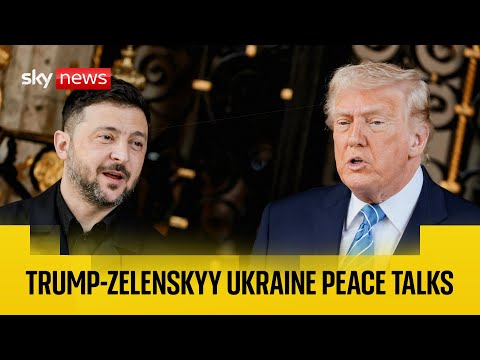
Finalizing the 20-Point Peace Agreement: Key Discussions Between Zelensky and Trump at Mar-a-Lago
Edited by: Tatyana Hurynovich
On Sunday, December 28, 2025, high-stakes negotiations took place at Donald Trump’s private estate, Mar-a-Lago, in Palm Beach, Florida. The meeting convened US President Donald Trump and Ukrainian President Volodymyr Zelensky. The primary objective of this summit was to bring the full-scale conflict initiated by Russia in 2022 to a close. Reports indicated that the negotiations centered on finalizing a draft peace agreement, which was reportedly 90 percent complete.
Diplomatic efforts were intensely focused on hammering out the crucial provisions of the comprehensive 20-point peace plan. This framework had been meticulously developed by the joint negotiating teams representing both the United States and Ukraine. The goal was to achieve a definitive resolution during this critical session.
A central topic addressed in Florida involved securing robust security assurances for Ukraine from both the United States and various European nations. These guarantees, it was suggested, might mirror the protective mechanisms currently established under NATO structures. President Trump reiterated his commitment to cementing a “strong security agreement.” However, the issue of territorial integrity, particularly concerning the Donbas region, remained a significant sticking point requiring further deliberation.
In response to the ongoing territorial disputes, President Zelensky presented a counter-proposal on behalf of Ukraine. This suggestion involved establishing a demilitarized zone across the contested areas. This concession was contingent upon Russia agreeing to a verifiable ceasefire lasting between 60 and 90 days. This move aimed to de-escalate tensions while addressing sovereignty concerns.
Prior to the Florida summit, President Zelensky engaged in crucial consultations with global leaders. For instance, on December 27, 2025, Canadian Prime Minister Mark Carney announced from Halifax an additional financial injection for Ukraine, amounting to 2.5 billion Canadian dollars, equivalent to approximately 1.83 billion US dollars. These funds were intended to facilitate Kyiv’s receipt of an installment from the International Monetary Fund and bolster overall macroeconomic stability.
President Trump also shared updates on his diplomatic outreach, noting a “good and very productive” telephone conversation with Russian President Vladimir Putin. During that call, Trump conveyed an urgent appeal for a deal, emphasizing the unacceptable human cost of the continued fighting. The seriousness of the delegations underscored the weight of the discussions. Representing Ukraine, alongside President Zelensky, were Rustem Umerov, Secretary of the National Security and Defense Council, and Sergiy Kyslytsya, the First Deputy Minister of Foreign Affairs. The American side included key figures such as Special Envoy Steve Witkoff and Jared Kushner.
President Trump framed the potential outcome of the talks in stark terms: either a swift agreement or a protracted war characterized by escalating casualties. He expressed firm confidence that both parties shared a vested interest in achieving peace. Beyond security guarantees and territorial arrangements, the 20-point blueprint also addressed Ukraine’s non-nuclear status, its path toward European Union membership, and the establishment of investment funds totaling roughly $800 billion designated for post-conflict reconstruction. The success or failure of these December 28, 2025, negotiations holds direct and profound implications for regional stability and the broader international order.
11 Views
Sources
Bild
The Guardian
CBS News
OPB
Anadolu Ajansı
The White House
Read more articles on this topic:


Did you find an error or inaccuracy?We will consider your comments as soon as possible.