


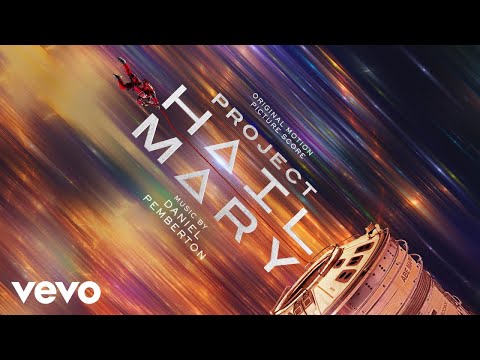
Daniel Pemberton - Life is Reason | Project Hail Mary (Original Motion Picture Score)
Share
Author: Inna Horoshkina One
Daniel Pemberton - Life is Reason | Project Hail Mary (Original Motion Picture Score)
The soundtrack for the film Project Hail Mary from Amazon MGM Studios, which premiered on March 20, 2026, has become one of the most unusual musical solutions in modern science fiction.
Composer Daniel Pemberton deliberately abandoned the usual synthesizer clichés of the genre and built the film's sonic architecture on organic sound sources—body percussion, acoustic textures, and everyday ambient sounds.
The film's directors Phil Lord and Christopher Miller were looking for a musical language that could connect drama, humor, and a sense of human presence within the space story.
The answer was a score in which the human sounds instead of the usual electronic sci-fi sound.
A group of sixteen body percussionists participated in the recording. Their rhythms formed the basis of the film's musical space—vibrant and physically tangible.
A particularly unusual element of the score was the sound of a leaking faucet, recorded on an iPhone and transformed into a full-fledged musical instrument within the soundtrack.
The original album Project Hail Mary (Original Motion Picture Score) was released in digital format on the day of the film's premiere—March 20, 2026.
Later, on March 26, Pemberton spoke in detail about the creation of the score on the Dolby Creator Talks platform, explaining his task as follows:
to create a sound that will not be an illustration of space, but an extension of the human experience within it.
This approach transforms the film's music from a background into an independent dramaturgical layer of the story.
For decades, space in cinema has sounded like a realm of machines and signals.
In Project Hail Mary, it begins to sound different—as a space of breath, movement, and human presence.
That is why Daniel Pemberton's score becomes not only a part of the film but also a step toward a new understanding of how science fiction can sound today.
Sometimes a new sound appears not when a new instrument is created.
But when the way of hearing the space around oneself changes.
Daniel Pemberton's music for Project Hail Mary reminds us that even space can sound with human presence—breath, body rhythm, and the living sounds of everyday life.
And that is exactly why science fiction today is beginning to sound different.
Not as a territory of machines.
But as a space in which a human remains audible even among the stars.


