


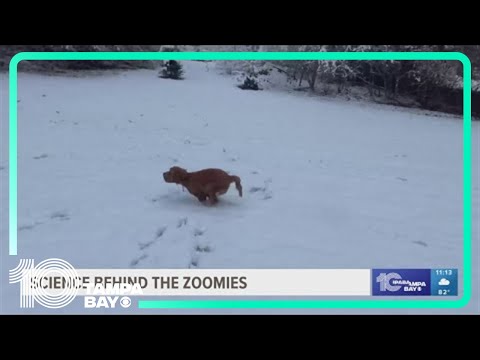
Does your pet get the zoomies? There is a science behind it.
Share
Author: Svetlana Velhush
Does your pet get the zoomies? There is a science behind it.
Has your dog just stepped out of the bath and turned into a furry cannonball, wreaking havoc on the furniture? Or has your cat staged a midnight rally across the walls, seemingly defying the laws of gravity? Online, this behavior is known as the 'zoomies,' but in 2026 scientific circles, it is recognized as something far more significant than mere mischief.
FRAPs (Frenetic Random Activity Periods) are not a glitch in your pet’s 'firmware.' They are a sophisticated pressure-release mechanism. Imagine an animal living by your schedule all day: waiting for walks, suppressing hunting instincts, and enduring the roar of a vacuum cleaner. At a certain point, cortisol levels—the stress hormone—require immediate processing. An explosive sprint is the fastest way to burn off these excess chemicals and restore the nervous system to a state of equilibrium.
Today, scientists are paying particular attention to 'litter box zoomies' in cats. Researchers confirm that stimulating the vagus nerve during defecation triggers a brief surge of dopamine. A cat doesn't run because it feels ashamed, but because it feels physically wonderful.
However, in 2026, veterinarians are urging pet owners to remain vigilant. We tend to assume an aging cat has simply 'settled down' when it stops racing around in the evenings. In reality, the sudden disappearance of FRAPs is a concerning marker. It is often the first sign of osteoarthritis or cognitive decline. The animal wants to run, but the brain suppresses the impulse due to pain.
Has your pet stopped 'exploding' with joy? Or has their movement become stiff and awkward?
Understanding the mechanics of the 'zoomies' provides a window into the inner world of those who cannot put their pain or happiness into words. Healthy 'zoomies' are a sign that an animal feels safe and that its body is functioning perfectly. The next time your Labrador topples a floor lamp after a bath, just remember: its biological safety valve has just rescued it from stress.
American Kennel Club (AKC) — Фундаментальное руководство по пониманию FRAPs у собак
Scientific American / Biology — Исследование нейробиологических причин внезапной активности у млекопитающих.
Psychology Today (Animal Emotions) — Колонка д-ра Марка Бекоффа о психологии «зумиса» как индикатора благополучия.


