
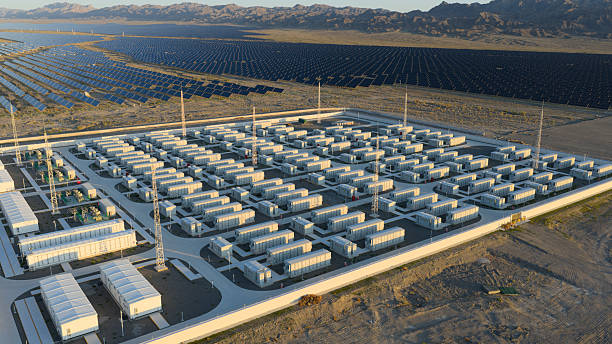
Inner Mongolia Launches Region's Largest Autonomous Energy Storage System at 500 MW Capacity
Edited by: an_lymons
A significant milestone in China's energy infrastructure development has been reached in the Inner Mongolia Autonomous Region. Commercial operation has commenced for a cutting-edge, autonomous Battery Energy Storage System (BESS) located in the Naiman Banner area of Tongliao City. This facility stands as the largest single-site energy storage project in the entire region, boasting a substantial capacity of 500 MW and an energy storage capability of 2000 MWh. This rollout underscores China's aggressive strategy to deploy large-scale solutions aimed at stabilizing an electrical grid increasingly burdened by the inherent variability of renewable sources like wind and solar power. The total capital investment for this crucial undertaking amounted to approximately 1.5 billion yuan, equating to roughly 211 million US dollars.
The execution speed of this vital infrastructure project is particularly noteworthy. Construction officially kicked off on June 28, 2025, yet the system achieved formal grid connection and successful acceptance testing on November 28, 2025—a full month ahead of the initial schedule. The development and primary financing were managed by Tongliao Conch New Energy Co., Ltd., a subsidiary of the massive Conch Cement Group, which is recognized as China's foremost cement conglomerate. Key equipment suppliers, including CATL and Kehua, utilized Lithium Iron Phosphate (LFP) technology. This choice is strategic, prioritizing safety and longevity, which are essential considerations given the harsh winter conditions in Eastern Inner Mongolia, where temperatures can plummet as low as -35°C.
The functional role of this storage facility is intrinsically linked to the dynamics of the local Mengdong energy market. The system is programmed to prioritize charging during periods of surplus wind and solar generation and then discharge power during peak demand hours. This capability facilitates critical grid services such as peak shaving, frequency regulation, voltage stabilization, and smoothing out load ramp rates. Analysts project that the system will facilitate an annual load shift between peak and off-peak times approaching 600 GWh. Furthermore, its maximum annual throughput capacity is estimated at 1.5 TWh, which represents about 4% of the region's total commercialized electricity volume.
Specific technological contributions highlight the project's advanced nature. Kehua supplied centralized, integrated 5 MW PCS-step-up units. These modules cleverly combine power conversion and voltage boosting within a single enclosure, significantly streamlining the installation process and maintenance procedures while achieving peak conversion efficiencies exceeding 99%. Meanwhile, CATL provided containerized energy storage systems, each rated at 5 MWh, built around 314 Ah cells. This deployment marks one of the first mass-produced 20-foot container solutions achieving this specific capacity level in China. CATL's engineering focus is centered on driving cell failure rates down to the parts-per-billion (PPB) level through platform standardization and fully automated manufacturing protocols.
Local authorities are championing this project as a benchmark, symbolizing the 'Tongliao speed' of execution. They view it as a replicable blueprint for integrating autonomous storage solutions across other provinces. The commissioning of this facility directly addresses the high penetration rate of wind and solar power in the region, which accounted for 38% of installed capacity by 2023. As Inner Mongolia solidifies its role as a national energy hub, this storage asset serves as a cornerstone for establishing a modernized power system framework. This development occurs against the backdrop of other planned mega-projects, such as a proposed 1000 MW/6000 MWh station slated for Ulanqab.
11 Views
Sources
pv magazine Latin America
ESS News
pv magazine Mexico
pv magazine International
Evlithium
Energy-Storage.News
Read more news on this topic:

Did you find an error or inaccuracy?
We will consider your comments as soon as possible.