
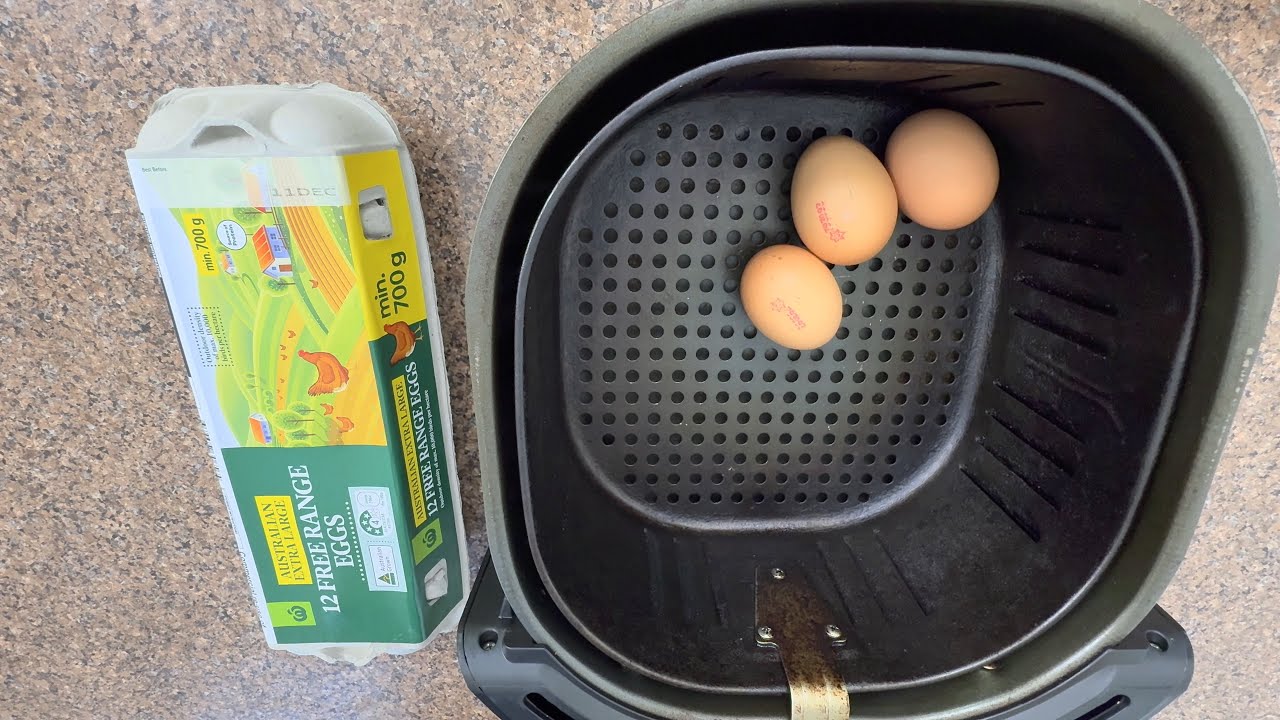
Air Fryer Method Proves Consistent for Preparing Hard-Cooked Eggs
Edited by: Olga Samsonova
The air fryer is establishing itself as a consistent method for preparing in-shell eggs, presenting a viable alternative to conventional stovetop boiling. This appliance inherently reduces common variables associated with water-based cooking, such as fluctuating water temperatures and the influence of batch size, leading to more dependable results regardless of the quantity prepared.
Culinary guidelines suggest operating the air fryer between 250°F and 300°F (120°C to 145°C) for a duration between 12 and 17 minutes to calibrate the desired doneness. For example, some protocols specify 15 minutes at 250°F for a well-done yolk, while others recommend 17 minutes at 270°F (132°C) for a firm result, highlighting that precise timing is often model-dependent. A primary benefit cited for this dry-heat technique is the reduction in shell cracking, a common issue during the agitation of a rolling boil. The air fryer, functioning as a compact convection oven, circulates hot air to cook the egg uniformly without physical disturbance.
Cleanup is substantially simplified compared to the traditional method, eliminating the need to drain and wash a pot of boiling water. Once programmed, the process is largely hands-off, allowing users to attend to other meal preparation tasks. To achieve the desired easy-peel characteristic, an immediate transfer to an ice water bath is universally advised. This rapid thermal shock halts residual cooking and causes the cooked egg white to contract slightly away from the shell membrane, facilitating easier removal.
The historical context of air frying technology extends beyond its modern commercial success, which began when Philips introduced the HD9220 unit at the 2010 Berlin tech show (IFA). The underlying concept of using circulating hot air dates back to the 1960s with Albert Guérin's patent for a “hot air stove,” and earlier to William Maxson's 1940s “Maxson Whirlwind Oven,” which used convection for faster cooking of frozen meals for the Naval Air Transport Service. The current appliance leverages this established principle, often appealing to health consciousness due to its minimal oil requirement.
Users must account for variations between appliance models, as cook times differ significantly. While some recipes suggest 12 to 17 minutes between 250°F and 300°F, others using a 180°C (approximately 356°F) setting call for as little as 9 minutes for a hard set. A traditional basket model might require 16 minutes at 275°F, whereas a toaster oven-air fryer hybrid could require up to 25 minutes. This variability necessitates initial testing with a single egg to establish the precise time and temperature profile for a specific device to ensure optimal texture.
14 Views
Sources
CNET
Allrecipes
CNET
Food Network
Read more news on this topic:



Did you find an error or inaccuracy?
We will consider your comments as soon as possible.