
A large X1.14 solar flare from sunspot region 4298.
X1.1 Solar Flare Erupts from Unexpected Corner of Giant Sunspot Group 4298
Author: Uliana S.
On December 8, 2025, at 05:01 UTC, the Sun delivered an event that simultaneously intrigued and surprised solar physicists. The largest sunspot complex observed throughout the year, which had been relatively quiet for nearly a week, finally unleashed significant activity. However, the manner of this eruption defied conventional solar forecasting models.
A powerful X1.1 class flare erupted, originating not from the expected massive regions, but from the smallest and seemingly least promising section of the colossal sunspot complex spanning regions 4294, 4296, and 4298. The source was specifically group 4298, which occupied a mere 120 micro-heliosystem units in area. This occurred while its much larger neighbors, the behemoths 4294 and 4296, boasting areas of 800 and 680 units respectively, remained in a state of ominous, yet stable, dormancy.
Video of the X1.1 flare
Ironically, the US National Oceanic and Atmospheric Administration (NOAA) had assigned only a slim 1 percent probability for an X-class flare emanating from region 4298 on that particular day. As it turned out, that one percent materialized. Physicists noted the paradox, observing that the most potent explosion observed to date originated from the least anticipated location. This forces a critical re-evaluation of the established models used to predict the accumulation and subsequent release of magnetic energy within complex groupings of sunspots.
Despite its classification as an X-class event, the practical impact on Earth proved to be minimal. The flare was characterized as brief and impulsive. Furthermore, its position on the solar disk—situated more than 50 degrees away from the direct line of sight to our planet—ensured that any associated coronal mass ejection (CME) would pass harmlessly by. Subsequent modeling confirmed that the plasma cloud would miss Earth entirely. Nevertheless, the event itself signals a significant shift: the period of relative calm has definitively concluded.
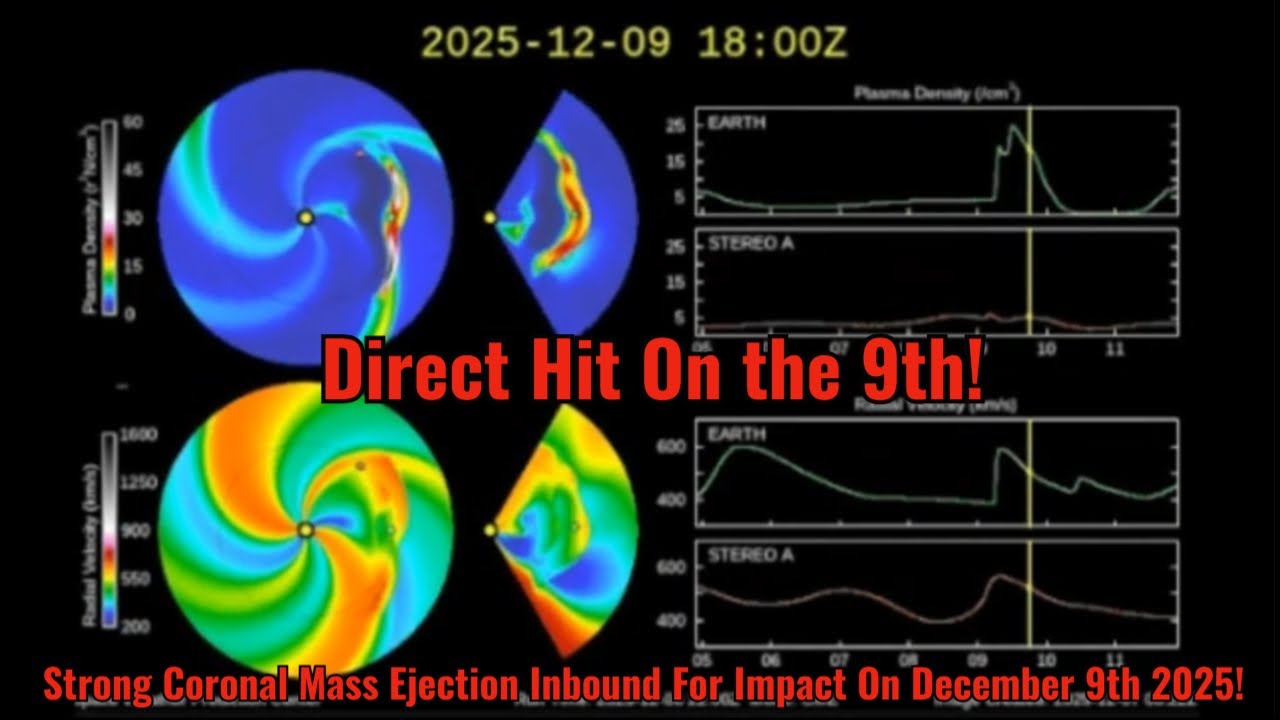
This recent outburst follows an M8.1 class flare recorded during the night of December 7. Plasma ejected during that earlier event is currently projected to reach Earth on December 9, potentially causing geomagnetic disturbances.
Scientists are now deeply engaged in analyzing the implications of the X1.1 flare, particularly concerning the energy release mechanisms within these massive sunspot structures. The primary focus has now pivoted to anticipating when and how the larger regions, 4294 and 4296, might finally discharge their stored energy. Current predictions suggest that geomagnetic storms ranging from G2 to G3 intensity could be observed on December 9 and 10, keeping space weather watchers on high alert.
14 Views
Read more news on this topic:

Did you find an error or inaccuracy?
We will consider your comments as soon as possible.