


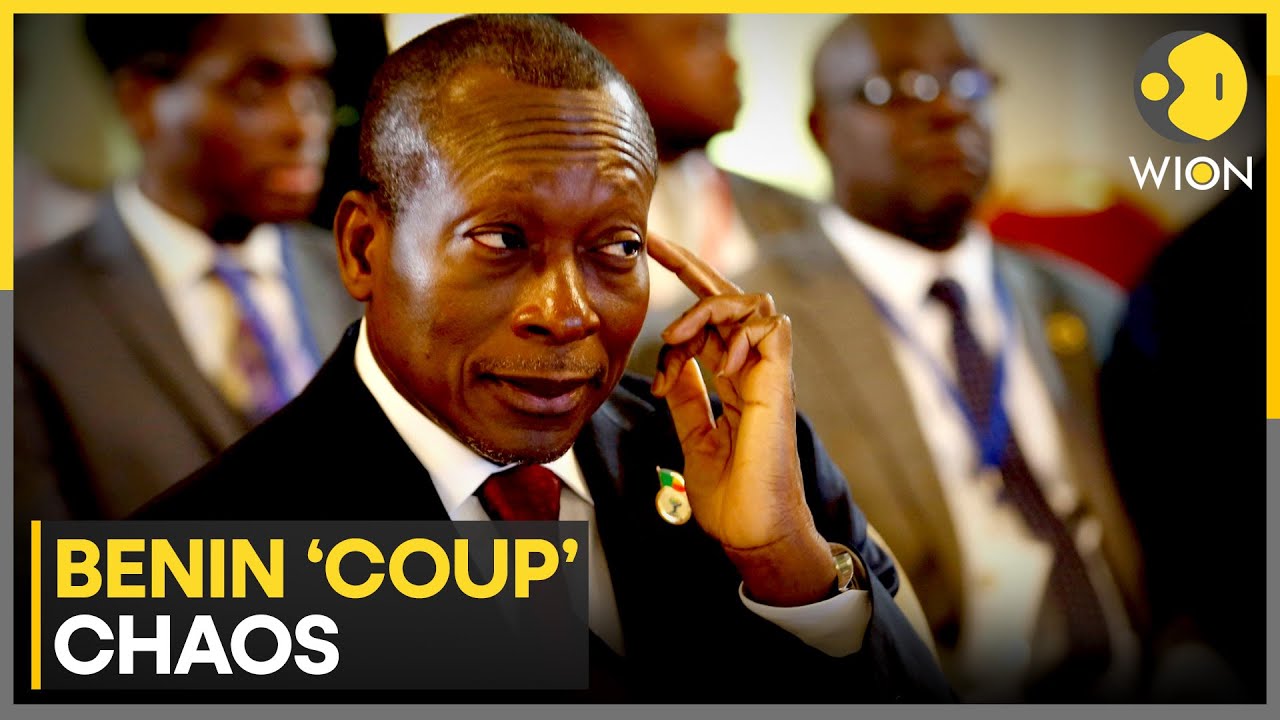
Swift Suppression of Failed Coup Attempt in Benin on December 7, 2025
Edited by: Tatyana Hurynovich
An attempted coup d'état rocked the Republic of Benin in the early hours of Sunday, December 7, 2025. However, the insurrection was swiftly neutralized by forces loyal to the sitting government. A faction of military personnel, styling themselves the Military Committee for Refund (or Revival) (MCR), seized control of the state broadcasting headquarters.
From this vantage point, the group declared the dissolution of the government and the suspension of the nation's constitution. They also announced the immediate removal of the incumbent President, Patrice Talon, from office. The mutineers proclaimed Lieutenant Colonel Pascal Tigri as the leader of their committee.
Initial clashes erupted near the presidential residence in Camp Guezou, situated within Cotonou, the country's economic hub, evidenced by audible gunfire in the area. Interior Minister Alassane Seidou confirmed the plot had been foiled, emphasizing that the vast majority of the Beninese Armed Forces and their command structure remained steadfastly committed to their oaths.
Foreign Affairs and Cooperation Minister Olushegun Adjadi Bakari provided further clarity, noting that the putschists only managed to secure the television station temporarily. He confirmed that elements of the army, alongside the Presidential Guard, successfully restored order to the situation.
As a direct consequence of the government's decisive action, a minimum of fourteen military personnel were taken into custody. Despite these arrests, the ringleader, Lieutenant Colonel Pascal Tigri, managed to evade capture. International bodies, including the Economic Community of West African States (ECOWAS) and the African Union (AU), issued strong condemnations against the unconstitutional power grab.
This attempted seizure of power occurred against a backdrop of escalating regional political instability and was timed just months ahead of the scheduled presidential elections in April 2026. President Talon has held power since 2016, having secured re-election in 2021, which, under the existing rules, precluded him from seeking a third term.
Tensions had been simmering; in January 2025, two of Talon's close associates faced conviction for allegedly plotting against him in 2024. Furthermore, shortly before the coup attempt, the parliament had controversially extended the presidential term length from five years to seven, while keeping the two-term limit intact. Heading into the election cycle, Romuald Wadagni, the Finance Minister and ruling party candidate, was widely considered the frontrunner. Conversely, the main opposition contender, Renaud Agbodjo, had been disqualified by the Electoral Commission (CENA).
The coup plotters themselves cited deteriorating security conditions in northern Benin, coupled with various social grievances, as the primary justification for their actions. This incident marks the latest in a string of military takeovers across West Africa, following the successful coup in neighboring Guinea-Bissau in November 2025. Benin, which gained independence from France in 1960, experienced numerous coups prior to 1991. Since then, the nation had largely enjoyed relative political tranquility, making this event a significant stress test for its democratic foundations.
16 Views
Sources
Deutsche Welle
Washington Post
Deutsche Welle
EL PAÍS
Yahoo Noticias
Infobae
Carta de Moçambique
Africa Radio
The Hindu
Anadolu Agency
APAnews - African Press Agency
Wikipedia
CBS News
DER SPIEGEL
Jeune Afrique
Libération
Les Echos
Die Zeit
Read more news on this topic:


Did you find an error or inaccuracy?We will consider your comments as soon as possible.