


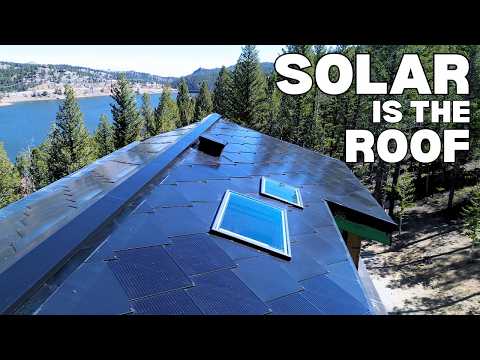
While the global media tracks tankers in the Persian Gulf, ordinary families in the suburbs of Munich, Rotterdam, and Lyon are making a surprisingly radical choice. They are installing rooftop solar panels not out of environmental enthusiasm, but to shield their household budgets from a new energy shock. On April 23, 2026, Reuters reported that demand for rooftop solar systems in Europe has surged so sharply that installation companies are overwhelmed by the influx of requests. What seemed like a long-term "green transition" project just yesterday has today become an urgent measure for self-preservation.
The energy crisis sparked by the escalation surrounding Iran has struck the most vulnerable points of the European economy: gas and electricity prices. Even after Europe largely shed its dependence on Russia, global oil and gas volatility was immediately reflected in utility bills. Households that paid their rates without concern two years ago are now calculating the payback period for panel installations. As a result, installation waitlists now stretch until autumn.
This surge mirrors the logic of the 1970s oil crises, albeit on a new technological level. Back then, the fear of empty gas stations sparked the first waves of interest in solar power. Today, the fear of empty wallets is driving the same trend, but on a massive scale and with modern equipment. German, Dutch, and French authorities are rapidly expanding subsidy programs, recognizing that decentralized generation is the fastest way to relieve pressure on the unified power grid.
However, Europe's "solar renaissance" has consequences reaching far beyond the continent. The growth in orders has immediately resonated at factories in China and Southeast Asia, where the majority of the world's equipment is manufactured. Supply chains, already under strain, have received a new jolt. Simultaneously, in African nations where millions still live without reliable electricity, the European experience is beginning to be seen as a practical model: small rooftop systems are proving cheaper and more reliable than large-scale centralized projects.
From a climate perspective, these developments appear to be a paradoxical gift. A geopolitical crisis that could have forced Europe back to coal is instead accelerating the phase-out of fossil fuels. Every new rooftop solar array reduces not only bills but also the carbon footprint, strengthening the EU's position in international climate agreements. What began as a reaction to a Middle Eastern shock is transforming into a structural shift toward distributed, more resilient energy.
This is the primary lesson of the current moment. When global energy supplies once again become hostages of geopolitics, the most reliable response proves to be energy that cannot be cut off with a valve or blocked by a tanker. Europeans installing panels on their roofs are not just voting for lower bills; they are voting for a new architecture of energy security. And this choice, born of crisis, may prove to be one of its most enduring legacies.


