


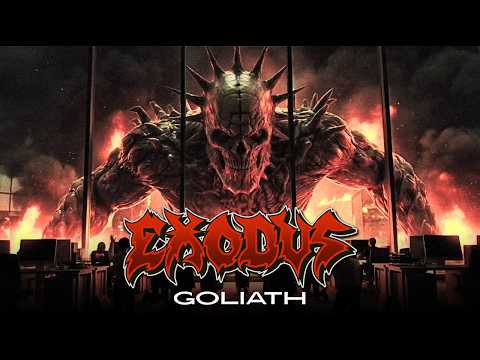
EXODUS - Goliath (Official Video) | Napalm Records
Share
Author: Inna Horoshkina One
EXODUS - Goliath (Official Video) | Napalm Records
On March 20, 2026, the legendary American thrash metal pioneers Exodus officially released their thirteenth studio album, titled Goliath. Issued through Napalm Records, this highly anticipated project marks a transformative moment for the band, blending their signature aggression with unexpected symphonic depth. The release has already sparked intense discussion within the heavy music community, signaling a bold new era for one of the genre's most enduring acts.
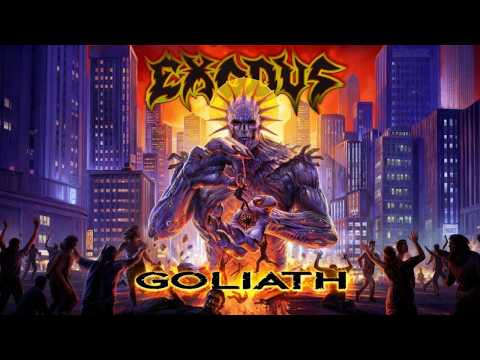
Exodus - Goliath (Full Album)
The road to this album began with a significant shift in the group's lineup in early 2025. Following the departure of longtime vocalist Steve "Zetro" Souza, the band announced the return of Rob Dukes to the frontman position. This transition was more than a simple personnel change; it served as the primary catalyst for the record's revitalized sound. Dukes' return brought a renewed sense of intensity and a different vocal dynamic that allowed the band to explore more complex arrangements than in previous years.
Produced and mixed by the acclaimed Mark Lewis, Goliath represents a deliberate effort to push the boundaries of the thrash metal genre. While the core of the Exodus sound remains intact, the album showcases a remarkable stylistic expansion. The production emphasizes a broader sonic palette, moving beyond the standard high-speed riffs to include more intricate layers and a more polished, yet devastatingly heavy, atmosphere that reflects the band's maturity.
Listeners will notice several key characteristics that define this new release, which set it apart from the band's earlier discography:
One of the most striking collaborations on the album is found in the song "The Changing Me." This track features a guest appearance by Peter Tägtgren, a legendary figure known for his work in the industrial and extreme metal realms. Tägtgren’s involvement brings a modern, almost mechanical edge to the composition, further illustrating the band's willingness to integrate diverse influences into their traditional thrash framework.
The title track, "Goliath," has quickly become the centerpiece of the album's critical reception. In a surprising move for a band known for speed, the song is unusually slow and atmospheric. It serves as a showcase for the band's newfound interest in orchestral textures, featuring a massive arrangement that includes 18 distinct layers of violin. These strings were recorded with the contribution of violinist Katie Jacoby, adding a cinematic and haunting quality to the music.
This inclusion of 18 violin layers represents a significant departure from thrash metal norms. It demonstrates how the genre can incorporate classical instrumentation to create a more immersive and expansive soundscape. By utilizing Jacoby’s talents, Exodus has managed to create a track that feels both ancient and modern, proving that the legends of the Bay Area scene are still capable of genuine innovation decades into their career.
Prior to the full album's arrival, Exodus set the stage with two pivotal single releases that hinted at the record's grander scale. The first single, "3111," debuted in January 2026, followed by the title track "Goliath" in February 2026. Both tracks were carefully chosen to signal the band's new phase—one characterized by a more dramatic, multi-layered, and atmospheric approach to heavy metal songwriting that prepared the audience for the full experience.
The return of Rob Dukes has fundamentally altered the energetic center of the band. His vocal delivery on this record is noticeably grittier and more forceful, which perfectly complements the denser instrumental structures. This shift has not only widened the band's emotional range but has also allowed for a tighter, more cohesive sound that maintains the group's identity while simultaneously opening a new phase of creative development.
The critical consensus suggests that this thirteenth studio effort is a landmark in the Exodus discography. By refusing to rest on their laurels, the band has produced a work that is as intellectually stimulating as it is sonically punishing. Goliath is not just an album; it is a statement of intent, proving that the band can maintain its relevance by evolving alongside the modern musical landscape.
Ultimately, the release of Goliath serves as a powerful reminder of the resilience of thrash metal as a genre. It shows that even a style built on a foundation of rigid traditions can continue to change by embracing new textures and depths. By combining the raw power of the classic thrash riff with the expansive resonance of an orchestral space, Exodus has successfully navigated a new path forward, ensuring their sound remains as vital as ever.


