


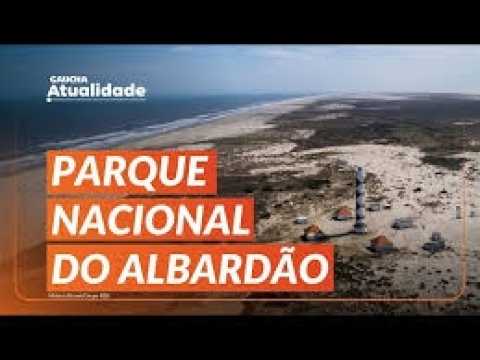
Albardão in RS will gain the country's largest coastal marine park.
Share
Edited by: Inna Horoshkina One
Albardão in RS will gain the country's largest coastal marine park.
Brazil formally instituted the Albardão National Marine Park on March 6, 2026, creating the most expansive marine protected zone in the South Atlantic Ocean. The decree safeguards an area exceeding one million hectares off the coast of Rio Grande do Sul, Brazil's southernmost state. Spanning approximately 1,004,480 hectares, the new national park now represents the country's largest marine park and the third-largest marine protected area overall.
This strategic conservation measure advances Brazil's commitment to the global 30x30 target, which aims to safeguard 30 percent of the world's oceans by 2030. The ecological sanctuary is designated to shield numerous critically endangered species from escalating environmental pressures. Protected fauna include the Lahille's bottlenose dolphin (Tursiops truncatus gephyreus), a subspecies endemic to the southwestern Atlantic with an estimated global population of fewer than 500 mature individuals. The park also encompasses habitats for 23 distinct species of sharks and rays, offering refuge from threats such as overfishing and habitat loss, and is home to the critically endangered franciscana dolphin (Pontoporia blainvillei) within Brazil.
Complementing the marine park is an adjacent Coastal Environmental Protected Area, spanning nearly 56,000 hectares, which preserves significant paleontological assets. This coastal zone features dune fields and natural shell deposits where paleontologists have unearthed substantial megafauna fossils dating back to the Pleistocene epoch, including remains of ground sloths, saber-toothed cats, giant armadillos, and mastodons. These deposits are currently the sole Brazilian sites known to have preserved Pleistocene cetacean remains, offering a unique window into ancient South American ecosystems.
The government's decree permits specific activities within the protected zones, including scientific research, controlled visitation for sustainable ecotourism, and artisanal fishing under a management plan. The establishment followed years of advocacy, with protection proposals dating back to 2004, gaining momentum after President Luiz Inácio Lula da Silva pledged expanded marine protection at COP 30 in November 2025. This action positions Brazil as a significant player in global ocean stewardship, aligning with its broader commitment to sustainably manage all 3.68 million km² of its national waters by 2030.
Initial resistance arose from interests focused on future offshore wind energy development. The federal government clarified that the park's structure will not automatically halt previously approved offshore wind or oil exploration projects, provided they adhere to the park's environmental objectives. A buffer zone of an additional 614,000 hectares was incorporated into the decree, where wind energy exploration is potentially permissible within the Coastal Environmental Protected Area. The region also serves as a crucial resting and reproduction site for migratory species, including humpback whales, sea turtles, and various seabirds.
Mongabay
Shanna Hanbury
The Scuba News
Impactful Ninja
Casa Civil - GOV.BR
Folha


