


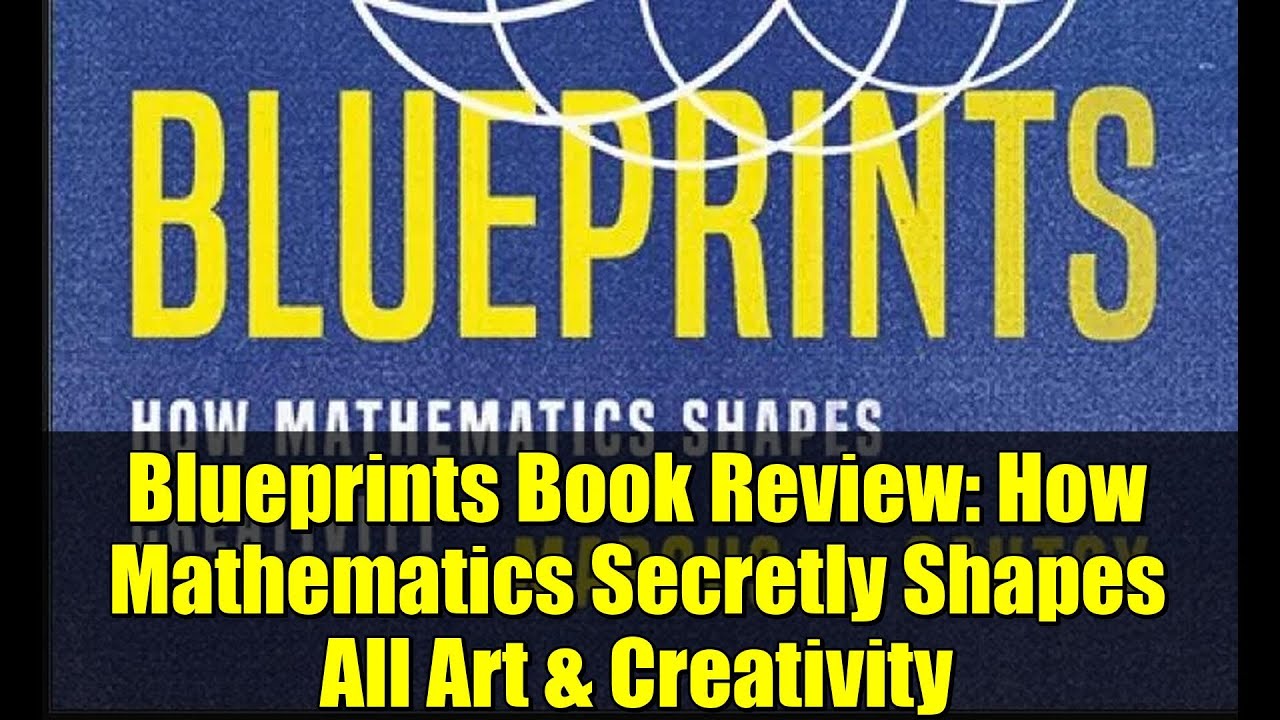
Mathematics Foundational to Creativity, New Studies Suggest
Edited by: Tetiana Martynovska 17
New research emerging in 2025 proposes a paradigm shift in understanding creativity, suggesting it is not solely an unpredictable spark but a process deeply intertwined with mathematical principles. This perspective challenges traditional views by positing that creative endeavors follow underlying structures analogous to mathematical formulas.
Studies indicate a strong correlation between the volume of creative output and the likelihood of producing exceptional work. Historical figures like Thomas Edison, with over 1,000 patents, and Pablo Picasso, with tens of thousands of artworks, exemplify this, as only a fraction of their prolific output achieved widespread acclaim. This highlights the iterative nature of innovation, where consistent effort and experimentation are crucial.
The concept of "combinatorial creativity" further supports this mathematical underpinning, emphasizing that novel ideas often arise from the recombination of existing elements, mirroring mathematical permutations and combinations. This suggests that innovation is more about reimagining and reconfiguring familiar components than inventing from nothing. Experts note this process is particularly potent in digital environments, where each new combination exponentially increases future possibilities, creating a self-reinforcing cycle.
Mathematical concepts like Zipf's Law provide a framework for understanding the distribution of creative outcomes, indicating that most ideas are average, with a few being good and a rare few exceptional. This pattern, observed across various fields, underscores the importance of generating a large volume of work, as exceptional results naturally emerge from a broader pool of efforts. This distribution highlights the value of prioritizing quantity to allow exceptional outcomes to surface through persistence.
Furthermore, the development of creative skills often follows an exponential growth curve, where sustained, deliberate practice leads to accelerated improvement over time, echoing the "10,000-hour rule." Creativity also thrives at the "edge of chaos," a concept from complexity theory where a balance between order and randomness fosters innovation. Operating in this dynamic space, where systems are neither too rigid nor too chaotic, allows for the emergence of meaningful and unexpected connections.
In essence, the 2025 research suggests that creativity is a process governed by discernible mathematical principles influencing probability, idea recombination, time investment, and the balance between order and chaos. Understanding these frameworks can equip individuals with greater clarity and purpose in their creative pursuits, thereby unlocking their inherent potential.
25 Views
Sources
Geeky Gadgets
University of South Australia. (2025). Creativity boosts NAPLAN literacy and numeracy performance. Phys.org.
Pllana, D., Baez, R., Sanchez, H., & Sandeep, N. (2024). Technology Inspires Mathematical Creativity in High School. Futurity Education, 4(3), 309–333.
Boldt, G. T., Canavan, E. J., Cody, R. A., & Gubbins, E. J. (2023). Developing Mathematical Creativity in Gifted and Talented Education. Teaching for High Potential.
Shwartz, H., & Fuchs, A. (2025). Mathematics Education and Creativity - Influencing Cognitive Arousal, Self-Efficacy and Motivation- Meta-Analysis Article. Gaia, 1(1)-(the Educational Spectrum), 38–48.
Sriraman, B. (2025). Math is creative? Yes! 4 ways to encourage creativity in math class. NWEA.
Read more news on this topic:

.@antoniobanderas leads #The33 in their quest to survive. See it in theaters November 13th. #Los33


 Nuclear bunker falls off cliff A clifftop nuclear bunker has fallen into the sea from one of the fastest eroding coastlines in Britain. Waves have washed over the red brick building, which was based near Tunstall in East Yorkshire, for almost 70 years.


🧵 1/10 NEW DISCOVERY: We’ve found a hidden mathematical pattern in Earth’s geological history spanning 540 million years. It predicts mass extinctions, geomagnetic reversals, and major climate transitions. Here’s what we found… 🌍📊 2/10 The pattern is “log-periodic” — unlike

Did you find an error or inaccuracy?We will consider your comments as soon as possible.