
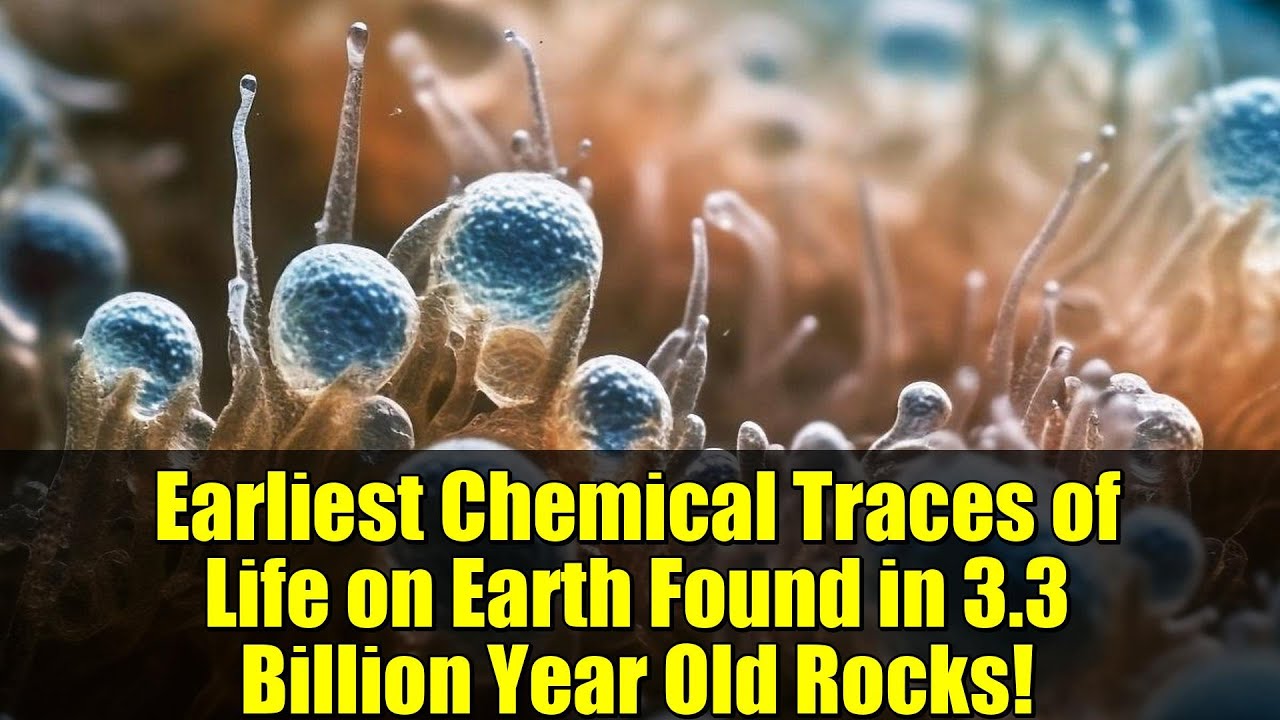
AI Deciphers Chemical Signatures of Ancient Life in 3.3-Billion-Year-Old Rocks
Edited by: Vera Mo
A multidisciplinary scientific team has achieved a significant methodological advancement in astrobiology and paleobiology by integrating advanced chemical analysis with artificial intelligence to identify molecular signatures of ancient life. This innovative technique targets chemical "echoes" preserved within terrestrial rocks dating back 3.3 billion years, long after the original, fragile biomolecules would have degraded.
The study, published in the Proceedings of the National Academy of Sciences, successfully identified molecular evidence suggesting that oxygenic photosynthesis was active as early as 2.5 billion years ago. This finding pushes the documented timeline for this critical biological process back by approximately 800 million years compared to previous established benchmarks. The methodology involved analyzing over 400 disparate samples—including ancient sediments, modern organisms, fossils, and meteorites—using Pyrolysis-Gas Chromatography and Mass Spectrometry (Py-GC-MS).
The resulting data sets were processed by a supervised machine learning model trained to distinguish chemical fingerprints unique to biological origins from those of abiotic materials. This system demonstrated a classification accuracy exceeding 90% for ancient rock samples and reached 98% accuracy when classifying modern samples. Dr. Robert Hazen of the Carnegie Institution for Science, the corresponding author, noted that machine learning now permits the reliable interpretation of chemical echoes left by life, comparing the process to asking a computer to identify the origin of complex puzzle pieces.
This development substantially revises models of the early Earth's biosphere, as dependable molecular evidence for life had previously been secured only from rocks younger than 1.7 billion years, effectively doubling the temporal window for chemical biosignature study. The technique is designed to complement established methods, such as isotope analysis, by offering a robust new lens for interpreting complex, degraded organic matter. The high accuracy rates, including 93% accuracy in detecting photosynthetic signatures, suggest a powerful system for resolving long-standing questions regarding deep-time evolution.
The oldest confirmed traces of life were found in 3.33-billion-year-old rocks, specifically from formations such as the Josefsdal Chert in South Africa. Beyond terrestrial applications, the implications for astrobiology are considerable, offering a practical methodology for analyzing planetary samples. The authors suggest that the same analytical approach could be deployed in the search for extraterrestrial life on environments like Mars or the icy moons of Jupiter, including Europa, given the AI's ability to detect biotic fingerprints surviving billions of years on Earth. Dr. Katie Maloney, who contributed rare billion-year-old seaweed fossils from Canada's Yukon Territory for validation, emphasized that this pairing of chemistry and machine learning reveals biological clues previously invisible in the geological record.
19 Views
Sources
Fanpage
Chemical evidence of ancient life detected in 3.3 billion-year-old rocks | Carnegie Science
Chemical evidence of ancient life detected in 3.3 billion-year-old rocks: Carnegie Science / PNAS | EurekAlert!
Read more news on this topic:



Did you find an error or inaccuracy?
We will consider your comments as soon as possible.